Welcome to one of the most rewarding (and weirdly underrated) hobbies out there. You'll need to pass a short federal exam first: a week of study, a $15 fee, and you're licensed for 10 years. Then a $130 handheld transceiver gets you on local repeaters the same day your call sign posts. Here's exactly what to get.
By Colin B. · Published May 24, 2026 · Last reviewed June 8, 2026
Budget path: Baofeng UV-5R, Nagoya antenna, programming cable, and the ARRL manual runs about $100 including the exam fee. A proper Yaesu setup is around $215 all-in.
We earn commission on qualifying Amazon purchases — see our
affiliate disclosure.
Price tiers and budget totals shown above are editorial estimates;
actual Amazon prices vary.
At a glance
Our top pick in each category
The fastest path through this guide — each best-starter pick by category.
Scroll for the budget and upgrade alternatives.
You cannot legally transmit without a license, but the Technician exam is not hard. The question pool has about 400 questions and every one is publicly available before you sit. Most people study for 5–7 days and pass on the first try. Budget time before you budget money.
The Baofeng question: almost every new ham asks whether to buy the $25 UV-5R. It works, the community supports it, and it'll get you on repeaters. But if you can stretch to $130, start with a Yaesu FT-60R. You'll use it for years without thinking about replacing it.
Programming is not optional. Your radio ships with blank channels. You need to load your local repeater frequencies: by hand through the menu (painful) or with a $15 USB cable and free CHIRP software (10 minutes). Buy the cable when you buy the radio.
The gear
What you actually need
Study Materials
The Technician exam is 35 multiple-choice questions from a published pool of about 400. You can read every possible question before you sit the test. Most people pass after 5–10 hours of study. The exam costs $15 at a club testing session; your call sign posts to the FCC database within a few business days and is valid for 10 years. You don't need a formal course. Just pick up a good manual and run practice tests at HamStudy.org, which is free and tracks your weak spots.
Best starter
ARRL
Ham Radio License Manual
$31.30 as of Jun 22, 2026
★★★★★Our rating
The ARRL is the national organization for amateur radio and their license manual is the official study guide. It explains why answers are right, not just what to memorize, which makes the electronics and regulations stick faster. Most new hams pass the Technician exam after one read-through.
What we like
Official ARRL guide, aligned to the current question pool
Explains the reasoning behind answers, not just what to memorize
Doubles as a useful reference after you're licensed
What to know
More thorough than needed if you just want to pass and move on
Not cheap at $35; HamStudy.org covers the same questions for free
Gordon West has been writing ham radio study guides for decades. His Technician book is leaner and faster than the ARRL manual, takes a drill-and-repeat approach, and is the right choice if you learn better through repetition than through explanation.
What we like
Leaner and faster than the ARRL manual; study the minimum and pass
Drill-focused approach works well for repetition learners
What to know
Less depth on the why; you'll understand less than with the ARRL book
Your first radio will almost certainly be a handheld transceiver (an HT). As a new Technician, you're mostly operating on VHF (2m) and UHF (70cm), which means local repeaters and nearby operators. The Baofeng UV-5R costs $25 and works; the Yaesu FT-60R costs $130 and is noticeably better-built and easier to live with. If ham radio sticks, you'll keep your first radio for years. Spend the extra $100 if you can.
Handheld Transceivers — what's the difference?
A few common shapes, each making a different trade.
Dual-Band Analog
Universal compatibility: works with every existing repeater.
Bands
2m + 70cm
Digital modes
None
Entry cost
$25–$130
Best for Most new Technicians; areas without digital repeater infrastructure
Tradeoff No digital modes; analog audio quality ceiling
BrandMeister global network; runs on budget-tier hardware.
Bands
2m + 70cm
Digital modes
DMR
Entry cost
$30–$80
Best for Hams who want digital voice on a budget; BrandMeister users
Tradeoff DMR radios (e.g. Radioddity GD-77) have a steeper programming curve
Best starter
Yaesu
FT-60R Dual Band Transceiver
$$$
★★★★★Our rating
The FT-60R is what the ham community recommends when someone asks what to buy as a first radio. Dual-band, weather-resistant, and built to survive field abuse that kills budget units. Simple enough for a new ham to operate, deep enough to grow into. You won't outgrow it; you'll just add to it.
What we like
Yaesu reliability: survives drops, rain, and field conditions
Simple operation with a menu system that makes sense after one day
Strong resale value when you eventually upgrade
What to know
No digital modes; upgrade required if C4FM or DMR repeaters call you
$130 stings until you've owned a Baofeng that died in six months
The $25 radio that every ham owns or has owned. Works on 2m and 70cm, hits local repeaters, and gets you on air immediately. The interface is counterintuitive and build quality is low, but it's the right choice if you're not sure ham radio will stick.
What we like
Under $30, a low-stakes entry if you're not yet committed
Massive community support: CHIRP profiles and YouTube tutorials everywhere
What to know
Build quality is noticeably below Yaesu and Kenwood
Menu navigation is a frustration exercise until programmed via CHIRP
The FT-70DR does everything the FT-60R does, plus Yaesu's C4FM digital mode for System Fusion repeaters. If there are Wires-X repeaters near you, the digital audio clarity is a noticeable step up from analog. Same Yaesu build quality at a modest premium.
What we like
Full C4FM digital mode on top of complete analog compatibility
System Fusion repeaters auto-switch between digital and analog callers
Same solid Yaesu build at a modest premium over the FT-60R
What to know
C4FM only useful if there's a System Fusion repeater nearby
DMR operators on BrandMeister can't reach you in digital mode
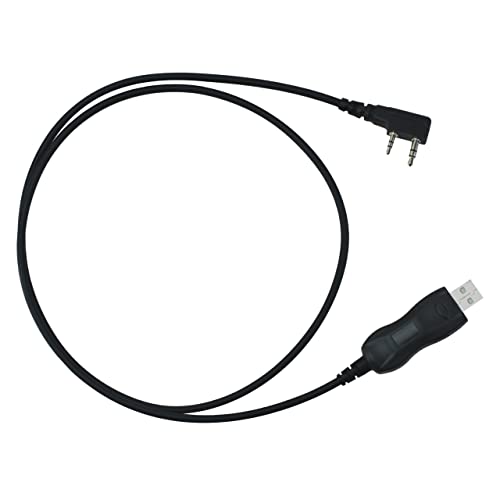
Every modern HT ships with dozens of programmable memory channels. Entering frequencies by hand through the radio's menu is doable but painful (imagine entering 50 contacts into a flip phone). A $15 USB cable and the free CHIRP software (Windows, Mac, Linux) lets you program the whole radio from a spreadsheet in 10 minutes. This is how everyone actually does it. The catch: the cable must match your radio's brand.
Best starter
BTECH
PC03 FTDI USB Programming Cable
$22.49 as of Jun 22, 2026
★★★★★Our rating· In Stock
BTECH's programming cable is the most reliable option for Baofeng and compatible radios. It uses a Prolific chip that installs without the driver headaches that plague generic cables. Works out of the box with CHIRP on all major platforms.
What we like
Prolific chip means reliable Windows drivers without troubleshooting
Works with CHIRP out of the box; no setup beyond driver install
What to know
Baofeng-compatible only; Yaesu and Kenwood need different cables
Included CD drivers are outdated; download from Prolific's site instead
★★★★☆Our rating· Only 2 left in stock - order soon.
If you went with a Yaesu FT-60R or FT-70DR, this is your cable. The SCU-57 is Yaesu's current USB interface, replacing the older SCU-19. Reliable drivers, and works with CHIRP for those who prefer the open-source route over Yaesu's proprietary software.
What we like
Official Yaesu hardware; no driver compatibility guessing
Compatible with both CHIRP and Yaesu's own programming software
What to know
Yaesu-only; not compatible with Baofeng or Kenwood radios
More expensive than third-party alternatives at the same function
The rubber duck antenna that ships with your HT is bad by design; manufacturers cut costs and assume you'll upgrade. A $15 aftermarket whip can double your effective range on a local repeater. This is the single highest-leverage upgrade for a new radio. A magnetic-mount car antenna opens up mobile operation and dramatically extends your transmit range when operating from a vehicle.
Best starter
Nagoya
NA-771 Dual Band Antenna
$20.98 as of Jun 22, 2026
★★★★★Our rating· In Stock
The NA-771 is the universal HT antenna upgrade. A 15.6-inch whip that dramatically improves gain over the stock rubber duck. Under $15, works with any SMA-female radio (Yaesu, Baofeng, most HTs), and the improvement on a weak repeater is immediately obvious.
What we like
15.6-inch whip provides real gain over any stock rubber duck
Under $15, the best bang-for-buck upgrade in the hobby
Works on both 2m and 70cm bands simultaneously
What to know
Longer than stock; pockets and holsters may not accommodate it
Watch for counterfeits; buy from a seller with verified reviews
When you want to operate from your car, a magnetic-mount antenna turns your HT into a proper mobile setup. The Tram 1185 runs a 5/8-wave whip on a magnetic base and performs far better than any handheld antenna in a moving vehicle.
What we like
No permanent installation; magnetic base on any metal roof
5/8-wave gain is a significant step up from any portable HT antenna
What to know
Cable routing inside the car takes some planning the first time
Designed for mobile use; not a substitute for a base station antenna
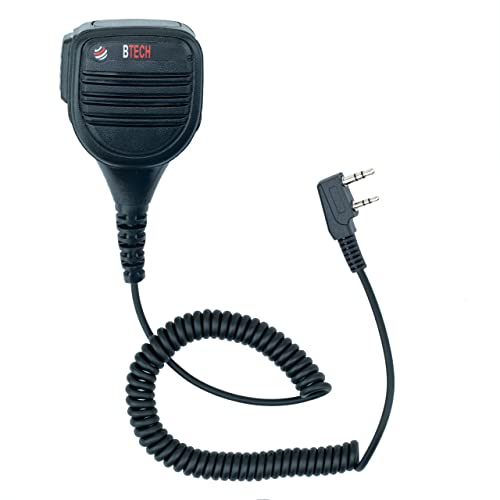
Two accessories that meaningfully improve daily radio use: a lapel speaker-mic for hands-free operation (essential if you're driving or working with your hands), and a simple earpiece for listening in public without broadcasting to the room. Total under $30 for both, and each solves a specific frustration you'll hit within the first week.
Best starter
BTECH
Lapel Speaker Mic (2-pin Kenwood)
$24.89 as of Jun 22, 2026
★★★★★Our rating· In Stock
A shoulder-clip speaker-mic lets you monitor and transmit hands-free without raising the radio to your face. The built-in HT speaker is weak and directional; a lapel mic clips to your collar and makes audio immediately clearer in outdoor conditions. Works with Baofeng and most Kenwood-connector radios.
What we like
Hands-free operation for driving, hiking, or event volunteer work
Much clearer audio than the built-in HT speaker in outdoor conditions
What to know
Baofeng and Kenwood 2-pin only; Yaesu users need a different model
Budget speaker-mics can crackle at high volume; check reviews
For monitoring in meetings, public events, or anywhere a speaker would be inappropriate, a simple earpiece does exactly one thing well. These cost $8 and plug into the HT's 2.5mm jack.
What we like
Lets you monitor radio traffic without alerting the room
Under $10, the most disposable accessory on this list
What to know
Monaural only; fatigue builds on sessions over an hour
Fit varies; read sizing reviews before trusting the default tip
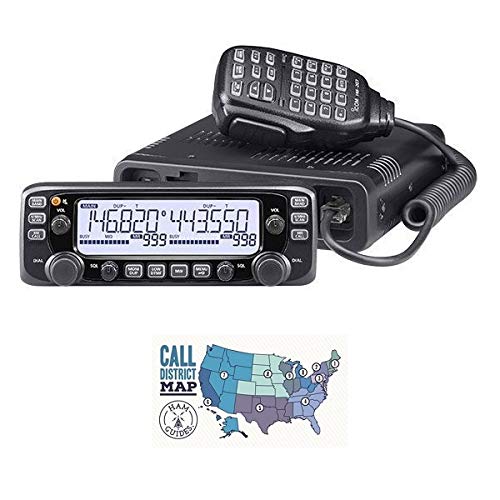
Your HT is the right first radio, but the power ceiling is real; most HTs top out at 5–8W. A mobile radio mounted in your car runs 25–50W and dramatically improves range to distant repeaters. Most active hams buy a mobile radio within a year of licensing. This is the natural second purchase after you're hooked.
Best starter
ICOM
IC-2730A Dual Band Mobile Transceiver
$374.95 as of Jun 22, 2026
★★★★★Our rating· In Stock
The IC-2730A is the most popular dual-band mobile among new hams who've outgrown their HT. Two-band simultaneous receive, 50W on VHF, a clear faceplate display, and ICOM's well-earned reputation for reliability. Installs in a dash or under a seat and connects to any NMO or magnetic-mount antenna.
What we like
50W output vastly outperforms any HT's 5W in the same situation
Simultaneous dual-band receive: monitor two frequencies at once
ICOM quality and support reputation is well-earned in the hobby
What to know
Requires a fused power cable run to the battery, about 30 minutes of work
Larger faceplate than modern dashes expect; mounting needs planning
Kenwood's TM-V71A is the step up for operators who want more from a mobile: two independent VFOs, full 50W on each band simultaneously, excellent APRS/packet capabilities, and a detachable face for theft deterrence. Noticeably more capable than the IC-2730A for active operators.
What we like
Two independent VFOs: full 50W on each band simultaneously
Built-in APRS/packet support, no external TNC needed
Detachable face keeps the radio hidden when parked
What to know
$350+ is a serious commitment; confirm mobile operation is your thing first
Menu system rewards reading the manual before you start
Ham radio has a prerequisite that almost no other hobby has: a federal exam. You cannot legally transmit until you pass it. This sounds like a barrier. In practice, it’s a week of study that also teaches you most of what you need to know to actually use the radio, a surprisingly efficient on-ramp.
This is what your first month actually looks like, from opening the study guide to checking into your first net.
Days 1–7: Passing the Technician exam
The Technician exam is 35 multiple-choice questions drawn from a published pool of about 400. You can read every question before you sit the test. The pass threshold is 26 correct. Most people clear it comfortably after 5–7 days of focused study.
The fastest approach: buy the ARRL Ham Radio License Manual and read it cover to cover while running daily practice tests at HamStudy.org. HamStudy tracks your accuracy by topic and surfaces weak areas. By day five, you should be consistently scoring above 80%. Day six, find a local testing session. Day seven or eight, sit the exam.
A few study tips that actually matter:
Understand; don’t just memorize. The Technician exam covers electronics basics, FCC regulations, and operating procedures. The electronics is genuinely interesting once you see how it connects to what radios actually do. Memorizing works, but understanding the reasoning means you’ll actually use the radio correctly after you’re licensed.
The math is not scary. Ohm’s law (V = IR) shows up several times. That’s most of the calculation content. If math questions make you anxious, just learn those five formulas and practice them once.
Band plans and frequency allocations feel like arbitrary lists until you start using them. Learn them in context: 2m band (144–148 MHz) is your main repeater band, 70cm (420–450 MHz) is the other one. Everything else you can look up.
The exam costs $15, takes 30 minutes, and your results are usually available immediately. Your call sign posts to the FCC’s Universal Licensing System database within 2–10 business days. Until it posts, you cannot legally transmit, but you can listen to everything.
Days 8–14: Setting up your radio
Order your radio and USB programming cable when you sit the exam; don’t wait for your call sign. Shipping takes a few days, and your call sign will likely post before the box arrives.
Yaesu FT-60R buyers: Your radio ships with a basic rubber duck antenna, a wall charger, and a belt clip. The manual is thorough but overwhelming. Set that aside for now. Your first task is programming.
The programming cable and CHIRP workflow:
Download CHIRP from chirp.danplanet.com (free, all platforms)
Install your USB cable driver (Prolific for most BTECH cables)
Go to RepeaterBook.com and find 5–10 active repeaters in your area. You want their output frequency, offset (positive or negative), and CTCSS/PL tone
In CHIRP: Radio → Download From Radio. This reads your radio’s current state.
Add your repeater channels in the spreadsheet view
Radio → Upload To Radio. Done.
The whole process takes 15–20 minutes the first time. After that, adding a new repeater is a two-minute edit.
What’s a CTCSS tone? Most repeaters require you to transmit a sub-audible tone along with your signal before they’ll activate. RepeaterBook lists the tone for each repeater. Program it in CHIRP, or the repeater will hear you but won’t repeat your transmission. This trips up almost every beginner at least once.
When your call sign posts to the FCC database (you can check at wireless.fcc.gov/uls), you’re legal to transmit. Your first contact will feel oddly ceremonial.
Start with a simplex call. Find a local calling frequency (146.520 MHz is the national 2m simplex calling channel) and call “CQ, CQ, CQ, this is [your call sign] calling CQ, listening.” CQ means you’re looking for any station to respond. You may not get an answer on the first try, or the tenth, but the act of making the call cements the process.
Then, check in to a local net. Most amateur radio clubs run a weekly net: a structured on-air meeting, usually on a local repeater, where members check in and exchange brief messages. Find one (ask at the local club or search on repeaterbook.com for “net”) and tune in for one session before you participate. Listen to the format. Most nets go like this: the net control announces the net, asks for check-ins, calls each station alphabetically, you give your call sign and say “checking in,” and that’s it. Your first check-in takes about 20 seconds.
The ham community is famously welcoming to new operators. You’ll almost certainly get a response during your first net check-in mentioning that you’re new, and at least one local ham offering to help you get set up. This is normal and a genuine feature of the hobby.
Radio etiquette basics that matter:
Listen before you transmit. Always check that the frequency is clear before keying up. Say “KA1ABC, is this frequency in use?” and wait five seconds.
Identify every 10 minutes and at the end of each transmission. FCC rule. Your call sign, in plain English (or morse for HF).
“73” means “best regards” and is how most conversations end. You’ll hear it constantly within the first week.
Days 22–30: Going further
By the end of your first month, you’ll have a working radio, a handful of programmed repeaters, and at least one real QSO. A few directions to consider next:
Get your Nagoya NA-771 antenna. If you haven’t already upgraded from the stock rubber duck, do it now. The difference on a marginal repeater is immediate and noticeable. This is a $15 upgrade that makes a bigger difference than almost anything else at this stage.
Join your local ARRL club. Most clubs have monthly meetings, field events, and members who know every repeater and frequency idiosyncrasy in your area. The ARRL club finder at arrl.org is the right place to start.
Start thinking about digital modes. APRS (Automatic Packet Reporting System) uses your radio to broadcast your GPS position to a map visible at aprs.fi; it’s easy to set up on a Baofeng or Yaesu with a $20 cable, and watching your position appear on the map is genuinely satisfying the first time. Digital voice modes (C4FM, DMR) come later, when you’ve decided you want more from repeater contacts.
Study for your General class license. The Technician license gives you VHF/UHF privileges plus limited HF access. The General class opens most of the HF bands (shortwave, the ability to talk across continents on a 100W radio). The General exam is harder than Technician, but the question pool is also public. Most active Technicians upgrade within a year or two.
Things that trip up every beginner
A few patterns that show up in almost every new ham’s first month:
CTCSS tone not programmed in. The repeater hears you but doesn’t repeat. You hear nothing back. Check RepeaterBook for the tone and add it in CHIRP.
Wrong offset direction. Most 2m repeaters use a –600 kHz offset (transmit 600 kHz below the output frequency). Most 70cm repeaters use a –5 MHz offset. If you program the offset direction backwards, the radio transmits on the wrong frequency. CHIRP handles this automatically if you enter the offset correctly.
Talking too close to the mic. HT microphones are sensitive. Holding the radio three inches from your mouth rather than pressed against your face usually improves your audio quality noticeably.
Impatience after calling CQ. Repeaters and simplex channels go quiet for hours at a stretch. A non-response doesn’t mean you’re doing it wrong. Try different times of day; early evenings and weekend mornings are usually the most active.
Save your money
What you don't need yet
Beginners get pressured to buy a lot of stuff that doesn't help them play
better. Here's what we'd skip on day one.
HF transceiver — HF (shortwave) requires a General class license for most bands. Get comfortable on VHF/UHF first, then study for the upgrade when you're ready.
A tower and beam antenna — You'll be on repeaters for months before you think about DX contacts. Start with a handheld and an aftermarket whip.
Linear amplifier — Amplifiers require compliance care and create interference risks for beginners. Your mobile radio gives you all the power you need.
SDR dongle (software-defined radio) — Fascinating rabbit hole with a steep learning curve. Learn to transmit and operate first; RTL-SDR monitoring is a great year-two project.
D-Star radio — D-Star is ICOM's digital mode. Unless there's active D-Star infrastructure near you, you won't use it; check the repeater map before buying.
First week
Your first seven days
A short, real plan to get from gear-on-doorstep to actually playing.
Go to HamStudy.org and take a diagnostic practice test to see your baseline score. · Action
HamStudy.org · Free practice tests, tracks weak spots, matches the current question pool
Order the ARRL Ham Radio License Manual so it arrives before the weekend. · Buy
Find your local repeaters at RepeaterBook.com, download CHIRP, and program them in before your first contact. · Action
RepeaterBook · The most complete directory of active amateur radio repeaters in North America
CHIRP Software · Free, open-source radio programming software for Windows, Mac, and Linux
Check in to a local net. Most clubs run a weekly check-in where you give your call sign and introduce yourself. It's the fastest way to meet the community. · Action
FAQ
Common questions
How long does it take to get a ham radio license?
Most people study for 5–7 days and pass on the first try. After the exam, the FCC posts your call sign to the ULS database within 2–10 business days. Your Technician license is valid for 10 years and renewable indefinitely.
Do I need a license just to listen?
No. You only need a license to transmit. Many people spend weeks listening to local repeaters before ever keying up; it's a legitimate way to learn the rhythm of on-air conversation before you join it.
What's a repeater, and why does everyone talk about them?
A repeater is an automated radio station on a hilltop or tower that receives your low-power signal and re-broadcasts it at high power. A 5W HT talking to a repeater can reach every ham in a 30-mile radius. Without repeaters, that same radio talks maybe 2 miles line-of-sight.
Is the Baofeng UV-5R really that bad?
It works. But it has a painful user interface, mediocre build quality, and legitimate FCC compliance questions. For $25, it's a fine first experiment. For a radio you'll use regularly, spend $130 on a Yaesu FT-60R.
What's the difference between VHF and UHF for a new ham?
VHF (2 meters, ~144 MHz) travels farther and penetrates buildings better. UHF (70cm, ~440 MHz) is more crowded with urban repeaters and behaves differently in buildings. As a Technician, you have privileges on both. A dual-band radio handles either without you having to think about it.
What's a QSO, and what's all the Q-code jargon?
A QSO is just a two-way contact (a conversation). Ham radio has a lot of Q-code shorthand (73 = best regards, QSY = change frequency, QRM = interference) that sounds like a foreign language at first. It takes about a week of listening to absorb. Don't try to memorize it before you start.
ARRL — The national organization for amateur radio. Licensing info, club finder, exam sessions, and the definitive rules reference.
HamStudy.org — Free practice tests that track your weak spots against the current question pool. The fastest way to prepare for the Technician exam.
RepeaterBook — The most complete directory of active amateur radio repeaters. Essential for finding local infrastructure before programming your radio.
CHIRP — Free, open-source radio programming software for Windows, Mac, and Linux. The right way to program your HT with local repeater frequencies.
Ham Radio Crash Course (YouTube) — Josh Nass K6JSA. Practical, beginner-friendly content covering getting licensed through digital modes. Start here after passing your exam.
r/amateurradio — Active community. Good for gear questions and local club recommendations. Read the wiki before posting; most beginner questions are answered there.
BrandMeister Network — The primary network for DMR digital voice. Useful once you have a DMR-capable radio and want to understand the global talkgroup system.
As an Amazon Associate, JustBeginning earns from qualifying purchases.
We may also earn commission from other affiliate programs linked on this
page. Editorial recommendations are independent; we don't choose
products based on commission rates.
Product prices and availability are accurate as of the date and time
indicated and are subject to change. Any price and availability
information shown on Amazon at the time of purchase will apply.

 Best starter