Karting is real motorsport at human scale, same physics as Formula 1, no doors, four inches of ground clearance. Your first arrive-and-drive session will either hook you completely or not, and either outcome is fine. The gear list matters: karting has actual safety requirements. Here's what to buy, what it costs, and what to skip until you're sure you're hooked.
By Colin B. · Published May 24, 2026 · Last reviewed June 18, 2026
Alpinestars Tech-1 Race Gloves
— Alpinestars Tech-1 Race gloves: thin enough to feel the wheel, tough enough to last a full season.
Budget total
$300
Typical total
$550
Helmet is non-negotiable (~$150-200). Add suit (~$100), neck collar (~$50), and gloves (~$40) and you're race-ready for under $400. Premium versions of each run $150-250 each.
We earn commission on qualifying Amazon purchases — see our
affiliate disclosure.
Price tiers and budget totals shown above are editorial estimates;
actual Amazon prices vary.
At a glance
Our top pick in each category
The fastest path through this guide — each best-starter pick by category.
Scroll for the budget and upgrade alternatives.
Try an arrive-and-drive session first. Most tracks rent helmets and suits, you're out $20-50 for a session before you own a single piece of gear. Do this before spending anything, because karting is addictive and you'll spend more once you know you love it.
Helmet certification matters. Your local track's rule sheet specifies which certifications they accept, usually Snell K2020 (or K2015 for casual sessions). Don't buy a motorcycle or car-racing helmet and assume it transfers; karting helmets carry specific certifications for this environment.
Measure your head before buying a helmet. Sizing varies significantly across brands. Measure at the widest point (above your ears and brows) in centimeters, and check each brand's specific size chart, one brand's Large is another's Medium.
Your helmet is non-negotiable and the most important purchase you'll make. Karting helmets must meet Snell K (kart-specific) or equivalent CMR standards, a motorcycle or cycling helmet won't satisfy most track requirements. For arrive-and-drive weekends, a Snell K2020 certified helmet is the standard. Expect to spend $150-250 for a proper starter; anything under $100 lacks the right certification. The difference between a $160 and a $500 helmet is mostly weight and ventilation, both are safe.
Helmets — what's the difference?
A few common shapes, each making a different trade.
Snell K2020
Current standard. Required by most competitive series.
Standard
Snell K2020
Introduced
2020
Accepted at
All US tracks
Best for Anyone buying new, especially if you might race competitively
Tradeoff Costs $30-50 more than an equivalent K2015 helmet
Previous standard. Fine for casual arrive-and-drive.
Standard
Snell K2015
Introduced
2015
Accepted at
Most arrive-and-drive tracks
Best for Budget buyers who will only do casual track days
Tradeoff Not accepted at all tracks or club series, verify first
CMR / CIK-FIA
European standard. Used in FIA-sanctioned karting.
Standard
CMR (CIK-FIA)
Introduced
2016
Accepted at
FIA-affiliated clubs and SKUSA
Best for Drivers in FIA-affiliated series or junior programs
Tradeoff Less common at casual US tracks, verify acceptance first
Best starter
Bell
RS7-K K2020 Karting Helmet
$$$
★★★★★Our rating
Bell is the most trusted name in motorsport helmets, and the RS7-K is their Snell K2020 certified karting lid. Full-face protection, solid ventilation for summer sessions, and padding that holds up through a full race day. This is the helmet we'd tell any first-time karter to buy without second-guessing, the brand you'll see more than any other in a US karting paddock.
What we like
Bell is the most trusted name in motorsport, real credibility
Snell K2020 certification accepted at virtually every US track
Better ventilation than most helmets at this price
What to know
Runs narrow in the forehead, try before buying if possible
Vega's Trak is an entry-level full-face helmet at a price that makes sense if you're not yet sure how often you'll race. It's a legitimate head covering at a low price. Check your track's specific certification requirements before buying, if they require Snell K2020, you'll need to step up to the Bell.
What we like
Legitimate Snell K certification at the lowest credible price
Accepted at most arrive-and-drive tracks in the US
What to know
K2015 vs K2020, some tracks and series won't accept it
Ventilation is noticeably worse on hot summer days
Arai's SK-6 is what serious club racers end up in. Snell K2020 certified, lighter than budget lids, and Arai's fit system is genuinely different, once you've worn one, you understand the premium. The foam settles to your specific head shape over the first few sessions. Buy this when you're racing twice a month and care about comfort over a long race day.
What we like
Lighter and better-fitting than anything in the same safety class
Foam molds to your head shape over time for a custom fit
The helmet serious club racers consistently upgrade to
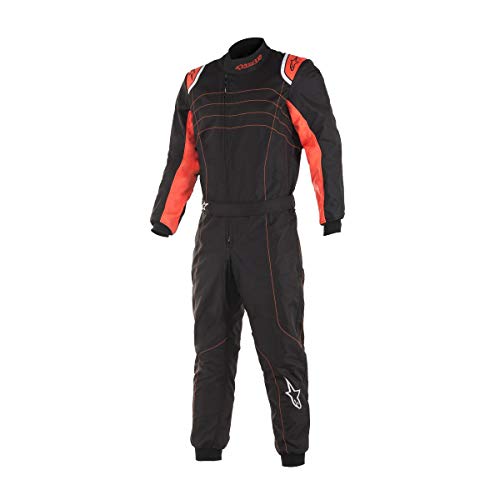
A kart suit does two things: protects you from pavement abrasion if you go off, and keeps you compliant with track requirements. Most tracks require at minimum a single-layer kart suit for practice; competitive series require CIK/FIA-rated suits. Note that karting suits are NOT fireproof nomex, that's car racing equipment. Fit matters: too loose and fabric bunches under harnesses, too tight and you can't rotate to check your mirrors. Budget around $100-150 for a solid entry suit.
Best starter
K1 Race Gear
Speed 1 Kart Racing Suit
$199.99 as of Jun 22, 2026
★★★★★Our rating· Only 6 left in stock - order soon.
K1 Race Gear is the most recognized kart-specific apparel brand in the US, and this suit is why. CIK/FIA rated, thoughtfully tailored for movement, and available in enough sizes to actually fit people. The knee and elbow reinforcement panels are noticeably thicker than cheaper suits. Washable, durable, and the right call for anyone racing more than once.
What we like
CIK/FIA rated, meets requirements at virtually every US club
Reinforced knee and elbow panels outlast cheaper alternatives
Most recognized kart-apparel brand in the US paddock
What to know
European sizing, go up if between sizes or tall
Less insulation than fireproof suits in cold weather
OMP's entry-level kart suit passes muster at most tracks for arrive-and-drive sessions. The single-layer design offers less abrasion protection than the K1, but if you're doing two sessions a month and just need to be compliant, this works. OMP has real motorsport heritage, even their budget stuff is reasonably well-made.
What we like
OMP motorsport credibility at an entry-level price
Single-layer design is less bulk and easier to move in
The step up serious club racers make. Alpinestars' two-layer construction, better abrasion resistance, and real ergonomic tailoring for kart-specific movement patterns. The articulated shoulders and stretch panels make a genuine difference in a full-weekend event. This is the suit you'll still be wearing in three years.
What we like
Two-layer construction, meaningfully more abrasion protection
Alpinestars' kart tailoring beats generic motorsport suits
The suit serious club racers invest in and keep for years
What to know
Price jumps significantly over budget options
More suit than you need for casual arrive-and-drive sessions
Karting involves real neck loads, you're pulling 3-4G through corners with no suspension to absorb it. A simple foam neck collar costs $30-50 and reduces strain over a long day. A proper neck brace (like the Leatt) goes further, limiting extreme range-of-motion in a crash. Most club series don't mandate neck braces, but they're cheap insurance. Start with a foam collar if you're doing light arrive-and-drive; upgrade to a Leatt once you're racing regularly.
Best starter
Leatt
3.5 Neck Brace
$$
★★★★★Our rating
The Leatt 3.5 is the neck brace of choice across karting and motocross. It fits under your helmet without gaps, limits dangerous range-of-motion in a crash, and is comfortable enough to forget you're wearing within ten minutes. Originally designed for motocross riders, it has been standard equipment in karting paddocks for years. The best $120 you'll spend on safety.
What we like
Standard in karting paddocks, the brace serious drivers actually use
Limits dangerous range-of-motion in a crash without restricting turns
Comfortable after ten minutes, you forget you're wearing it
What to know
More complex to fit than a foam collar, must size against your helmet
Overkill for once-a-month arrive-and-drive; foam collar is fine then
★★★★☆Our rating· Only 5 left in stock - order soon.
A foam neck collar is the minimum reasonable neck protection for karting, it cushions contact and reduces fatigue over a long session. OMP's anatomic collar is firmer than cheap generic foam (which compresses to nothing within a season) and fits most helmet openings cleanly. Good enough for arrive-and-drive, upgradeable later.
What we like
Costs under $40 and meaningfully reduces neck fatigue on long sessions
OMP foam density outlasts generic foam collar alternatives
What to know
No range-of-motion limiting, won't protect against crash extremes
Foam compresses after a full season of regular use
Karting gloves are thin and tight, you need to feel the wheel and work with harness buckles. Thick winter-style gloves are useless here. You want the thinnest glove that still protects your knuckles and palms from the wheel and chassis. Budget $30-60; anything less starts to feel slippery by the end of a session. Sizing tends to run slim, so check brands carefully if you have wider hands.
Best starter
Alpinestars
Tech-1 Race Gloves
$$
★★★★★Our rating
Alpinestars sets the standard for motorsport gloves, and the Tech-1 Race is their workhorse. Thin enough to feel every input, reinforced palms for genuine grip, and the closure strap holds without pressure points on the back of your hand. Sized consistently and available everywhere. The glove you'll see more than any other in an entry-level paddock.
What we like
Thin enough to feel steering inputs clearly without numbness
Reinforced palm holds grip through long sessions without slipping
Alpinestars is the default glove brand in kart paddocks worldwide
What to know
Runs slim, wider hands should size up
No thermal insulation, add liners for cold-weather racing
OMP's budget glove punches above its price. The suede palm gives adequate grip, and the elasticated cuffs hold position better than you'd expect. If you're doing occasional sessions and not ready to commit to Alpinestars pricing, these are the sensible move.
What we like
Suede palm provides real grip at a budget price
Elasticated cuffs stay in position through a full session
What to know
Palm suede wears faster than synthetic alternatives
Stitching holds for one season, not multi-year like premium gloves
Karting pedals are small and closely spaced, you need thin, flat-soled shoes with real feel. Dedicated kart shoes have very thin soles for pedal feedback and a narrow ankle design to avoid catching on the chassis. Regular trainers work for your very first arrive-and-drive session, but thick-soled shoes create dead spots where you can't feel your pedal position. Racing shoes range from $70-200; beginners do fine in the $80-100 range.
Best starter
Sparco
K-Pole Karting Shoes
$125.00 as of Jun 22, 2026
★★★★★Our rating· Only 1 left in stock - order soon.
The Sparco K-Pole is the standard entry kart shoe used at club tracks worldwide. The thin, stiff sole gives you genuine pedal feel without the 'am I on the throttle?' uncertainty you get with trainers. The low ankle design doesn't catch on the kart chassis, and the velcro closure fastens quickly between sessions. A purchase that genuinely changes how you drive.
What we like
Thin stiff sole gives real pedal feedback, no more guessing throttle
Low ankle design doesn't snag on chassis or harness hardware
Sparco is the most recognized karting shoe brand worldwide
What to know
Narrow fit, wide feet should size up one
No cushioning, uncomfortable for paddock walking; bring separate shoes
OMP's KS-3 kart shoe does the job at a modest price. The sole is slightly thicker than the Sparco's, which trades some pedal feel for a more comfortable fit on wider feet. Build quality holds for a full season of regular use. The right call if Sparco's narrow fit doesn't work for you.
What we like
Fits wider feet more comfortably than the Sparco
Slightly more paddock walking comfort vs. thinner alternatives
What to know
Thicker sole reduces pedal feel compared to thinner options
Less widely available than Sparco in most kart shops
Karting's direct seating position puts your ribs and chest close to the seatback and steering column. Rib protectors are worn under your suit and matter once you're driving karts with real power. Arrive-and-drive rental karts at most tracks are low-powered enough that you can skip a rib protector for the first few casual sessions, but once you're driving a 125cc arrive-and-drive kart or taking a club day seat, a rib protector is worth its $60-100 price. Bruised ribs are the most common injury that ends beginner drivers' seasons.
Best starter
K1 Race Gear
Karting Pro-Lite Rib Protector Vest (Black, Large)
$89.99 as of Jun 22, 2026
★★★★★Our rating
K1 Race Gear's Pro-Lite is the rib protector you'll see most often in US club paddocks. Closed-cell foam panels protect your floating ribs without adding bulk, and it layers under a kart suit without restricting movement. The velcro adjustment holds all day without migrating. A purchase that prevents the rib bruising that ends beginner drivers' seasons early.
What we like
Closed-cell foam protects ribs without bulk under the suit
Velcro closure stays put through a full race weekend
The most commonly seen rib protector in club karting
What to know
Size by chest circumference, doesn't match suit sizing reliably
Not necessary for low-power rental karts; skip until you move up
Alpinestars' Bionic Air adds chest coverage and uses firmer foam that survives more impact cycles. If you're running a competitive club series, this level of protection makes sense. The chest panel softens contact with the steering column on tight tracks. Step up here when you're genuinely racing wheel-to-wheel.
What we like
Chest coverage in addition to rib panels, more complete protection
Firmer foam lasts longer under regular impact than budget options
The step up serious club racers make before competitive series
What to know
More volume under suit, can feel bulky in tight-fitting suits
Priced for competitive use; overkill for casual sessions
Most new karters overthink the start. Here's what actually happens, from your first rental session to your first club day, and what actually improves your lap times.
Karting has a reputation for being either a children’s birthday party activity or a brutal training ground for professional racing drivers. Both things are true, and neither should discourage you. The same physics that shaped Michael Schumacher and Ayrton Senna are available at your local track for $30 a session.
What follows is what your first season actually looks like: the controls, the mistakes, the breakthroughs, and when it stops feeling like survival and starts feeling like racing.
Session 1: Survive the first corners
The first time you sit in a rental kart, two things will surprise you. First, how low the seat is: your hips are maybe four inches off the ground, and you’re looking up at the barriers like they’re walls. Second, how responsive the throttle is. There’s no suspension in a kart. Every input translates directly to movement.
The rental briefing will tell you the basics. Pay attention to two things above everything else:
The flag rules. Yellow flag means a hazard ahead: lift, slow, no overtaking. Red flag means stop and pull to the side. Black flag pointed at you means get off the track immediately. These are not optional. Tracks will pull your session for ignoring flags.
Kart controls are minimal. Throttle, brake, steering. The brake is often more aggressive than anything you’ve felt in a car; karts stop fast. Don’t stand on it in your first session; squeeze it progressively.
Your only goal in session one: stay on the track. Hit your reference points: the cones or painted lines at each corner entry. Don’t worry about speed. Don’t think about other drivers. Focus on hitting the same spot at each corner, every lap. If you can do that, your first session was a success.
You will spin out. You will miss an apex. You will brake too late into at least one corner and run wide onto the rumble strips. This is normal and expected. The kart will not tip over.
After your first session, you’ll have the survival instinct calibrated. Sessions two through five are where real learning happens.
Braking is the most important thing you’ll work on. In a kart, nearly all lap time is found, or lost, in the braking zones. Most beginners brake too early and coast into corners. The fastest approach is to brake late, firmly, and then get back on the throttle as early as possible in the corner exit. You’re not trying to be brave; you’re trying to minimize the time spent coasting.
The useful mental model: trails of traction. Your tires have a total budget of grip at any moment; grip used for braking is unavailable for steering, and vice versa. If you’re braking in the middle of a corner turn, the kart will push wide (understeer) or snap loose (oversteer) depending on the kart’s setup. The solution is to finish your braking before the corner and get your steering inputs clean.
Find your reference points. A reference point is a fixed object: a painted mark, a cone, or a seam in the tarmac, that tells you when to brake, when to turn in, and when to hit the apex (the inside edge of the corner). You need three per corner: a braking point, a turn-in point, and an apex point. Once you can hit the same three points consistently each lap, your times will drop automatically, without trying to go faster.
Watch the fastest drivers on track for five minutes. Notice how smooth they look; they’re not wrestling the kart, they’re guiding it. That smoothness is the target.
By session six, something shifts. The track starts to feel familiar. You’re not discovering corners anymore; you’re executing them. This is when lap time consistency becomes the real measure of progress.
Smooth is fast. This sounds like a cliché because it gets repeated constantly. It’s repeated constantly because it’s true. In the first five sessions you were fighting the kart. Sessions six onward, you stop fighting and start flowing. The inputs become quieter. Your hands move less. Your lap times stop varying wildly.
Overtaking is a skill you can practice. Arrive-and-drive sessions aren’t competitive races, but you’ll share track time with other drivers. Watch where the track opens up: the straights, the wide exits after slow corners. Set up a pass by being on the inside approaching a braking zone. Commit to your line and brake late. The other driver will typically yield on the inside if you’re clearly there first. Don’t try to pass mid-corner; that’s how karts touch wheels.
Your second gear begins here. Once you’re consistent within a corner, you’ll notice that applying throttle earlier out of each corner, catching the apex a fraction earlier than your usual point, gives you more exit speed down the next straight. Chase corner exit speed. A tenth gained on exit multiplies all the way down the straight. A tenth gained on corner entry affects only that corner.
Your first club day
An arrive-and-drive membership or club day is a different experience from rental sessions in one important way: everyone is trying to go fast. The atmosphere changes. Lap times are posted. The karts are typically quicker than rental hardware.
Show up with your own gear: helmet, suit, gloves. The briefing will cover the flag rules and track-specific procedures. Ask which class is appropriate for your experience level; most clubs have a beginner or arrive-and-drive class that doesn’t require a racing license.
The most important thing at your first club day: keep your eyes up and stay predictable. Don’t weave under braking. If a faster driver is clearly on your tail, choose your line and commit to it; they’ll go around you cleanly. The karting community is generally welcoming to new drivers who are predictable and flag-aware.
After ten sessions, you’ll have heard a dozen theories about what makes karts fast. Here’s an honest ranking:
What actually works:
Consistent reference points at every corner (biggest single improvement)
Getting back on the throttle earlier at corner exit
Smooth, progressive braking, firm but not stabbing
Keeping your eyes looking through the corner, not at the apex
What sounds like it works but doesn’t (for beginners):
Obsessing over kart setup (tire pressure, seat position) before you’re consistent enough to feel the difference
Trying to go faster by braking later before you’ve mastered your reference points
Watching data on a GPS logger before you understand what you’re seeing
What actually slows you down:
Lifting mid-corner when the kart feels unsettled (usually makes it worse)
Braking and steering at the same time
Trying to be aggressive in your first club sessions; consistency scores more than one fast lap
Your fastest lap in month three will be a different animal than your fastest lap in month one. That’s what progress looks like.
Save your money
What you don't need yet
Beginners get pressured to buy a lot of stuff that doesn't help them play
better. Here's what we'd skip on day one.
Your own kart — Arrive-and-drive is the smart way to start. Owning a kart means storage, transport, a trailer, tooling, and fresh tires every few sessions. Drive arrive-and-drive for a full season before considering ownership.
A data logger or GPS lap timer — You'll improve faster in your first months by watching brake points and lines, not data screens. Add a Mychron when you're competitive enough that tenths of a second matter.
Nomex fireproof underwear — That's equipment for car racing, not karting. Karting suits are abrasion-rated, not fire-rated. Nomex underneath a kart suit is unnecessary and uncomfortable.
A helmet camera mount — Most tracks require camera approval and bracket attachment is helmet-specific. Sort out your driving first. GoPro footage can wait a few months.
Balaclavas and undersuit layers — Unless racing below 50°F, standard moisture-wicking base layers, or nothing at all, are more comfortable than karting-specific underclothing.
First week
Your first seven days
A short, real plan to get from gear-on-doorstep to actually playing.
Find your nearest karting track and book a rental session. · Action
Do a rental session using the track's gear. Tracks provide helmets and suits for rental; you bring your running shoes. This is your proof-of-concept lap before you spend anything. · Action
Order your helmet before your second session, it's the one piece of gear most tracks require you to own. · Buy
Learn the flag system before your second session. You'll be safer and more confident if you understand black, yellow, red, and checkered before you're at speed. · Learn
WKA rulebook · Flag definitions in the WKA rulebook, the authority on US karting rules
Arrive fifteen minutes early for every session. Most tracks have a briefing for new drivers, and starting without knowing the flags or passing rules is how beginners get black-flagged. · Action
FAQ
Common questions
How much does it cost to start karting?
A rental session at most arrive-and-drive tracks costs $20-50 for 10-15 minutes on track. To own your gear (helmet, suit, gloves, neck collar), budget $300-550. An arrive-and-drive membership at a club runs $800-1,500 per season including track time, competitive by any motorsport standard.
Do I need to own a kart to start?
No, and most tracks actively discourage it for beginners. Arrive-and-drive means you show up, pay for track time, and drive the track's karts. No storage, no trailer, no tooling, no tires every few sessions. Drive arrive-and-drive for at least a full season before considering ownership.
What's the difference between arrive-and-drive and club racing?
Arrive-and-drive is renting track time and a kart from the venue, no ownership, no competition, just driving. Club racing means you enter a formal series, race against other people, and results matter. Most karting clubs have a beginner class specifically for arrive-and-drive drivers stepping up. The jump isn't as large as it sounds.
Can I use a motorcycle helmet for karting?
Usually no. Most tracks require helmets certified to Snell K (kart-specific) or CMR (CIK-FIA) standards. Motorcycle helmets carry Snell M or ECE certifications. Some tracks also accept Snell SA (car racing). Check your specific track's rulebook before buying anything.
Is karting safe for beginners?
Yes, with the right gear and a proper track briefing. The most common beginner injuries are bruised ribs from more powerful karts (preventable with a rib protector) and hand blisters from bare-hand driving (preventable with gloves). Follow the flag rules and the sport is as safe as any contact sport.
What age can kids start karting?
Most tracks offer junior programs starting around age 8, with dedicated cadet kart classes using slower, lighter machines. The WKA and CIK both have youth licensing. Many professional racing drivers started in karting at 8-10 years old, this is genuinely the beginning of the motorsport ladder.
World Karting Association (WKA) — US governing body for karting. Rulebooks, sanctioned tracks, youth licensing. The authority on certifications, flag rules, and class structures.
Karting America — Track directory and beginner event listings. The best starting point for finding your nearest venue and arrive-and-drive programs.
r/Karting — Active community. Gear recommendation threads are genuinely useful, search for helmet sizing, track recommendations, and the pinned 'new to karting' posts.
Speed Secrets Racing School (YouTube) — Ross Bentley's channel, driving theory applicable to karting. Vision, trail braking, reference points. Watch this instead of random lap-video channels.
Kartpulse — Community forum with detailed setup guides, brand comparisons, and local track recommendations. Best non-Reddit resource for technical questions.
As an Amazon Associate, JustBeginning earns from qualifying purchases.
We may also earn commission from other affiliate programs linked on this
page. Editorial recommendations are independent; we don't choose
products based on commission rates.
Product prices and availability are accurate as of the date and time
indicated and are subject to change. Any price and availability
information shown on Amazon at the time of purchase will apply.