Longboarding is one of the most satisfying ways to get around. You can go from never having stepped on a board to cruising a bike path in a single week. Unlike skateboarding, it's not about tricks. It's about the flow: carving smooth pavement, commuting to work, maybe learning to dance. Pick the right deck shape, put on a helmet, and stop overthinking it.
By Colin B. · Published May 23, 2026 · Last reviewed June 8, 2026
A solid complete board plus a helmet runs $150–220. Add the Triple Eight pad set and you're fully kitted out under $280.
We earn commission on qualifying Amazon purchases — see our
affiliate disclosure.
Price tiers and budget totals shown above are editorial estimates;
actual Amazon prices vary.
At a glance
Our top pick in each category
The fastest path through this guide — each best-starter pick by category.
Scroll for the budget and upgrade alternatives.
Start with a complete, not a custom build. Buying a deck, trucks, wheels, and bearings separately sounds satisfying but adds cost, complexity, and mismatched components. A quality complete from Landyachtz, Loaded, or Sector 9 ships with everything dialed in. Build custom after six months when you know what you actually want.
The deck shape decision matters more than brand. Drop-through decks sit lower to the ground (most stable, easiest to push, best starting point). Pintail decks are classic top-mount with livelier carving. Dancer decks are long and flexy, built for footwork. If you're not sure, start drop-through.
Wear a helmet every single time. Longboarding falls happen fast and unexpectedly. One moment of inattention on a slight downhill is all it takes. The $60 you spend on a helmet is not optional.
The gear
What you actually need
Complete Longboards
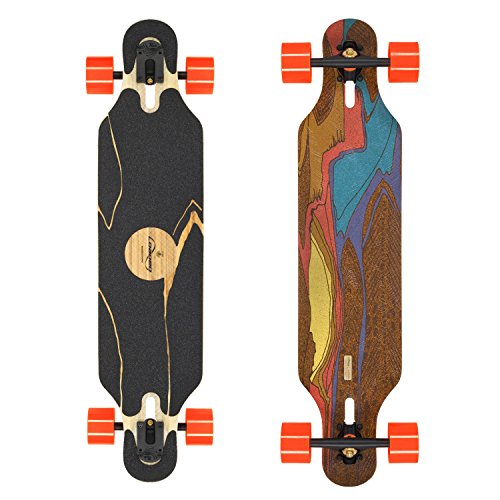
Your deck shape is the most important decision you'll make. Drop-through mounts sit lower to the ground (most stable, easiest to push, and best for beginners commuting or cruising. Pintail top-mounts feel more responsive and carvy but are less forgiving at first. Dancer decks are long and flexy, purpose-built for footwork cross-steps. Most people should start drop-through. All the boards here ship as completes: deck, trucks, wheels, and bearings included. Don't build custom on day one.
Complete Longboards — what's the difference?
A few common shapes, each making a different trade.
Drop-Through
Deck mounted through the trucks. Lowest center of gravity, stable at speed. Best for commuters.
Stability
Highest
Push effort
Lowest
Carve feel
Mellow
Best for Beginners, commuters, downhill cruising
Tradeoff Less responsive turning than a top-mount pintail
★★★★★Our rating· Only 2 left in stock - order soon.
The Switchblade is the board we recommend first to anyone who asks. Drop-through mount puts you low to the ground, making it easier to push, easier to balance, and more stable at speed. Landyachtz is one of the most respected brands in longboarding, and this setup ships with quality trucks and wheels that don't need immediate replacing. Ride it for six months before thinking about upgrading.
What we like
Drop-through mount gives the lowest center of gravity, easiest for beginners
Landyachtz trucks and wheels are quality out of the box
40-inch length is stable without being unwieldy to carry
What to know
Larger board is harder to carry on transit or store in small spaces
Drop-through has mellower carving feel than top-mount pintails
Retrospec makes the most reliable budget completes. The Zed runs around $80–100 and ships with aluminum trucks and soft wheels that actually roll. It's a real longboard, not a toy, good enough to ride for a year before you feel limited. Smart choice if you're not sure the hobby will stick.
What we like
Under $100 and a genuinely rideable longboard, not a toy
Soft wheels handle sidewalk cracks and debris without jarring you
Good starter board if you're not yet sure the hobby sticks
What to know
Bearings need greasing out of the box for best performance
Trucks feel stiffer and less responsive than premium alternatives
Loaded Boards makes premium longboards used by serious riders worldwide. The Icarus with Flex 1 is a top-mount freeride and cruising deck that ships with Caliber trucks and Orangatang wheels, quality components riders choose anyway. Step up to this once you're riding 3-5 times a week and want more responsive turns.
What we like
Caliber trucks are the benchmark for carving and cruising performance
Orangatang wheels pre-installed, the premium choice riders buy anyway
Flex profile tuned to rider weight for natural, lively board feel
What to know
Over $280, a meaningful spend if you haven't confirmed the hobby sticks
Top-mount feels less stable than drop-through for new riders
If you've watched longboard dancing videos and that's the reason you're here, the Tarab is the board. Long, flexible, and sized for footwork cross-steps and pivots. Not for day-one cruising. This is a dedicated dancer that rewards months of practice. If dancing is your goal, buying it first beats convincing yourself to upgrade later.
What we like
Dedicated dancing deck from the brand that defined the discipline
Flex profile tuned for footwork cross-steps, pivots, and manuals
Works for casual cruising too once you have the fundamentals
What to know
Not a stability-first beginner board. Learn to cruise separately first
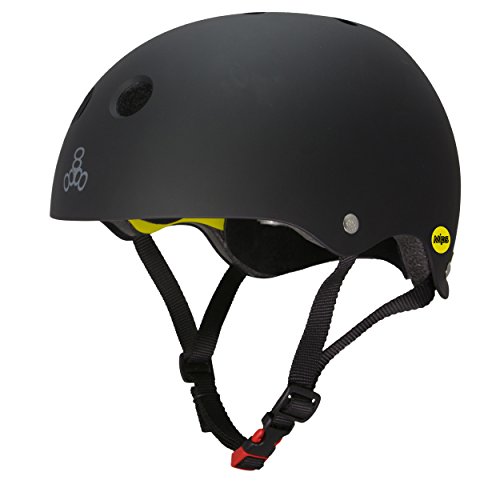
Longboarding without a helmet is genuinely dangerous. Falls happen fast and without warning. One moment of inattention on a gentle slope is all it takes. The key decision: get a dual-certified helmet (CPSC + ASTM), which is rated for both cycling-style impacts and repeated skate-style knocks. MIPS adds rotational protection that standard helmets don't have. Spend at least $50. Anything cheaper is not worth the risk.
Best starter
Triple Eight
Dual Certified MIPS Helmet
$$
★★★★★Our rating
The Triple Eight Dual Certified is the standard recommendation in longboarding and skating. Dual certified means it meets both ASTM and CPSC, covering skate and cycling impacts. The MIPS liner adds rotational impact protection that standard skate helmets lack. This is what instructors recommend and what most experienced riders end up on.
What we like
MIPS liner reduces rotational brain injury risk on oblique impacts
Dual certified for skate and cycling, covering all your board riding
Trusted by instructors and experienced riders worldwide
What to know
Costs more than non-MIPS skate helmets. It's worth it
Slightly heavier than entry-level helmets due to the MIPS liner
Pro-Tec invented the modern skate helmet in the 1970s and still makes a reliable one. The Classic is the cheapest helmet we're comfortable recommending: CPSC certified, real foam liner, and it doesn't look like a road cycling helmet. Spend at least this much; don't go cheaper.
What we like
Classic skate profile, doesn't look like a bike helmet
CPSC certified with real foam liner, not a toy
Under $50 from a brand with 50+ years in skate protection
What to know
Not MIPS, less rotational protection than the Triple Eight
S1's EPS liner is multi-impact certified, absorbing smaller hits without needing replacement after every fall, unlike standard single-impact liners. Riders who practice regularly, do any freeriding, or ride hills owe it to themselves to spend the extra money. Lighter than comparable dual-certified helmets.
What we like
Multi-impact EPS liner survives smaller falls without needing replacement
Lighter than comparable certified helmets, comfortable for long sessions
Preferred by freeride longboarders for protection-to-weight balance
What to know
Runs small. Size up if you're between measurements.
Premium price compared to entry-level certified options
Wrist injuries are the most common longboarding injury, full stop. When you fall, your hands go out instinctively (it's involuntary). Wrist guards with a palm impact bar spread that force across your palm instead of concentrating it at the wrist joint. Add knee and elbow pads for your first month, especially if you're practicing foot-braking on any incline. This is cheap insurance that buys you a lot of peace of mind.
Best starter
Triple Eight
Saver Series 3-Pack
$$
★★★★★Our rating
Wrist injuries are the #1 fall injury for new longboarders. You'll put your hands out instinctively. This 3-pack covers wrists, knees, and elbows (the three spots you actually land on). Triple Eight's hard-shell caps on knees and elbows stay in place during a fall, and the wrist guards have a palm impact bar that spreads the load. Buy this with your board.
What we like
Palm impact bar on wrists reduces fracture risk on instinctive falls
Hard-shell knee and elbow caps stay in position through the impact
3-pack is cheaper than buying three separate sets of pads
What to know
Hard shells feel bulky until your first fall. Then you're grateful
Sizing runs small. Measure and size up if between sizes
187 Killer makes the preferred knee pads among freeride and downhill longboarders: stiff, they stay put, and the multi-layer foam absorbs serious impact. If you're learning slides or tackling any real downhill, these are the pads serious riders actually choose.
What we like
Hard cap and multi-layer foam absorb genuine impact from real falls
Straps stay put through extended freeride and downhill sessions
Preferred by serious freeride riders for durability and protection
What to know
Knee pads only. Purchase wrist guards separately
Thicker than beginner pads, overkill for casual neighborhood cruising
The wheels on most completes are fine for the first month. When you're ready to upgrade, two numbers matter: diameter in millimeters and durometer in A (hardness). Bigger wheels (70mm+) roll over cracks easier and hold speed on longer pushes. Softer wheels (78–83A) absorb road vibration and grip pavement for cruising. Harder wheels (85A+) break loose intentionally. That's for freeriding and slides, not beginner cruising. Most longboarders want the soft, large setup.
Best starter
Orangatang
Stimulus 70mm 80A Longboard Wheels
$$
★★★★★Our rating
Orangatang makes some of the most respected longboard wheels on the market. The Stimulus at 70mm and 80A is their all-around cruising and light-carving wheel, soft enough to roll smoothly over sidewalk cracks, large enough to hold momentum on imperfect asphalt. A genuine step up from stock complete wheels.
What we like
80A is soft enough to absorb road vibration on real pavement
70mm rolls over debris and cracks without jarring you to a stop
Orangatang urethane formula has an excellent road-feel reputation
What to know
Grip-focused wheels, not designed for learning slide techniques
You won't feel the difference from stock wheels for the first 4-6 weeks
The Kegel is Orangatang's commuter wheel: 80mm for maintaining speed over longer distances through intersections and crosswalks. If you're using your longboard to cover a mile or more at a time, the larger diameter keeps your pace up without extra pushes. Built on the same urethane formula as the Stimulus.
What we like
80mm diameter requires fewer pushes per block, great for commuting
Center-set core can be flipped to extend wheel life evenly
Same OTANG urethane formula as the Stimulus in a larger format
What to know
Causes wheelbite on some deck/truck combos. Verify clearance first
Any flat-soled shoe works for longboarding. The feedback you feel through a flat sole tells you where the board is under your feet, while curved running-shoe soles insulate you from that and don't grip the grip tape the same way. Skate shoes from Vans, Nike SB, and Emerica are purpose-built for this. You don't need to buy them on day one if you already own flat sneakers, but it's the right upgrade for your second month.
Best starter
Vans
Old Skool Skate Shoe
$$
★★★★★Our rating
The Vans Old Skool is the default skate shoe because it works. Flat waffle sole, grippy on grip tape, and durable. You feel the board through the sole, which is exactly what you want for learning balance and position. The side support and padded collar give it a slight edge over Vans slip-ons for longboarding.
What we like
Flat waffle sole gives direct board feel for learning balance
Vulcanized construction grips deck grip tape reliably
Padded collar adds ankle support better than canvas slip-ons
What to know
Sole wears faster under the push foot if you foot-brake frequently
Nike's flat-soled entry from the SB skate line. The canvas version is affordable, the flat sole works well for longboarding, and Nike's sizing is consistent across the board. Not as purpose-built as the Vans but a legitimate skate shoe at a competitive price.
What we like
Consistent Nike sizing makes online ordering straightforward
Flat sole and reinforced toe cap, a genuine skate shoe, not a copy
Often discounted. Check Nike SB directly for current pricing
What to know
Slightly cushier sole than Vans, less direct board feel
Less skate-specific construction than Vans' vulcanized sole
Emerica makes technical skate shoes favored by serious skateboarders and carver longboarders. The Reynolds G6 has a vulcanized sole with extra insole cushioning, better for longer sessions where you're doing a lot of push-and-ride. The durability upgrade over canvas shoes is noticeable after 3-6 months of regular riding.
What we like
Vulcanized sole with added insole cushion for extended sessions
More durable under regular foot-braking than canvas alternatives
Board feel matched to technical skating standards
What to know
More expensive than Vans for modest benefits in casual cruising
Most people are riding confidently within a few sessions. Here's what actually happens, session by session, between stepping on a board for the first time and feeling like you own the road.
Longboarding has a gentler learning curve than almost any other board sport. The first session is usually a pleasant surprise. You expect to fall constantly and instead spend most of it rolling around a parking lot feeling pretty good about yourself. That’s the drop-through design doing its job: low center of gravity, stable platform, forgiving on mistakes.
The hard part isn’t balance. It’s stopping. Learning to control your speed on a slight downhill is the real first skill, and it’s what the first two weeks are mostly about.
Session 1: Find your footing
Start on the flattest, smoothest surface you can find. Empty parking lots are ideal. You’re looking for two things: pavement quality (rough, cracked sidewalks make everything harder) and zero cars.
Before you even step on the board, figure out your stance:
Regular: left foot forward, right foot pushes
Goofy: right foot forward, left foot pushes
Not sure which is yours? Have someone give you a gentle push from behind with no warning. The foot you step forward with instinctively is your front foot.
Your first few minutes on the board: put your front foot at a slight angle across the board (roughly 45 degrees), stand on it, and just balance. Get comfortable with the flex under your feet and the trucks shifting as you lean side to side. The board responds to weight; understanding that takes a few minutes of just standing there.
Pushing: put your front foot across the deck, drop your back foot to the ground, push backward, bring the back foot up onto the board. Repeat. It feels awkward for exactly one session and then becomes automatic.
Foot-braking is the most important skill you’ll learn in your first two weeks. It’s also the one beginners skip, because it feels slow and obvious. Then they’re on a slight downhill with no way to stop and they step off moving too fast and eat it.
Foot-brake technique: while rolling, slide your back foot off the board and drag the sole (heel-heavy) on the ground. Apply pressure gradually, not suddenly. The goal is to feel the friction and learn how much pressure equals how much deceleration.
Practice this on flat ground first. Roll, brake, stop. Roll, brake, stop. You want this movement to be automatic before you’re on any incline at all.
Common mistakes:
Too much pressure too fast: you’ll stumble forward. Ease into it.
Dragging the toe: heel-first is more stable and gives you more control.
Staying on the board too long: if you’re losing control, step off sooner rather than later. Controlled bail beats involuntary bail.
Foot braking wears out the sole of your shoe under the push foot. If you’re riding regularly, the sole under your right heel (for regular stance) will wear faster than anywhere else. That’s just the price of stopping.
Sessions 3–5: Carving and finding flow
By your third or fourth session, pushing and rolling feel natural. This is when you start carving, weighting your heels and toes to arc the board through gentle turns.
Longboard carving is different from how you steer a bike. You lean into turns with your whole body, not just your feet. Lean too hard and you’ll slide out. Don’t lean enough and the board stays straight. The feedback loop between how much you lean and how sharp the arc is takes a few sessions to internalize, but when it clicks, it clicks fast.
What you’re building toward: a rhythm. Push, carve left, carve right, push. The board shouldn’t feel like something you’re managing. It should feel like an extension of where you want to go. Most people get their first real taste of this in sessions 4–6. You’ll know it when it happens.
Hills: wait until you’ve fully sorted your foot-braking before riding anything with a real slope. “Fully sorted” means you can brake smoothly and consistently on flat ground without thinking about it. Even a gradual 5-degree incline puts more force on a beginner than they expect.
When you do start on hills, do it from the bottom: ride up a gentle slope and then coast back down, staying well within your ability to brake. Build the length of your run gradually.
Week 2: Building mileage and range
By your second week, you’re probably riding somewhere with a purpose: around the block, to a coffee shop, across campus. This is when longboarding becomes genuinely useful rather than just a skill to practice.
A few things that will start mattering:
Pavement scouting: you’ll develop an instinct for which surfaces are worth riding. Fresh asphalt is a joy. Cracked sidewalks are annoying but manageable with 78–80A soft wheels. Wet pavement cuts your grip significantly. Foot-braking on wet asphalt requires much longer distances than dry.
Carrying the board: a 40-inch longboard is harder to carry than it looks. Under your arm is fine for short distances. Over your shoulder (truck hanger on the shoulder) works for longer ones. If you’re commuting on transit, you’ll figure out your own system quickly.
Other people: bikes, pedestrians, and cars all behave less predictably than you’d like. The default rule is to treat yourself as the less maneuverable object and give way. Make your path obvious to others well before you’re in their space.
What comes next
Foot-braking is the beginner stop. Eventually you’ll want to learn the Coleman slide, a hand-down, board-sideways stop that lets you slow down from higher speeds by intentionally breaking traction. It requires slide gloves, a helmet, knee pads, and a willingness to practice falling on purpose. Most people pick this up in months 2–3 if they’re riding regularly.
If dancing is your goal (cross-steps, pivots, pirouettes), start watching tutorials and begin with flat-ground footwork drills. The dancing community is welcoming and patient, and the skills are completely different from freeride or commuting. A dancer deck (longer, more flexy) helps, but you can begin the footwork on any longboard.
The milestone that tells you you’re past the beginner stage: you stop thinking about balance and start thinking about where you’re going. It happens faster than you’d expect.
Save your money
What you don't need yet
Beginners get pressured to buy a lot of stuff that doesn't help them play
better. Here's what we'd skip on day one.
A custom truck/deck/wheel build — Quality completes ship with dialed components. Custom builds cost more and introduce mismatched parts. Upgrade piece by piece after six months.
Slide gloves — You won't be doing hand-down slides on day one. Wait until you're actively learning freeriding. Then they're essential.
An electric conversion kit — E-board conversions add weight, complexity, and $200+ to your setup. Learn to push and brake first. Electric longboards are a different hobby.
A second board — One board well-ridden beats two boards poorly understood. Ride your first board for at least a year before buying a second.
Downhill-specific gear — Slide gloves, speed suits, and full-face helmets are for gravity racing above 30mph. Not your first six months.
First week
Your first seven days
A short, real plan to get from gear-on-doorstep to actually playing.
Order your complete longboard: the Landyachtz Switchblade or Retrospec Zed depending on your budget. · Buy
Find a flat, smooth, empty surface for your first session. A quiet parking lot or empty path beats any hill. Pavement quality matters enormously. Rough, cracked asphalt makes everything harder. · Action
Learn to foot-brake before you ride anywhere with a slope. Stand on the board, drag your back foot lightly on the ground, and feel where the weight needs to go. This one skill prevents most beginner accidents. · Action
Practice pushing and coasting before you try carving. Get comfortable with the rolling sensation first. Your balance will adapt faster than you expect. · Action
FAQ
Common questions
How long does it take to learn to ride a longboard?
Most people can push, coast, and foot-brake within a single 1-2 hour session on flat ground. Confident carving takes a few weeks of regular riding. Comfortable downhill riding takes a few months. The learning curve is gentle compared to skateboarding.
Drop-through or pintail for a beginner?
Drop-through. The lower center of gravity makes pushing easier, balance more forgiving, and speed less intimidating. Pintails are livelier and more fun to carve once you have the basics, but they're less forgiving on day one. Start drop-through and switch later if you want the different feel.
Is longboarding dangerous?
Moderately: riskier than walking, significantly less dangerous than cycling without a helmet. The big risks are head injuries (prevented by a certified helmet), wrist fractures (prevented by wrist guards), and getting hit by a car (prevented by not riding in traffic). Wear your gear and stay out of vehicle traffic and the risk is very manageable.
What size board should I get?
For a drop-through beginner board, 38-42 inches is ideal for most adults. Longer boards are more stable; shorter boards are easier to carry. Don't go shorter than 36 inches on your first board. The extra stability is worth it.
Can I use a longboard to commute?
Yes, and it's one of the best uses of a longboard. A drop-through with 78-80A soft wheels handles most sidewalks and bike paths easily. You'll want to practice foot-braking first, stay off roads with heavy traffic, and accept that hills add complexity. Many people commute 1-3 miles each way on a longboard comfortably.
What's the difference between longboarding and skateboarding?
Different boards, different goals, different culture. Longboards are longer (typically 36-48 inches), have softer wheels, and are built for cruising, carving, commuting, and dancing. Skateboards are shorter (typically 28-32 inches), have harder wheels, and are built for tricks and skate park riding. The skills and gear barely overlap. They're essentially separate hobbies.
r/longboarding — Active community with 200k+ members. Best for beginner questions, setup advice, and finding local riders. Use the wiki and search before posting. Most beginner questions are well answered.
r/LongboardingForBeginners — Smaller, friendlier subreddit specifically for people starting out. Less intimidating than the main sub and genuinely welcoming to basic questions.
Muir Skate (YouTube) — One of the most comprehensive longboard tutorial channels. Gear reviews, technique walkthroughs, and buyer guides. Well-produced and unbiased.
Landyachtz YouTube Channel — Landyachtz produces good instructional content for cruising and freeriding. Their 'how to longboard' series is a solid starting point.
Loaded Boards YouTube Channel — Loaded's channel covers dancing, freeriding, and freecarve. Best resource for anyone interested in longboard dancing specifically. Their tutorial series is excellent.
As an Amazon Associate, JustBeginning earns from qualifying purchases.
We may also earn commission from other affiliate programs linked on this
page. Editorial recommendations are independent; we don't choose
products based on commission rates.
Product prices and availability are accurate as of the date and time
indicated and are subject to change. Any price and availability
information shown on Amazon at the time of purchase will apply.
Our top pickLandyachtz Switchblade 40 Complete Longboard

 Best starter