Motorcycling rewards the prepared. Before you buy a bike — even before you look at bikes — take an MSF Basic Rider Course and get your gear. The course teaches you to ride; the gear decides whether you walk away from your first mistake. Here's exactly what to buy and what to skip.
By Colin B. · Published May 24, 2026 · Last reviewed June 10, 2026
Gear alone runs $600–1,000 for helmet, jacket, gloves, and boots. Your bike is additional — budget $3,000–5,000 for a solid used beginner machine.
We earn commission on qualifying Amazon purchases — see our
affiliate disclosure.
Price tiers and budget totals shown above are editorial estimates;
actual Amazon prices vary.
At a glance
Our top pick in each category
The fastest path through this guide — each best-starter pick by category.
Scroll for the budget and upgrade alternatives.
Take the MSF Basic RiderCourse before you buy a bike. It's around $300, takes a weekend, and satisfies the license requirement in most states. More importantly, it gives you a controlled environment to drop a bike that isn't yours. Almost every instructor will tell you: riders who take the course have significantly fewer incidents in their first year.
Buy your gear before you buy your bike. You'll need it for the MSF course anyway, and having the gear in hand means you won't rationalize skipping it once you own a bike. Budget $600–1,000 for helmet, jacket, gloves, and boots — and don't treat this as optional.
Start on a small bike: 300–500cc for most people. The instinct is to buy 'enough bike to grow into.' This is a mistake. A 600cc supersport punishes beginner errors in ways a 300cc naked won't. Your first bike is a training tool, not a statement. Sell it in a year when you actually know what you want.
Gear goes on every ride. ATGATT — All The Gear, All The Time — is not a preference. It's a philosophy. The crash you don't expect is the one that matters most, and almost every rider who has gone down without gear will tell you they won't make that choice again.
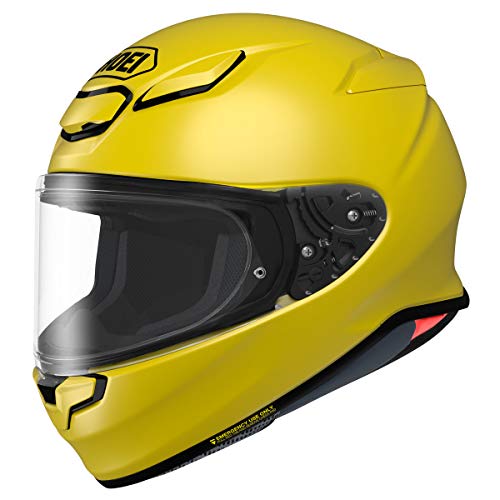
Your helmet is your single most important piece of gear — full stop. A $50 helmet is a costume prop, not motorcycle safety equipment. Budget at least $150 and buy a DOT/ECE-certified full-face helmet as a beginner. Full-face protects your chin and jaw, where nearly half of all impacts occur. Fit is everything: the helmet should feel snug on your cheeks with zero wobble. If it rocks when you press on it with both hands, it's too large — and too large means it leaves your head in a crash.
Helmets — what's the difference?
A few common shapes, each making a different trade.
Full-Face
Maximum protection front, back, and chin — the only type we recommend for new riders.
Coverage
Full head + chin
Noise
Lowest
Airflow
Vents only
Best for All beginners, highway riding, any speed above 45 mph
Tradeoff Harder to communicate or drink water at stops
Chin bar flips up at stops — convenient, but heavier and noisier than full-face.
Coverage
Full face when closed
Noise
Moderate (hinge gap)
Airflow
Open when flipped
Best for Commuters who stop frequently, riders with beards or glasses
Tradeoff Heavier and noisier; chin bar protection less than a dedicated full-face
Open-Face (3/4)
Airflow and peripheral vision at the expense of chin and jaw protection.
Coverage
Head only — no chin
Noise
High
Airflow
Maximum
Best for Low-speed urban riding only; classic or cafe racer aesthetic
Tradeoff No chin or jaw protection — chin accounts for nearly half of all helmet impacts
Best starter
HJC
i10 Full Face Motorcycle Helmet
$$
★★★★★Our rating
HJC is the most trusted helmet brand for value-minded riders. The i10 is DOT and ECE certified, comfortable, and well-ventilated. The polycarbonate shell earns its keep without feeling cheap. When MSF instructors get the 'what helmet should I buy?' question, this is the answer most give. More head shapes and sizes available than almost any competitor at this price.
What we like
DOT and ECE dual-certified — passes the strictest international standards
Available in more fits and sizes than most competitors at this price
Trusted by MSF instructors as the go-to starter recommendation
What to know
Oval fit shell — round-headed riders may find Shoei fits better
Ventilation is adequate, not exceptional, in very hot weather
Bell has been making motorcycle helmets since 1954, and the Qualifier DLX adds MIPS rotational impact protection that most helmets skip at this price. MIPS is a liner that reduces rotational forces in an angled impact. DOT certified, good face shield optical clarity, and a heritage name that commands respect. The right pick if the HJC doesn't fit your head shape.
What we like
MIPS rotational protection at a price most competitors skip it at
Bell pedigree — 70+ years of helmet manufacturing history
Optically clear face shield with good anti-fog performance
The Shoei RF-1400 is where serious riders land when they stop compromising. Japanese engineering, exceptional noise attenuation, a plush interior you'll wear on four-hour stretches. The fit difference against a budget helmet is immediately perceptible — it's not placebo. Buy this after your first year when you know motorcycling is your long-term thing.
What we like
Japanese manufacturing with noise reduction noticeably better than budget helmets
Interior lining you'll actually want to wear for 4+ hour stretches
Holds resale value well — a used Shoei still commands respect
What to know
Premium price ($450+) — overkill until you're committed to the hobby
Round-to-intermediate oval fit only — oval-headed riders may need Arai
You can't ride without a jacket. Not because of the law — most states don't require one — but because road rash is expensive and unpleasant. Look for CE Level 1 or Level 2 armor in the shoulders and elbows; that rating is on the tag, not in the marketing copy. Leather offers better abrasion resistance; textile breathes and handles rain. For a first jacket, textile wins: versatile, machine-washable, and better for all-season riding.
Best starter
Alpinestars
Bogota Pro Drystar Jacket
$$$
★★★★★Our rating
CE Level 1 shoulder and elbow armor pre-installed; back armor slot ready for an upgrade when you are. The Drystar waterproof membrane handles rain without a separate cover. Alpinestars builds gear that pro road racers trust — the Bogota Pro brings that pedigree to a beginner-accessible price. The right first jacket for year-round riding.
What we like
CE Level 1 shoulder and elbow armor pre-installed at purchase
Textile construction breathes in summer and takes a thermal liner in fall
Alpinestars quality — the brand that dresses MotoGP riders
What to know
European sizing — measure carefully before ordering
Back protector sold separately (the slot is there; budget another $30)
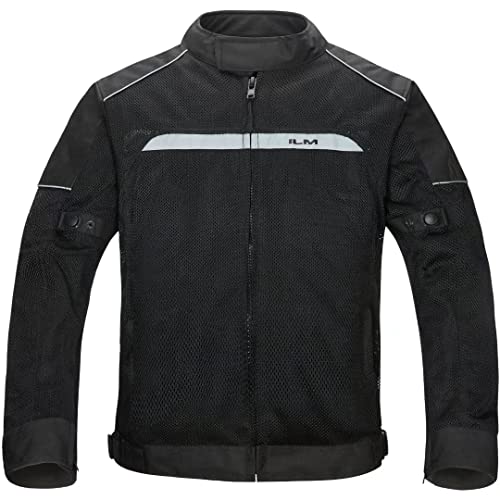
Under $100, CE armor in the shoulders and elbows, and better than a T-shirt in every measurable way. ILM's entry-level textile jacket isn't what you'll wear in five years, but it provides real protection at a price that works if you're not certain motorcycling will stick. Decent construction, multiple pockets, and a fit that works for most builds.
What we like
Under $100 with real CE-rated shoulder and elbow armor
Better choice than riding in a regular jacket or T-shirt
What to know
Stitching and zippers are noticeably lower quality than Alpinestars
You'll outgrow this jacket quickly once you're riding regularly
★★★★☆Our rating· Only 4 left in stock - order soon.
CE Level 2 elbow and shoulder armor, a fit that moves with you on a sport or naked bike, and construction that holds up to years of regular use. This is the jacket most serious street riders land on once they know their riding style. Buy after your first year when you have the miles to know whether you prefer touring, sport, or commuter riding.
What we like
CE Level 2 armor — one rating above the budget jacket standard
Sport cut moves with you rather than bunching at the waist
What to know
Sport cut works best on naked and sport bikes, not cruisers
Upper end of the budget — save this for after year one
Hands go down first in almost every crash — it's instinct to put them out. Without gloves, you lose skin across your palms, and palm skin doesn't regenerate cleanly. A CE-certified motorcycle glove has a knuckle guard and palm slider that survive the initial impact and protect the bones underneath. Short cuffs work for warm weather and everyday riding; gauntlet cuffs seal to your jacket sleeve in rain. Don't skip gloves because 'I'm just going to the store.' That's when it happens.
Best starter
Alpinestars
SP-8 V3 Air Leather Gloves
$124.95 as of Jun 22, 2026
★★★★★Our rating· Only 3 left in stock - order soon.
Short-cuff leather gloves with CE Level 1 certification, reinforced knuckle protection, and a palm slider that actually does its job when you need it. The SP-8 is what most intermediate riders use because they started with it and never found a reason to switch. Under $90, and one of the best-value pieces of safety equipment in motorcycling.
What we like
CE Level 1 certified with genuine palm slider protection
Leather palm provides real abrasion resistance in a fall
Intermediate riders keep these — you won't outgrow them
What to know
Short cuff offers no wrist or forearm coverage
Not waterproof — carry a glove cover for commuting in rain
Under $50 and a legitimate piece of safety equipment — not a fashion accessory. The Cortech DX4 has reinforced palm protection and a hard knuckle guard. Not as refined as the Alpinestars, but provides real protection at a price that works if you're still deciding whether motorcycling is your long-term thing.
What we like
Under $50 with real knuckle guard and palm protection
Breathable mesh construction — comfortable in warm weather
What to know
Stitching quality noticeable step down from Alpinestars
Knuckle protection is hard shell only — no CE certification
CE Level 2 certified gloves with waterproofing that actually works in sustained rain, a gauntlet cuff that seals against your jacket sleeve, and insulation for shoulder-season riding. When you start commuting year-round, you'll understand exactly why these exist. One pair that handles spring through fall without thinking about it.
What we like
CE Level 2 certified — highest street-glove protection rating
Drystar waterproofing works through a full rain commute
What to know
Gauntlet cuff can feel bulky under some jacket sleeves
Motorcycles weigh 300–500 pounds, and your feet are the ballast that keeps you upright at every stop. But ankle injuries are the second-most-common motorcycle injury after road rash — and a CE-certified riding boot has a rigid ankle cup that an athletic shoe simply doesn't have. The good news: modern riding boots look like regular boots or sneakers. You don't have to sacrifice style to protect your ankles.
Best starter
TCX
Street 3 Waterproof 21' Men's Street Motorcycle Shoes - Green/Brown / 46
$$$
★★★★★Our rating
The TCX Street Ace looks like a normal lace-up sneaker and rides like a proper motorcycle boot. CE certified, ankle protection you can't see, oil-resistant sole, and a profile that doesn't announce 'I own a motorcycle' when you walk into a coffee shop. The single best argument for wearing proper footwear every day is that these look normal enough that you actually will.
What we like
CE certified ankle protection hidden in a sneaker silhouette
Oil-resistant sole grips pavement and garage floors equally well
Low-profile enough to wear off the bike without looking like a rider
What to know
Breathability limited in the waterproof version — feet run warm
Lace-up closure takes longer to put on than zip-sided alternatives
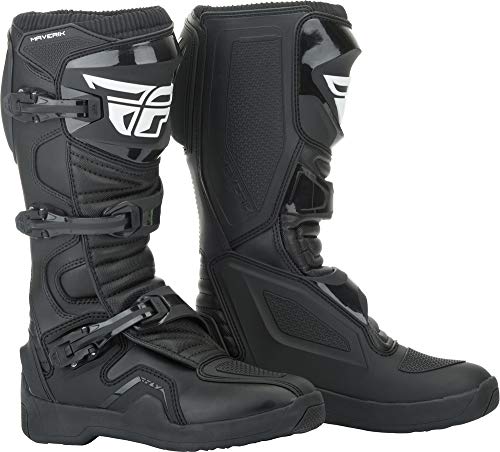
A genuine motorcycle boot under $100 with ankle protection and an oil-resistant sole. Not as refined as TCX, but built for the job. Fly Racing makes gear that gets used, not just worn, and the Maverik reflects that — functional ankle support, durable construction, and a price that doesn't require a commitment to be responsible.
What we like
Under $100 with real ankle protection and oil-resistant sole
Durable construction that handles regular use without babying
What to know
More adventure/dual-sport look — not the right choice for street commuting
Less refined comfort over long riding days than higher-tier boots
★★★★☆Our rating· Only 1 left in stock - order soon.
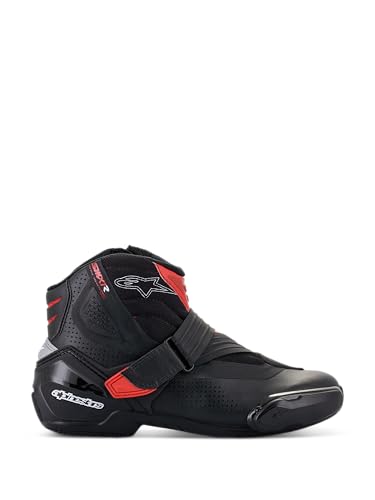
CE Level 2 ankle protection, a hard shin plate, and a toe box that deflects impact without transmitting it to your foot. The SMX-1 R is what happens when MotoGP engineers make a street boot — the protection is comprehensive, the fit is precise, and the sole grips through the full range of temperature and surface. Buy these when you're committing to riding seriously.
What we like
CE Level 2 ankle and shin protection — the highest street-boot rating
MotoGP-derived engineering at a street riding price point
What to know
Clearly a sport boot — no disguising these as street shoes
Some stiffness in the first 20 miles before the sole breaks in
New riders are statistically invisible to other drivers. A hi-vis vest or reflective overlay costs $20-30 and makes you measurably more conspicuous at dusk and dawn, when most accidents happen. Add a disc lock for parking security — bikes disappear from parking lots while you're in the grocery store — and a Bluetooth intercom so GPS directions come through your helmet instead of your phone screen.
Best starter
Safety-First
Chaleco Reflective Motorcycle Safety Vest
$39.86 as of Jun 22, 2026
★★★★★Our rating· Only 4 left in stock - order soon.
Put this over your jacket every time you ride at dusk, at night, or in rain. Studies consistently show hi-vis gear reduces collision rates for motorcyclists, particularly in intersection scenarios. It slips over any jacket in ten seconds, packs into a pocket, and costs less than a coffee stop. The argument against wearing one basically doesn't exist.
What we like
Reflective strips visible at over 500 feet in headlights
Packs into a jacket pocket — zero excuse not to carry it
What to know
Not a substitute for a properly armored jacket underneath
The aesthetic is practical, not flattering — that's the point
Motorcycles get stolen. A disc lock doesn't stop a determined professional, but it eliminates the opportunistic theft that accounts for most motorcycle losses. The Kryptonite Keeper locks through a brake rotor in three seconds and the 5mm pin is resistant to basic bolt-cutter attacks. Include the reminder cable — you WILL try to ride away without unlocking it.
What we like
Eliminates opportunistic theft — the most common type of motorcycle theft
Locks through the brake rotor in three seconds — no fumbling
What to know
Not proof against determined professional thieves with angle grinders
Buy the reminder cable — riding away with it engaged wrecks your caliper
Turn-by-turn directions through your helmet instead of a phone screen is genuinely safer. The Cardo Packtalk Slim pairs with your phone, runs GPS audio, and streams music without losing quality at highway speeds. It also enables rider-to-rider communication for group rides. A quality-of-life upgrade that pays for itself in distraction reduction.
What we like
GPS directions through your helmet — no looking at a screen
Works rider-to-rider for group rides up to 1.6km apart
What to know
Speaker fit varies by helmet brand — confirm compatibility first
Learning curve for pairing and controls during the first few rides
Everyone says motorcycling is dangerous. What they mean is it's unforgiving. Here's what to expect in your first month — the real learning curve, the moments it clicks, and what to practice when.
The first month on a motorcycle is unlike learning almost any other skill. The consequences of mistakes are immediate and physical in a way that, say, learning guitar is not. That’s not a reason to avoid it — it’s a reason to learn it properly. And “properly” has a specific meaning here: MSF course first, gear on every ride, and at least 30 deliberate hours before you touch a highway at night.
Here’s what that first month actually looks like.
Week 1: The MSF Basic RiderCourse
The Motorcycle Safety Foundation’s Basic RiderCourse is where you start. Full stop. It’s a weekend — a short classroom session followed by two days of riding exercises in a controlled parking lot, on bikes the MSF provides. You don’t need a license or your own bike. You will drop a bike. So will everyone else. That’s part of the curriculum.
What the course actually teaches is more useful than the website suggests. You’ll learn emergency braking at parking-lot speeds — the single most transferable skill to real riding. You’ll learn low-speed balance and slow-speed control, which is harder than it sounds and determines whether stopping at intersections feels graceful or humiliating. You’ll learn how to look through turns, not at them.
After passing, most states waive the DMV riding test entirely. In many states, the completion card IS the license prerequisite. Check your state’s requirements before the course weekend.
Your job in week one, beyond the MSF course: get your gear sorted. You need a helmet, jacket, gloves, and boots before you ride anything on public roads. If you’re serious about motorcycling, you own this gear before you own a bike.
Week 2: The First Solo Miles
Your first solo rides should be boring. On purpose.
Find an empty parking lot and spend 30 minutes on slow-speed maneuvers: figure-eights, tight U-turns, stopping precisely at a line. This is what distinguishes riders who feel in control from riders who always feel slightly behind the motorcycle. The exercise feels embarrassing. Do it anyway.
When you move to public roads, pick the quietest streets you can find. Residential neighborhoods at off-peak hours. Your goal is to accumulate time on the bike — not miles, not speed. Every traffic stop, every turn, every moment of balancing at low speed is a rep that builds the muscle memory you need.
What trips up new riders in week two:
Throttle consistency. The most common stall is releasing the clutch faster than you’re feeding the throttle. The fix isn’t thinking harder — it’s slowing the clutch hand down, not speeding the throttle hand up.
Looking at obstacles. Target fixation is real: wherever you look is where the bike tends to go. Practice looking to the exit of a turn rather than at the curb you’re trying to avoid.
Braking too late. Cars brake from a standing start; motorcycles from a lean angle. Start thinking about stopping earlier than feels necessary — 40% of beginner incidents are low-speed stops gone wrong.
Something shifts around 10-15 hours. The mechanical operations — clutch, throttle, braking, shifting — start to feel automatic rather than deliberate. When that happens, your attention can move from how to ride the bike to what’s happening around you.
This is when you start learning to ride defensively rather than just trying not to fall.
The mental model that works: assume you are invisible. Every car at a cross street has not seen you until it proves otherwise. Every driver on the highway is potentially about to merge into your lane without looking. This isn’t paranoia — it’s an attentional posture. You’re reading the situation three to five seconds ahead rather than reacting to it.
Start learning escape routes. Before every intersection, ask yourself: if that car pulls out, where am I going? If that car behind me doesn’t slow down, can I move right? Riders who survive their first year aren’t necessarily faster or more skillful — they’ve internalized this forward-looking attention and it’s become automatic.
Countersteering is also worth understanding by week three, even if it doesn’t feel like a new skill yet. At speeds above about 15 mph, you turn a motorcycle by pressing the handgrip in the direction of the turn — press left to go left. Your brain initially resists this because it feels backwards. It becomes instinctive faster than you’d expect once you’re aware of it.
Week 4: Your First Real Ride
By week four, with 20-25 hours on the bike, you’re ready for your first genuine ride — not a training loop, but a destination. Pick something 30-45 minutes away on roads you know. Not a highway for this one. Not unfamiliar mountain roads.
Notice what’s different. At 25 hours, the bike starts to feel like an extension of your decision-making rather than a machine you’re negotiating with. The decision to brake or accelerate becomes almost pre-verbal — you perceive a gap in traffic and you’re already in it. That feeling is what makes motorcycling addictive.
Overconfidence. The comfort you feel at 25 hours is real but not complete. You haven’t encountered everything yet — gravel on a corner, a driver running a red light, your first wet road. Ride like you know you haven’t encountered everything yet.
Fatigue. Motorcycling is more cognitively demanding than driving a car. Two hours on a bike can feel like four in a car. Don’t underestimate it.
Group rides. Being invited on a group ride is a milestone. Ride your own ride — meaning, don’t try to keep up with more experienced riders through turns you’re not comfortable with. Nobody in a group worth riding with will leave you behind for being careful.
What the First Month Teaches You
The first 30 days on a motorcycle teach you something that no amount of research can substitute for: what it costs to be underprepared, and what it feels like to get it right.
Almost every rider looks back at their first month and identifies two or three moments where they made a mistake and got away with it. That’s not luck — it’s a signal. The appropriate response is to take it seriously.
Take a second MSF course (the Intermediate RiderCourse) after your first 3,000 miles. Add emergency braking practice to your parking lot routine every few weeks. Ride with someone better than you who’s willing to debrief afterward.
And keep the gear on every ride. Including the short ones.
Save your money
What you don't need yet
Beginners get pressured to buy a lot of stuff that doesn't help them play
better. Here's what we'd skip on day one.
A 600cc or larger bike — You'll ride it at 20% of its capability and scare yourself the other 80%. A 300-500cc bike lets you explore the full envelope safely before adding power.
A track-day suit or racing leathers — One-piece leathers are for closed courses. Street riding is a different skill set. Get established on the street first.
Custom exhaust or modifications — Louder is not safer. You're tuning out your own mechanical signals, annoying your neighbors, and voiding your warranty — with zero performance benefit on a beginner bike.
A new bike — Everyone drops their first bike. Do it to a used 2019 Honda CB300R, not a new one. Buy used, learn, sell at minimal loss, then get what you actually want.
Airbag vest or suit — Excellent technology, genuinely protective, and completely premature for the first year. Learn to ride before optimizing the crash protection.
First week
Your first seven days
A short, real plan to get from gear-on-doorstep to actually playing.
Register for the MSF Basic RiderCourse near you. Most fill up weeks out — do this first. · Action
Yes, seriously. The MSF Basic RiderCourse gives you controlled practice on bikes you don't own, an instructor who can correct your habits before they calcify, and in most states, a waiver from the DMV riding test. Riders who complete it have measurably fewer incidents in their first year. Budget $300 and a weekend.
How much should I spend on my first motorcycle?
Budget $3,000-5,000 for a used 300-500cc beginner bike in good condition. Avoid anything over 500cc for your first year. Good starter picks: Honda CB300R or CB500F, Kawasaki Z400, Royal Enfield Meteor 350, Yamaha MT-03. You'll sell this bike in a year once you know what you actually want — don't overbuy.
New bike or used bike to start?
Used, almost always. Everyone drops their first bike — usually in a parking lot at walking speed — and doing it to a used bike is dramatically less painful than doing it to a new one. Buy a clean used machine in the 2018-2022 range, learn on it for a year, and sell it at minimal loss. Then buy what you actually want.
What gear do I absolutely need before my first ride?
Helmet (DOT/ECE certified, full-face), jacket (with CE armor), gloves (CE certified), and boots (over-the-ankle with ankle protection). ATGATT — All The Gear, All The Time. This isn't negotiable. The rides where you skip gear are statistically the ones where you need it.
Is motorcycling dangerous?
It carries more risk than driving a car — that's honest. But risk is managed, not eliminated. Trained riders in proper gear who ride defensively have dramatically better outcomes than untrained riders who skip gear. Take the MSF course, wear your gear every ride, assume cars don't see you, and the activity is manageable for most adults.
Can I just wear a bicycle helmet or ski helmet?
No. DOT (Department of Transportation) motorcycle helmet certification is a legal requirement in most states and a physical requirement for crash protection. Bicycle and ski helmets are designed for completely different impact velocities and will not protect you in a motorcycle crash. Only wear a DOT or ECE certified motorcycle helmet.
Motorcycle Safety Foundation — The MSF runs the Basic RiderCourse — the single most important thing a beginner can do. Their site has a course finder and free online resources.
NHTSA Motorcycle Safety — Federal safety data, gear standards, and state-by-state law summaries. Useful for understanding what DOT certification actually means.
RevZilla — Best online retailer for motorcycle gear. Excellent size guides, return policy, and the Common Tread blog has honest gear reviews written by real riders.
Cycle Trader — Largest used motorcycle marketplace. Set alerts for your target model and price range; deals move fast.
MCrider (YouTube) — The best beginner YouTube channel for motorcycle riding technique. Focused on street survival skills, not stunts. Start with the 'new rider' playlist.
FortNine (YouTube) — Exceptionally well-produced gear reviews and motorcycle journalism. The helmet safety tier list video alone is worth an hour of your time.
r/motorcycles — Active community. Read the wiki before posting a 'what bike should I buy' question — it's answered comprehensively there.
As an Amazon Associate, JustBeginning earns from qualifying purchases.
We may also earn commission from other affiliate programs linked on this
page. Editorial recommendations are independent; we don't choose
products based on commission rates.
Product prices and availability are accurate as of the date and time
indicated and are subject to change. Any price and availability
information shown on Amazon at the time of purchase will apply.


 Best starter