Clay target shooting (skeet, trap, and sporting clays) is one of the best-kept secrets in shooting sports. Most ranges will hand you a loaner gun your first visit. Here's the gear you'll need when you're ready to own your kit, plus the one safety item to buy before your very first trip.
By Colin B. · Published May 24, 2026 · Last reviewed June 17, 2026
Allen Company Ace Shooting Vest
— The range toolbelt: shell pockets, recoil pad, hull pouch, everything you need once you're going back weekly.
Budget total
$500
Typical total
$900
Your biggest cost is the shotgun; buy used from a reputable dealer to cut it nearly in half. Ear and eye protection are non-negotiables. A flat of target shells runs about $50.
We earn commission on qualifying Amazon purchases — see our
affiliate disclosure.
Price tiers and budget totals shown above are editorial estimates;
actual Amazon prices vary.
At a glance
Our top pick in each category
The fastest path through this guide — each best-starter pick by category.
Scroll for the budget and upgrade alternatives.
Try a loaner gun before buying one. Most sporting clays ranges have guns you can rent for $10-20 plus shells. A loaner session will tell you whether you prefer an over/under or a semi-auto, how 12-gauge recoil feels on your frame, and whether the sport is worth investing in. Ask range staff to watch your mount; they'll spot a fixable issue in sixty seconds.
Used shotguns are often the right first shotgun. A quality over/under in solid mechanical shape runs $350-500 used versus $650-900 new. The actions don't wear out quickly. A well-maintained gun from a reputable dealer is every bit as reliable as a new one. Skip the first-timer premium until you know the sport has you.
Buy hearing protection before you go, not at the range. Range counter ear pro is often foam plugs, adequate but uncomfortable over 100 rounds. Electronic muffs let you hear your instructor and fellow shooters between shots while still compressing gunfire to safe levels. Order them before your first trip: you can't undo hearing damage.
Shotguns must be purchased through a licensed local dealer; Amazon doesn't sell firearms. For your first gun, we recommend a 12-gauge over/under: the CZ Redhead Reserve (around $650-700 new) is the approachable O/U starter, or the Stevens 555 (under $500) for a budget entry. Once you have your gun, three accessories follow immediately: a cleaning kit, a padded case for transport, and the right choke tubes for clay target shooting.
Shotgun Accessories — what's the difference?
A few common shapes, each making a different trade.
Over/Under
Two barrels, two shots. The traditional clay target choice.
Action
Break-open
Capacity
2 shells
Competition
All formats
Best for Beginners, skeet, trap, sporting clays
Tradeoff Slower reload than semi-auto; must break open between shots
Best for High-volume shooting, recoil-sensitive shooters
Tradeoff More parts to clean; some formats restrict semi-autos
Best starter
Hoppe's
No. 9 12-Gauge Shotgun Cleaning Kit
$34.19 as of Jun 22, 2026
★★★★★Our rating· In Stock
Clean your gun after every session, without exception. Carbon and powder residue build up in the barrel and action, and a dirty gun misfires and wears faster. The Hoppe's kit includes No. 9 solvent, lubricating oil, a bore brush, and cotton patches, everything for a thorough cleaning in about 15 minutes at home after each range day.
A padded case protects your shotgun in transit, prevents scratches on the stock and barrel, and keeps the gun closed and secured at the range. The Eliminator has dense foam padding, lockable zippers, and fits over/under shotguns up to 52 inches. Basic, reliable, and around $30.
What we like
Dense foam padding protects stock and barrel in transit
Lockable zippers for safe transport between home and range
Fits over/under and semi-auto shotguns up to 52 inches
What to know
Soft-sided only, not suitable for airline firearm transport
No interior pocket for storing accessories alongside the gun
★★★★☆Our rating· Only 1 left in stock - order soon.
Choke tubes control how your pellet pattern spreads at distance. Your shotgun comes with basic chokes, but Carlson's Cremator tubes are ported specifically for clays, reducing muzzle rise between shots, and a Mid Range/Long Range combination that covers skeet through sporting clays. Most dedicated clay shooters own a set within their first year.
What we like
Ported design reduces muzzle rise for faster target re-acquisition
Mid Range + Long Range pair covers skeet, trap, and sporting clays
Made in USA, blued steel; more durable than budget tubes
What to know
Fits standard Invector/Winchester only; verify thread pattern first
Choke selection matters less until your fundamentals are solid
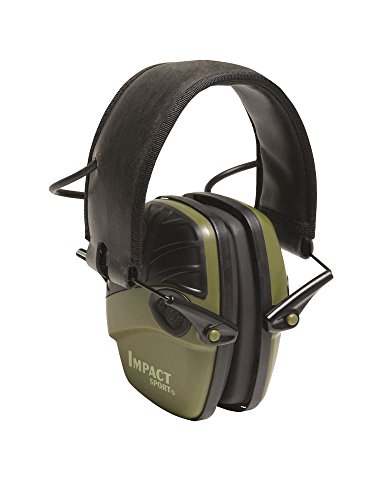
This is the one piece of equipment you absolutely cannot skip. A 12-gauge shotgun produces about 150-160 decibels, well above the 85dB threshold for permanent hearing damage. Electronic muffs are the move: they amplify ambient sound so you can hear your instructor and fellow shooters between shots, then compress gunfire instantly to a safe level. Spend the $50. You only get one set of ears.
Best starter
Howard Leight
Impact Sport Electronic Earmuff
$51.38 as of Jun 22, 2026
★★★★★Our rating· In Stock
The Impact Sport is the hearing-pro pick for nearly every shooting sport beginner, and for good reason. It amplifies ambient sound so you can hear your instructor while instantly compressing gunshots to safe levels. At under $50, it costs less than a flat of shells and protects something you can't replace.
What we like
Electronic amplification: hear conversation and commands between shots
Auto-compresses gunfire to 22dB NRR protection level
Under $50, the no-brainer safety buy for every range trip
What to know
AAA batteries drain in cold weather; keep spares in your vest
If you want basic protection under $20, the Peltor X2A delivers NRR 24 without batteries or electronics. You'll miss ambient range commands, but your ears will be fully protected. Best for solo practice sessions where you control the pace and don't need to hear a range officer.
What we like
NRR 24 protection for under $20, no batteries required
Durable construction that outlasts budget electronic muffs
No electronics to fail; zero maintenance, always reliable
What to know
Blocks all ambient sound; you'll miss range commands
Slimmer profile than the Impact Sport, better ambient audio quality, and a 3.5mm jack so you can run a podcast between stations. The slim cups clear shotgun stocks more cleanly on your gun mount, relevant once you've built a consistent cheek weld and care about perfect form.
What we like
Slimmer cups clear shotgun stock better on gun mount
3.5mm audio jack for music or podcasts between stations
Crisper ambient audio pickup than the Impact Sport
What to know
Less foam padding; long sessions can be less comfortable
Incremental upgrade over Impact Sport for similar price
Eye protection is required at every clay target range, and the lens tint makes a real difference. Orange and amber tints sharpen contrast against overcast skies; you'll track the clay faster. Gray and green-mirror lenses cut glare on bright days. Clear lenses work for indoor or low-light shooting. Most beginners don't know their preference yet, so start with a kit that includes multiple swappable lenses.
Best starter
Radians
Shift Interchange Shooting Glasses
$304.64 as of Jun 22, 2026
★★★★★Our rating
Clay shooters obsess about lens tints because different light conditions favor different contrast. The Shift Interchange ships with five swappable lenses (green mirror for bright sun, copper for medium light, amber for low light, orange for orange targets, and clear for indoor shooting), all for under $40. You won't know your preference yet, so interchangeable beats fixed every time.
What we like
Five interchangeable lenses cover every light condition at the range
Wiley X builds glasses to military ballistic specs, a genuine upgrade when you're shooting 200+ rounds a session. The removable foam gasket blocks debris in dusty trap and sporting clays conditions, and the polycarbonate lenses are rated for shotgun wad impacts at close range. This is where serious recreational shooters land.
What we like
Military ballistic specs, rated for shotgun wad impacts at range
Removable foam gasket blocks wind and debris in exposed conditions
Polycarbonate lenses stay optically clear for years of heavy use
What to know
$90-120 is premium, overkill for occasional range visits
Foam gasket can fog in high humidity without anti-fog treatment
Buy your shotgun shells at the range pro shop or a local sporting goods store; shotgun ammo isn't sold on Amazon. For skeet and trap, ask for 12-gauge 2-3/4" target loads with #7.5 or #8 shot, and plan for at least 50 shells your first session. The products below make your range day run smoother: a shell pouch so you're not digging through pockets between stations, and a portable hand thrower for mid-week practice when you can't make it to the range.
Best starter
Allen Company
Shotgun Shell Pouch
$
★★★★★Our rating
A shell pouch keeps 25 rounds accessible on your hip without filling your vest pockets between stations. Shell loops on the side let you stage a few rounds for quick reloads. Inexpensive and durable, one of those small purchases that immediately makes range sessions feel more organized.
What we like
Holds a full 25-round box, easy access between stations
Shell loops on sides for staging quick-reload shells
Under $20, easy to justify alongside your first box of ammo
What to know
Belt loop fits belts up to 2"; verify before ordering
A hand thrower lets you practice at a field, park, or rural property with a friend throwing while you shoot. Five minutes of this between range sessions keeps muscle memory fresh. Throws singles and stacked pairs, everything you'd see in a real skeet or trap round. Under $15.
What we like
Lightweight and portable, fits in any range bag or truck bed
Throws singles and stacked pairs for realistic practice
Under $15, the cheapest way to add mid-week clay sessions
What to know
Requires a second person to operate while you shoot
Manual throw means less consistent target speed than a machine
A shooting vest solves problems you'll notice immediately: where do you stash 25 shells between shots, where does your gun mount land, what do you do with spent hulls. A proper vest has deep front shell pockets, a padded recoil zone on the shooting shoulder, and a back compartment for hulls. Wear whatever you have on day one; buy a vest when you're going back for session three.
Best starter
Allen Company
Ace Shooting Vest
$$
★★★★★Our rating
A shooting vest is a toolbelt for the range: large shell pockets, a padded recoil zone on the shooting shoulder where the stock lands hundreds of times per session, and a back pocket for spent hulls. Allen Company's Ace has everything a beginner needs, moveable shoulder padding to dial in the fit, and comes in at a fair price.
What we like
Large shell pockets hold a full 25-round box each
Moveable padded shoulder cushions your shooting shoulder
Back hull pouch keeps spent shells off the range floor
What to know
Runs large; size down one from your normal clothing size
Budget materials show wear after a few seasons of regular use
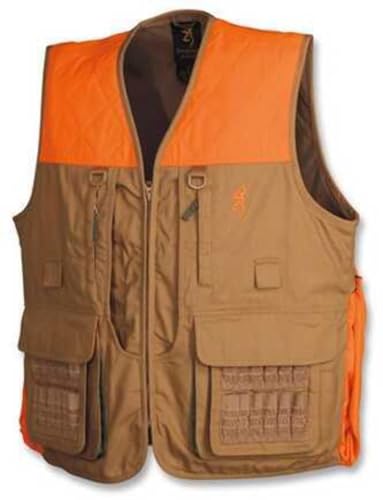
Browning's upland vest steps up in materials and construction, with better shell pocket retention, a more refined recoil pad, and trim proportions that don't look like you grabbed a tent from the sporting goods rack. Worth it once you're shooting twice a week and notice the difference between a cheap vest and a well-made one.
What we like
Better materials and construction than budget shooting vests
Trimmer proportions, looks purposeful rather than bulky
Refined recoil pad and improved shell pocket retention
What to know
Trimmer cut; size up if you layer in cold weather
Premium price better justified once you shoot regularly
Most new shooters break fewer birds than they expected and have more fun than they expected. Here's what actually happens across your first ten rounds, and why the learning curve is steeper and faster than almost any other sport.
Clay target shooting has an unusual property among sports: your first session is simultaneously harder than you think and more fun than you expect. You will miss more birds than you hit. You will still want to come back.
Here’s what actually happens across your first ten rounds of trap, skeet, or sporting clays: the things that matter, the things you’ll obsess over that don’t, and what separates the shooters who improve quickly from those who plateau.
Rounds 1–3: The gun is everything
Before you think about leads, timing, or technique, you have to sort out the gun itself.
Mounting the gun is the whole game. A shotgun fires a spread of pellets; miss the bird by a few inches and the pattern still catches it. But only if the gun is where you think it is. Most new shooters mount the gun inconsistently: different cheek pressure each time, different relationship between eye and rib. The result is that the gun points somewhere different on every shot, and the shooter can’t tell why they’re missing.
The fix is to practice your mount without any targets. At home, with an empty unloaded gun, practice shouldering the gun and cheek-welding the stock. Find the same spot on the stock every single time. When you get to the range, your brain should be focused on the bird, not on the gun.
Footwork matters more than it looks. Stand so your body is roughly oriented where you expect to break the target, not where the bird launches from. Beginners instinctively face the house (where the clay comes from). Experienced shooters face where they plan to pull the trigger. Small difference; huge effect on whether you can swing through naturally.
You’ll call “pull” before you’re ready. That’s fine. Your first few rounds are about building the sequence: stance, mount, focus on where the bird will be, call, track, swing. Getting that sequence consistent matters more than breaking a specific number of birds.
Rounds 4–7: Lead, swing-through, and the “pull the trigger” problem
The most common technical error in clay shooting isn’t a bad mount; it’s stopping the swing at the moment you pull the trigger.
When a clay is moving and you stop the gun to fire, the bird moves away from where your pattern lands. The solution is swing-through: keep moving the gun after it passes the bird’s back edge, and fire while the gun is still moving. It feels wrong. It is correct. Every competent clay shooter fires while their gun is in motion.
Reading lead is the skill you’re actually developing. How far in front of the bird should you pull the trigger? The answer depends on target distance, angle, and speed, and it’s almost impossible to calculate consciously. What you’re actually doing over these first rounds is training your subconscious to calibrate the lead. You’ll miss by shooting behind. You’ll correct. The pattern settles. This is the repetition loop the sport requires.
Skeet has predictable birds. Trap has variable ones. If you’re starting on skeet, the targets follow known paths from fixed positions; you can pre-visualize exactly where you’ll engage each bird. Trap birds launch from the same house but oscillate left, center, and right at random, so you don’t know the line until you see it. Most new shooters find skeet easier to learn technique on; most find trap more addictive quickly because of the variability.
Sporting clays is both. Each station presents a unique combination of target speed, angle, and trajectory. It’s the hardest to learn on and the most satisfying to improve at. Save it for after you’ve got some reps on skeet or trap.
Rounds 8–10: Patterns start to emerge
Around round seven or eight, something shifts. The mount starts to feel reflexive. You stop thinking about where your feet are. Your eye starts to anticipate rather than react.
This is when you’ll notice you have strengths and weaknesses by station. On a skeet field, most new shooters handle the crossing shots on stations 3, 4, and 5 better than the sharp incoming or outgoing angles on stations 1 and 7. On a trap field, the birds launched dead-away (center) are typically easier than the hard angles. Knowing which targets give you trouble is the beginning of deliberate practice.
You’ll also notice the reset cost. Miss a clay and it’s gone; there’s no replaying it. This is unusual among target sports and is why clay shooting builds concentration faster than most practice methodologies. You’re always performing for one shot with no second chance on that exact bird.
Your score will jump between sessions. A 12/25 one week might be followed by a 19/25 the next without anything obviously changing. Your technique is consolidating even when you’re not shooting; sleep and time are doing work you can’t feel.
A few universal beginner mistakes, and how to stop making them faster than average:
Looking at the gun instead of the bird. Focus hard on the leading edge of the clay, not on the gun barrel, not on the bead. If you can see your barrel clearly, you’re not focused far enough forward. The gun should be blurry.
Calling “pull” too fast. Get your eyes on the flight path before the bird launches. Know where you expect to see it. Then call.
Stopping the swing. Keep the gun moving through the shot and a beat after. Stop the swing and you’ll shoot behind every time.
Overthinking the miss. One bad station doesn’t tell you much. Patterns across a full round tell you something.
Nobody who is any good at this sport learned it without hundreds of rounds of misses. The path through the misses is the sport.
What to do in round eleven
A few things change the improvement slope dramatically:
Take one lesson after 5-10 rounds. Not before. With no reps, you won’t have enough context to use the feedback. After ten rounds, you’ll have specific misses and specific questions, and a good instructor can identify the one or two things actively holding you back.
Shoot with a regular group. Two or three people at roughly your level who go back weekly. You’ll improve faster with company, and the social element is most of what keeps people in the sport.
Watch advanced shooters, not just instructors. On a sporting clays course, stand behind an experienced shooter and watch how they read the bird, where they break it, what their follow-through looks like. You’ll absorb more in ten minutes than in hours of reading.
You won’t be a beginner much longer. The sport rewards reps with steep, fast improvement, and ten rounds in, you’ve earned the right to call yourself a clay shooter.
Save your money
What you don't need yet
Beginners get pressured to buy a lot of stuff that doesn't help them play
better. Here's what we'd skip on day one.
A $3,000 competition-grade shotgun — Perazzi and Krieghoff make world-class guns, but not until you've shot 5,000+ clays will you feel the difference. Start with a CZ or Stevens.
Custom stock fitting — A properly fitted stock genuinely improves accuracy, but wait 6 months until your mount is consistent before paying a gunsmith to fit the stock to you.
A backyard clay target machine — Fun eventually, but ranges have machines, instructors, and field variety you can't replicate solo. Travel to the range for the first year.
Reloading equipment — You'd need to shoot 5,000+ shells per year to break even on a reloading press. Buy factory loads until you're a dedicated regular.
A collection of specialty choke tubes — Your shotgun will come with chokes. Use improved cylinder for skeet, modified for trap. You don't need twelve tubes until you're competing seriously.
First week
Your first seven days
A short, real plan to get from gear-on-doorstep to actually playing.
Find a local range and call about their new shooter orientation or beginner clinics. · Action
Call ahead and ask about loaner guns; most ranges have O/Us and semi-autos to try. · Action
Shoot your first session with a loaner gun and ask range staff to watch your mount. · Action
Buy a flat of target shells at the range pro shop; single boxes cost noticeably more per shell. · Action
FAQ
Common questions
Do I need a permit or license to shoot clay targets?
In most U.S. states, no permit is required to shoot at a licensed range. You don't need an FOID card or purchase permit for range-only shooting in most states, though Illinois, Massachusetts, and a few others have specific requirements. When you call to book your first session, ask the range directly. They answer this question every day.
What's the difference between skeet, trap, and sporting clays?
Skeet: two fixed houses at each end of a half-circle field; targets cross in front of you at predictable angles. Trap: one house in front of you, targets fly away at variable angles. Sporting clays: a course of stations simulating hunting scenarios, the most varied and most addictive of the three. Start with trap or skeet to build fundamentals; sporting clays comes once you've got them.
What shotgun gauge should I start with?
12-gauge for almost everyone. Shells are cheapest and most available, every range has 12-gauge loaners, and most instruction assumes a 12-gauge. 20-gauge is a legitimate second choice for recoil-sensitive shooters or smaller frames, but it narrows your loaner and ammo options. Skip 28-gauge and .410 until you have serious fundamentals.
How much ammo should I plan on for a first session?
A round of skeet or trap is 25 birds; plan for 50 shells on your first visit: one full round plus extras for casual practice. Buy at the range pro shop your first time; once you know your preferences, buy in flats of 10 boxes at a local sporting goods store for better per-shell pricing.
Can I rent a shotgun at the range?
Most established sporting clays ranges and trap/skeet clubs keep loaner guns, typically a mix of O/Us and semi-autos. The rental fee is usually $10-20 plus the cost of shells. Call ahead to confirm availability; smaller clubs sometimes have only one or two loaners and they go quickly on weekend mornings.
How hard is it to break a clay on the first try?
A typical beginner breaks 5-10 of 25 birds in their first round of trap, about 20-40%. By the end of their third session, it's closer to 12-18 of 25. The learning curve is steep and fast, which is most of what makes this sport addictive. Don't measure yourself against experienced shooters; measure session-to-session improvement.
National Sporting Clays Association (NSCA) — The governing body for sporting clays in the U.S. Range finder, registered shoots calendar, and official rules. Start here to find your nearest club.
Amateur Trapshooting Association (ATA) — Governs trap shooting in the U.S. Club finder and beginner resources. If your local range emphasizes trap, the ATA is your primary org.
Gil Ash OSP Shooting School (YouTube) — Gil Ash and Vicki Ash are among the most-watched clay target coaches online. Their visual perception concepts are genuinely different from most instruction. Start with the 'Reading the Target' playlist.
Clay Shooting Magazine — UK-based publication with strong technique coverage applicable everywhere. Their beginner guides don't assume gun culture familiarity, useful for new shooters anywhere.
As an Amazon Associate, JustBeginning earns from qualifying purchases.
We may also earn commission from other affiliate programs linked on this
page. Editorial recommendations are independent; we don't choose
products based on commission rates.
Product prices and availability are accurate as of the date and time
indicated and are subject to change. Any price and availability
information shown on Amazon at the time of purchase will apply.
Our top pickHoward Leight Impact Sport Electronic Earmuff


 Best starter