Cast iron has survived a century of modernization for a reason: nothing else sears a steak like this, handles a campfire as gracefully, or improves with age. The internet will tell you it's complicated. It isn't. One pan, some oil, a hot burner, that's where everyone starts, including every cult-level cast iron collector you've ever met.
By Colin B. · Published May 24, 2026 · Last reviewed June 13, 2026
A single Lodge skillet is under $30. Add a chain mail scrubber and silicone handle holder and you're under $55 and fully equipped for years.
We earn commission on qualifying Amazon purchases — see our
affiliate disclosure.
Price tiers and budget totals shown above are editorial estimates;
actual Amazon prices vary.
At a glance
Our top pick in each category
The fastest path through this guide — each best-starter pick by category.
Scroll for the budget and upgrade alternatives.
Don't buy the expensive pan until you've cooked on cheap cast iron first. A $30 Lodge will tell you whether you love the weight, the heat retention, and the maintenance ritual. A $200 Field Company can wait.
The 'never use soap' rule is mostly outdated. A few drops of modern dish soap on a well-seasoned pan is fine, it's soaking, the dishwasher, and vigorous abrasive scrubbing that strip seasoning. Don't let internet lore scare you away from a clean pan.
Cast iron is heavy. The 10-inch Lodge weighs 5 pounds; a Dutch oven full of braised beef can hit 15 pounds. That's the tradeoff for the heat retention. Most people adjust within a few sessions.
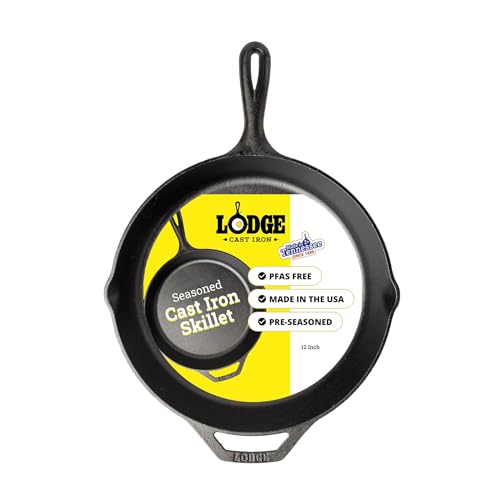
If you own one piece of cast iron, it should be a 10-inch skillet. This is where the Lodge L8SK3, a $30 pan with a cult following, earns its reputation. Searing steaks, baking cornbread, frying eggs once the seasoning builds: the skillet does it all. The big decision new buyers overthink is 10-inch vs. 12-inch. Both are right. Ten-inch if you cook for one or two people; 12-inch if you cook for a family or prioritize steak surface area. You can always add a second size later.
Skillets — what's the difference?
A few common shapes, each making a different trade.
10-inch (No. 8)
Everyday hero. Best for 1-2 people; lighter and stovetop-agile.
Diameter
10.25"
Weight
~5 lbs
Serves
1-2 people
Best for Solo cooks, couples, stovetop versatility, smaller ovens
Tradeoff Not enough surface area to sear two steaks without crowding
Lodge is the benchmark every other cast iron brand measures itself against. The L8SK3 is a $30 pan with a loyal following that spans generations. It arrives factory-seasoned and ready to cook. The surface is rougher than machined alternatives, but that's the seasoning-building process, not a defect. At this price, it's the only pan you need to decide whether cast iron is for you.
What we like
Under $30 for a pan you'll realistically use for decades
Arrives factory-seasoned and ready to cook on day one
Virtually indestructible, fully restorable even from heavy rust
What to know
Rough factory surface sticks eggs and fish until seasoning builds
At 5 lbs, one-handed maneuvering takes a few sessions to feel natural
Same Lodge quality as the 10.25", just one size up. At 12 inches, you get enough surface area to sear two steaks side by side or make a full frittata. The price difference from the 10-inch is under $10. If you regularly cook for three or four people, skip the smaller pan and start here, you'll end up wanting this size anyway.
What we like
Enough surface area to sear two steaks or make a family frittata
Same affordable Lodge pricing, barely more than the 10-inch
Helper handle makes the extra weight manageable
What to know
At 8 lbs, noticeably heavier than the 10-inch, takes adjustment
Larger footprint means it can overhang smaller burners
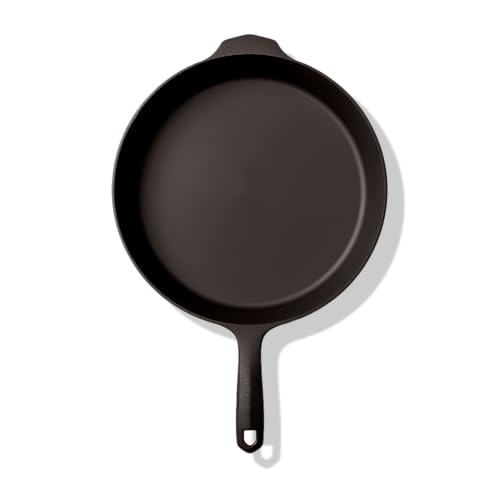
Field Company machines their pans to a smoother finish than Lodge's factory surface, eggs release earlier and heat spreads more evenly. The No. 10 (12-inch equivalent) is noticeably lighter than a comparable Lodge at 4.5 lbs vs. nearly 8 lbs. A real quality-of-life upgrade once you know cast iron is your daily driver. Worth every penny of the $150, after six months on Lodge.
What we like
Machine-polished surface, eggs release without months of seasoning first
4.5 lbs vs. Lodge's 8 lbs, a dramatic weight difference you feel every use
Tapered walls and pour spouts show how much thought went into the design
What to know
At $150, a commitment purchase, not the right first cast iron pan
Lighter weight means less heat mass; preheating matters more
Smithey is American-made boutique cast iron, hand-polished to a near-nonstick surface, fitted with a helper handle, and finished to a level that makes it as much kitchen decor as cookware. The No. 10 runs $200+. A gift-level purchase or a 'I've been cooking cast iron for two years and want something I'm proud to display' buy.
What we like
Hand-polished surface rivals vintage Griswold smoothness out of the box
Beautiful enough to hang on a wall, doubles as kitchen art
American-made with a lifetime guarantee, a true heirloom piece
What to know
$200+ price tag, only justifiable once you've proven the habit
Limited retail availability; mostly direct from Smithey
A cast iron Dutch oven is where the hobby graduates from searing to braising. Pot roast, no-knead bread, short ribs, chicken soup, the Dutch oven does all of it. Two decisions: bare cast iron (heats evenly, needs seasoning like your skillet, great for cornbread and baking) versus enamel-coated (easier cleanup, can cook acidic dishes like tomato braises, comes in colors). Start with bare cast iron if you want the full cast iron experience; choose enamel if you know you'll make a lot of saucy, acidic dishes.
Best starter
Lodge
L8DOL3 5-Quart Cast Iron Dutch Oven
$50.92 as of Jun 22, 2026
★★★★★Our rating· In Stock
The Lodge Dutch oven is the natural second purchase for any cast iron cook. At 5 quarts, it handles a 4-pound roast, a whole chicken, or a loaf of no-knead bread with room to spare. Same seasoning logic as your skillet, nothing new to learn. The 5-quart is the sweet spot: big enough for a family meal, small enough to heat efficiently on a standard burner.
What we like
5-quart capacity handles roasts, whole chickens, and bread
Same seasoning as your skillet, no new maintenance habits to learn
Lid doubles as a shallow skillet for stovetop use
What to know
Bare iron reacts with acid, not for all-day tomato braises
Heavy when full; 10+ lbs of pan plus contents tests your grip
The enamel coating changes what you can cook: tomato sauces, wine-heavy braises, and citrus dishes are now fully safe. Lodge's enamel line is the value play in a category dominated by Le Creuset and Staub at $300+. Same heat retention, easier cleanup, and it's technically dishwasher-safe. The upgrade from bare cast iron that opens the acidic-cooking door.
What we like
Enamel lets you braise tomatoes, wine, and citrus without stripping seasoning
Lodge pricing at $60-80 vs. $300+ for Le Creuset, same concept
Easier cleanup than bare cast iron; survives the dishwasher
What to know
Enamel chips if dropped or banged against metal cookware
You sacrifice the traditional cast-iron-seasoning ritual
★★★★☆Our rating· Only 6 left in stock - order soon.
Staub is the chef's choice for enamel cast iron. The matte black interior enamel improves with use unlike Lodge's glossy finish, and the lid's condensation nibs drip moisture evenly back onto the braise for noticeably juicier results. Holds its value on the secondhand market. Worth the $250+ for someone who braises weekly and wants to keep the pot forever.
What we like
Lid condensation nibs return moisture to the braise, noticeably juicier
Matte interior enamel develops a seasoned patina over time
Holds secondhand value almost as well as Le Creuset
What to know
$200-350 is a committed purchase, not a starter item
No metal utensils; nicks in the enamel are permanent
Cast iron cleaning is simpler than the internet makes it seem. The rules that actually matter: never soak it, dry it immediately after washing, and wipe it with a thin layer of oil before storing. The chain mail scrubber is the one tool that changes everything, it removes stuck food without touching the seasoning underneath. The 'never use soap' rule is mostly myth: a drop of dish soap won't ruin a well-seasoned pan. Avoid the dishwasher and avoid soaking, those two things will strip your seasoning fast.
Best starter
Knapp Made
CM Scrubber Chain Mail Scrubber
$14.99 as of Jun 22, 2026
★★★★★Our rating· In Stock
The chain mail scrubber is the one tool that makes cast iron maintenance genuinely easy. The small rings scrub burnt-on food and carbon buildup without touching the polymerized seasoning underneath, something a scouring pad can't safely do. It feels like cheating. Buy it the same day you buy your first pan. Knapp Made is the original and has a near-cult following on r/castiron for good reason.
What we like
Removes stuck food without stripping seasoning, nothing else does this
Stainless steel construction outlasts the pan it's cleaning
r/castiron's near-unanimous top recommendation for cleaning
What to know
Needs thorough rinsing, food bits collect in the links
Pricey at $25-30 for what looks like a mesh ball, buy it anyway
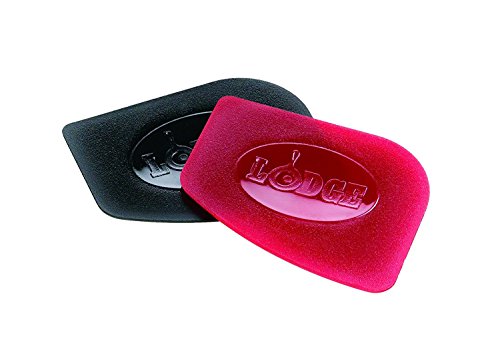
A $5 plastic scraper that pops stuck bits off the pan surface without scratching the seasoning. Use it while the pan is still warm and most residue comes right off. Not as thorough as chain mail for heavily carbonized pans, but the right tool for light cleanups and for breaking the suction on bits stuck to the bottom.
What we like
Under $5 and handles most light cleanup in 30 seconds
Shaped to fit cast iron corners, gets into the curved wall-base junction
What to know
Plastic warps against very hot pans, let the pan cool slightly first
No match for heavily carbonized buildup; use chain mail for that
Every cast iron cook eventually finds a pan with surface rust, either one they let sit wet, or a vintage piece they rescued. The rust eraser is a fine abrasive block that removes surface rust without reaching for sandpaper or steel wool. The rust almost always comes off faster than expected, and the pan seasons right back up with a few oven cycles.
What we like
Removes surface rust spots without sandpaper or wire wheels
Compact enough to keep in the kitchen drawer for quick touch-ups
What to know
Not for deep pitting or heavy rust, a restoration project needs steel wool
Seasoning is just thin layers of polymerized oil baked onto the iron surface. You build it up over dozens of cooking sessions, not in a single afternoon. The key insight most guides miss: thinner is better. A thick coat of oil will gum up and peel rather than cure. Apply a tiny amount, wipe it almost entirely off, and bake at high heat. For regular maintenance after cooking, any neutral oil, grapeseed, shortening, even vegetable oil, gets the job done. The Lodge spray makes the application foolproof for beginners.
Best starter
Lodge
Seasoning Spray 8 oz
$9.88 as of Jun 22, 2026
★★★★★Our rating· In Stock
The spray solves the hardest part of cast iron seasoning: applying an even, thin coat of oil without overloading the surface. It delivers a controlled mist you wipe down to nearly nothing before heating. Much harder to over-apply than pouring from a bottle, and over-applying is the #1 beginner mistake that causes gummy, peeling seasoning.
What we like
Controlled mist prevents over-applying, the #1 beginner seasoning mistake
Canola oil base works reliably for both oven seasoning and maintenance
What to know
More expensive per oz than bulk oil, but the application control is worth it
Single-use aerosol; not the most sustainable option long-term
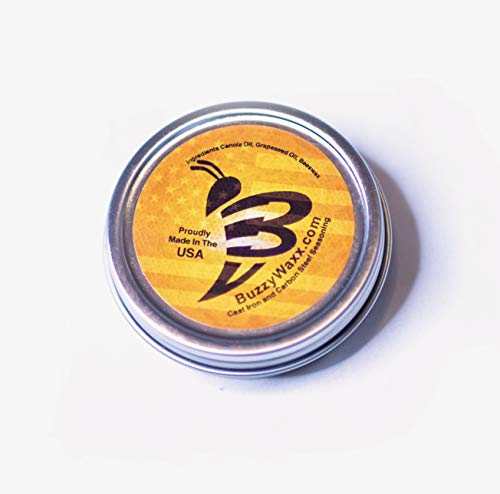
BuzzyWaxx is a beeswax-and-oil conditioning blend that protects the seasoning and guards against moisture-induced rust during storage. Apply a thin coat after the pan is fully dry and cooled. Especially useful in humid kitchens or if you store cast iron for extended periods. The cast iron community treats it as a rite of passage, once you've been cooking for a while.
What we like
Beeswax base protects against humidity and storage rust reliably
Small tin lasts a year of regular use, extremely economical
What to know
Not a substitute for oven seasoning, doesn't replace the bake-on process
Niche product; adds a step that basic neutral oil also accomplishes
Cast iron handles get searingly hot and stay that way long after you pull the pan off the burner. A silicone handle holder is the first thing to buy after the pan, a $10 piece of silicone that prevents the reflex grab that sends new cast iron cooks to the sink. For Dutch ovens or moving heavy pans from a 500°F oven, you need gloves that handle extreme heat and a lot of weight at the same time. Regular oven mitts work fine; the Ove Glove gives you the dexterity most mitts sacrifice.
Best starter
Lodge
Silicone Hot Handle Holder 2-Pack
$21.99 as of Jun 22, 2026
★★★★★Our rating· Only 11 left in stock - order soon.
The single most important safety accessory for cast iron cooking, and Lodge sells the right one for $8. It slides over the handle and stays put during stovetop use, protecting you from the reflex grab that burns every new cast iron cook. Buy two: one for the main handle, one for the helper handle on a 12-inch pan or Dutch oven.
What we like
Slides on instantly and stays secure, no adjusting mid-cook
Two-pack covers both handles on a 12-inch pan or Dutch oven
What to know
Not rated above 450°F, swap for a proper mitt at broil temps
Can slide on well-seasoned smooth handles if oil is present
★★★★☆Our rating· Only 5 left in stock - order soon.
When you're pulling a heavy Dutch oven from a 500°F oven, a regular oven mitt's bulk costs you dexterity at exactly the wrong moment. The Ove Glove fits like a glove, not a lobster claw, you can grip a Dutch oven handle, adjust the lid, and carry it across the kitchen without losing control. Rated to 540°F, which covers every cast iron task including campfire cooking.
What we like
Fits like a glove, dexterity you can't get from a standard oven mitt
540°F rating covers stovetop, oven, and campfire cast iron use
What to know
Wicks moisture, not for handling steam-heavy or wet pans
Single-hand design means you need two for heavy Dutch oven transport
★★★★☆Our rating· Only 7 left in stock - order soon.
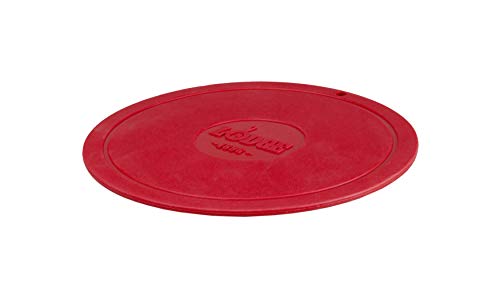
Cast iron retains heat long after you pull it off the burner, long enough to damage wood countertops or plastic cutting boards. Lodge's silicone trivet is heat-rated to 500°F, grips the pan so it doesn't slide, and stores flat in a drawer. At under $10, it's the overlooked accessory you'll use every single session.
What we like
Protects countertops from the pan's lingering heat, essential for wood surfaces
Non-slip grip keeps a heavy, full pan from sliding
What to know
Absorbs kitchen odors over time, needs regular dishwasher cycling
Trapped moisture under the pan on a trivet can cause rust spots
Cast iron looks intimidating because the internet made it that way. The actual learning curve is short — a few burned eggs, one re-seasoning session, and suddenly you understand why people cook on the same pan their grandmother used.
Cast iron has a reputation problem. The actual pan is a $30 piece of iron that requires nothing more than oil and heat to maintain. The internet version of cast iron involves seasoning charts, flaxseed oil debates, strict soap bans, and the strong implication that one wrong move will destroy a pan that has survived a hundred years.
Ignore most of that. Here’s what the first month actually looks like.
Week 1: The seasoning ritual
When a new Lodge skillet arrives, it comes with a factory seasoning — a thin, uneven layer of oil that was polymerized in at the foundry. It works, but it’s not mature. Your job for the first few weeks is to build on it through cooking.
Before your first cook, do a quick oven seasoning cycle: wipe every surface with a paper towel moistened in neutral oil (canola, grapeseed, vegetable — anything neutral). Then wipe it down again with a dry paper towel until you’ve removed almost all of it. What remains is the right amount. Place the pan upside down in a 450°F oven for one hour. Let it cool in the oven.
That’s it. You don’t need to do this multiple times. You don’t need special oil. The “polymerization temperature” debates online are real chemistry applied to a practical problem that a single oven cycle already solves adequately.
Cook bacon first. Not because of any mystical property, but because bacon is forgiving, the fat is free, and the rendered pork fat is genuinely great for building a seasoning base. Fry it over medium heat. Watch the sizzle. Pull it out, eat it, then wipe the pan with a folded paper towel while it’s still warm. That wipe is half the cleaning process already.
Cast iron heats unevenly from below and holds heat longer than anything else in your kitchen. Both of these facts require a small adjustment in how you cook.
Preheat longer than you think. Put the pan on a medium burner for five full minutes before adding any food. New cast iron cooks put cold food in a lukewarm pan and wonder why everything sticks. A properly preheated cast iron skillet is the closest thing to a professional flat-top grill a home kitchen gets.
Start lower than you think. The instinct from stainless and non-stick is to blast things on high heat. Cast iron on high will overshoot fast and create hot spots. Medium to medium-high gets you the crust you’re after. If something is smoking before you add food, the pan is too hot.
The things cast iron excels at: searing steak, frying chicken, making cornbread in the oven, cooking smash burgers, and anything where you want a hard crust from prolonged contact with a hot flat surface. The things it’s merely okay at: scrambled eggs (for now), fish (delicate proteins need a smoother surface), boiling pasta.
After a week of cooking, your pan will have darkened. Some spots will look almost black. That’s right. That’s seasoning. Don’t panic if it’s uneven.
Week 3: Cleaning without the anxiety
The cleaning protocol that actually works is also the simplest one:
While the pan is still warm (not burning hot — warm), rinse with hot water.
Scrub with the chain mail scrubber. It removes stuck food without touching the polymerized seasoning underneath.
Dry immediately on the stovetop over low heat for two minutes.
Wipe with a thin coat of oil using a paper towel.
Store it.
That’s the whole process. It takes about 90 seconds once you’ve done it a few times.
A few drops of dish soap during step 2 won’t ruin a well-seasoned pan. The “never use soap” rule is a holdover from the era of lye-based soaps that were genuinely harsh enough to strip iron. Modern dish soap isn’t. Use it if you have something you want to clean thoroughly, then proceed through steps 3-4 normally.
What will actually damage your seasoning: soaking the pan in water (even briefly), putting it in the dishwasher, cooking highly acidic dishes for extended periods (all-day tomato sauce, long wine braises). Avoid those three things and you’re fine.
By week four, the seasoning should have developed enough that eggs are starting to cooperate. Test it: heat the pan over medium-low for five minutes, add a pat of butter, let the butter foam and subside, then crack in an egg. Don’t touch it for two minutes. If the egg lifts with a gentle shake, your seasoning is coming along. If it sticks, you need more cooking sessions before the eggs will work reliably.
The dishes that will teach you the most about cast iron:
Smash burgers. Press a golf-ball-sized portion of 80/20 ground beef onto the screaming-hot pan surface for 30 seconds, then scrape and flip. The contact crust is something no non-stick pan can produce. One smash burger session does more for your seasoning than three bacon sessions.
Cornbread from the oven. Pour the batter into a room-temperature or lightly preheated oiled skillet, then place in a 400°F oven. The cast iron gives you a crispy, almost fried bottom crust that a glass or ceramic pan cannot produce. This is the dish that makes people understand why the pan exists.
A simple pan sauce. After searing chicken thighs, deglaze the pan with a half-cup of broth or white wine. The fond (the brown bits stuck to the pan) dissolves into the sauce. This is the professional technique that home cast iron cooking unlocks.
Cast iron requires less maintenance than stainless steel. Stainless requires careful temperature management, deglazing with the right liquids, and a lot of scrubbing to remove the fond that turns to carbonized crust. Cast iron forgives heat abuse, cleans in 90 seconds, and gets better with every session.
The month of adjustment is short. The decade of cooking on the same pan is the whole point.
Save your money
What you don't need yet
Beginners get pressured to buy a lot of stuff that doesn't help them play
better. Here's what we'd skip on day one.
A $300 Le Creuset Dutch oven — Lodge's enamel Dutch oven does the same job for $70. Buy Le Creuset when you've used cast iron long enough to have opinions about it, or as a wedding gift.
Cast-iron-specific cleaning soap — Regular dish soap in normal amounts is fine on a well-seasoned pan. Save the $15.
A cast iron wok — The rounded bottom is poorly matched to flat Western stovetops. Carbon steel is the right wok material, same seasoning concept, half the weight.
A cornbread stick pan — Charming, but niche. Master the skillet first. The specialty pans are for when you have developed opinions about cornbread texture.
A cast iron grill press — A foil-wrapped heavy pan does the same job. Only buy one if you smash-burger weekly and need the consistency.
First week
Your first seven days
A short, real plan to get from gear-on-doorstep to actually playing.
Order the Lodge 10.25" skillet, it'll arrive in a couple of days and the seasoning ritual is a satisfying first step. · Buy
Do the initial seasoning when it arrives: wipe a paper-thin film of neutral oil on all surfaces, place upside down at 450°F for one hour. Let cool, repeat once. · Action
Cook bacon for your first real session. The rendered fat does more for your seasoning than any product you can buy. · Action
Clean it while still warm, hot water and the chain mail scrubber handles 95% of cast iron cleanup jobs. · Action
Dry it immediately: two minutes on the stovetop over low heat, then wipe with a paper towel with a tiny amount of oil before storing. · Action
Skip highly acidic dishes (tomato sauce, lemon-heavy marinades) for your first six sessions. Let the seasoning build before you challenge it. · Learn
Buy the chain mail scrubber at the same time as the pan. It makes maintenance a 60-second task instead of a 10-minute one. · Buy
Lodge, vintage Griswold, or Field Company, which should I start with?
Lodge. It's $30, it's at every hardware store, and it's what the entire cast iron community uses as the baseline comparison. Once you've cooked on cast iron for six months and know what you actually want, smoother surface, lighter weight, or vintage patina, then you'll have enough context to invest in Field Company, Smithey, or a vintage Griswold. Starting with anything other than Lodge is gear anxiety, not cooking.
Can I use dish soap on cast iron?
Yes, in small amounts. The 'never use soap' rule comes from the era of lye-based soaps that were harsh enough to strip seasoning. Modern dish soap (Dawn, etc.) in a normal amount during scrubbing won't significantly damage a well-seasoned pan. What actually strips seasoning: soaking in water, the dishwasher, and vigorous abrasive scrubbing. Use a few drops if you need it, then dry immediately and apply a thin coat of oil.
What can't I cook in cast iron?
Extended high-acid cooking, tomato-based sauces simmered for hours, wine-heavy braises, citrus marinades left overnight. The acid slowly strips seasoning and can add a metallic taste. A quick hit of acid (a pan sauce with a splash of wine, a squeeze of lemon at the end) is fine. For all-day tomato sauces, use enamel cast iron or stainless steel.
How do I fix a rusty cast iron pan?
Scrub the rust off with steel wool or the chain mail scrubber, wash with soapy water, and dry completely. Apply a very thin coat of neutral oil, bake upside down at 450°F for one hour. Repeat 2-3 times. The finished pan should look matte black and not feel sticky, stickiness means too much oil was applied. Rust is not the end of a cast iron pan.
How heavy is cast iron, really?
The Lodge 10.25-inch weighs about 5 pounds empty. A 12-inch is around 8 pounds. A Dutch oven loaded with a braise can hit 15 pounds. That density is where the heat retention comes from. Most cooks adjust within a few sessions. If the weight is a genuine issue, look at carbon steel, it seasons the same way and weighs half as much.
Why does my food stick even after seasoning?
Usually one of three things: the pan wasn't hot enough before adding food, not enough fat in the pan, or the food was moved before it naturally released. Cast iron needs a full 5-minute preheat over medium heat before anything goes in. For eggs specifically, wait until the seasoning has built up over 8-10 cooking sessions, eggs are the most honest test of cast iron seasoning.
r/castiron — The most active cast iron community online. The wiki covers seasoning, restoration, and identification. Skip the gear-recommendation threads (everyone's biased) and read the sticky posts first.
Lodge Cast Iron Care Guides — Lodge's own seasoning and care instructions. Authoritative for their own pans and broadly correct for all bare cast iron. The 'five easy steps to restore cast iron' guide is worth bookmarking.
Serious Eats: Cast Iron Coverage — Kenji López-Alt's long-form testing of cast iron myths, the seasoning science, the 'never cook acidic food' rule examined, the Lodge vs. vintage Griswold comparison. The most rigorous food-science approach to the hobby.
The Cast Iron Collector — The definitive reference for identifying vintage cast iron, Wagner, Griswold, and lesser-known foundries. Essential if you're buying at antique stores or estate sales.
America's Test Kitchen Equipment Reviews — Rigorous side-by-side testing of cast iron skillets and Dutch ovens. Their skillet ranking puts Lodge at the top for value and is updated regularly. Subscription required for full results.
As an Amazon Associate, JustBeginning earns from qualifying purchases.
We may also earn commission from other affiliate programs linked on this
page. Editorial recommendations are independent; we don't choose
products based on commission rates.
Product prices and availability are accurate as of the date and time
indicated and are subject to change. Any price and availability
information shown on Amazon at the time of purchase will apply.
Our top pickLodge L8SK3 10.25-Inch Cast Iron Skillet


 Best starter