Fresh pasta is just flour and eggs — but the technique is everything. Get the dough right and you can make spaghetti, fettuccine, ravioli, or anything else that comes out of an Italian kitchen. The gear list is genuinely short. Here's exactly what to buy and what to ignore until you've made twenty batches.
By Colin B. · Published May 15, 2026 · Last reviewed June 2, 2026
The pasta machine is the main cost — budget $60-90 for a decent hand-crank model. A scale, bench scraper, and drying rack run another $40-50 total. You can be fully set up for under $150.
We earn commission on qualifying Amazon purchases — see our
affiliate disclosure.
Price tiers and budget totals shown above are editorial estimates;
actual Amazon prices vary.
At a glance
Our top pick in each category
The fastest path through this guide — each best-starter pick by category.
Scroll for the budget and upgrade alternatives.
You need a scale before you need anything else. Pasta dough is built on ratios — 100g flour to 1 large egg — and measuring flour by volume will give you a different dough every time. A $15 kitchen scale eliminates 80% of beginner failures.
Start with a hand-crank roller, not a pasta extruder. Extruders (the kind that push dough through a die to make rigatoni or penne) are satisfying gadgets but expensive, hard to clean, and they teach you nothing about how pasta dough actually behaves. Learn on a roller first — you can always add an extruder later.
Your flour choice matters more than your machine. Tipo 00 flour makes silky, pliable fresh pasta; all-purpose works but produces a chewier result. Both are fine for starting. Italian '00' is worth trying once you've made a few batches with AP.
The gear
What you actually need
Pasta Machine
Your pasta machine is the gear decision that actually matters. The good news: the right choice for 95% of beginners is the same machine it's been for fifty years — a hand-crank stainless steel roller with adjustable thickness settings. Skip the pasta extruders (they're for a different kind of pasta and require much stiffer dough). Skip the KitchenAid attachment until you've used a hand-crank for six months and know you want to go faster. The Marcato Atlas 150 isn't exciting because it's trendy — it's the default because it works, it lasts, and the price never makes you wince.
Pasta Machine — what's the difference?
A few common shapes, each making a different trade.
Hand-Crank Roller
The traditional way. Builds intuition for dough texture. Easy to clean. Perfect for beginners.
Speed
Manual
Best for
Flat pasta: fettuccine, lasagna, ravioli
Cleanup
Brush out (no water)
Best for All beginners. The default choice.
Tradeoff Slower than motorized; requires one hand to crank while the other guides the sheet
Forces dough through dies to make rigatoni, penne, fusilli, and other extruded shapes.
Speed
Electric
Best for
Extruded pasta: rigatoni, penne, fusilli
Cleanup
Complicated — soaking required
Best for Enthusiasts who specifically want extruded pasta shapes and have mastered basic fresh pasta
Tradeoff Completely different technique (stiffer, drier dough); expensive; hard to clean; won't make flat pasta
Best starter
Marcato
Atlas 150 Pasta Machine
$113.23 as of Jun 22, 2026
★★★★★Our rating· Only 6 left in stock - order soon.
Made in Italy since 1930, the Atlas 150 is the pasta machine that professional cooks recommend to everyone. Nine thickness settings (1–9, from thick to paper-thin), a 15cm wide roller, and a clamp that stays put on any countertop. The hand-crank builds feel for the dough in a way motorized machines can't replicate. Buy this once and you'll never buy another.
What we like
Made in Italy since 1930 — build quality that outlasts any budget machine
Nine thickness settings give you precise control over pasta thinness
Hand-cranking teaches you to read dough texture by feel
What to know
Cutter attachments need careful alignment to work cleanly
Clamps only to countertop edges — won't work on thick-apron tables
Also Made in Italy, almost identical mechanism to the Marcato, and sometimes $15 cheaper. The build quality is slightly flimsier (the Marcato is noticeably more solid) but it'll last years of regular use. If the Marcato is out of stock or over your budget, the Imperia gets you a real Italian pasta machine for less.
What we like
Also made in Italy — real quality at $15–20 less than the Marcato
Same 9-setting mechanism and 15cm rollers as the Atlas
What to know
Noticeably flimsier build — clamp and body feel less solid
Spares and accessories less available than Marcato
If you have a KitchenAid stand mixer and you're rolling pasta regularly, this attachment is genuinely faster — you feed the sheet and the motor does the rolling while your hands are free to guide. The pasta roller and two cutters (spaghetti and fettuccine) attach in seconds. But this is a month-six purchase, not a day-one one. You need to build the feel for proper dough consistency first.
What we like
Hands-free rolling — motor handles the sheet while you guide
Attaches in seconds; all three pieces store compact together
What to know
Requires a KitchenAid stand mixer — useless without one
Doesn't teach you dough feel the way hand-cranking does
Pasta dough is sticky, and your work surface matters. You want something large (at least 18 inches wide) with a slightly textured surface — perfectly smooth marble doesn't grip dough the way a wooden board does. A bench scraper is the one tool almost no beginner thinks to buy and almost every experienced pasta maker says is essential. It lifts stuck dough, portions dough cleanly, and scrapes the board between batches.
Best starter
John Boos
CB Series Maple Cutting Board, 20x15 Inch
$$$
★★★★★Our rating
A large maple board gives you the real estate you need to roll, cut, and dry pasta without running out of space. The 20x15-inch size is enough for most pasta sessions. Boos boards are built for exactly this kind of work — heavy, stable, and the maple surface has just enough grain texture to grip dough without sticking. Doubles as a bread board, charcuterie board, and general prep surface.
What we like
20x15 inches gives real room to roll, cut, and lay out pasta
Maple grain grips dough without sticking — the right texture
What to know
Needs oiling every few months to maintain the wood
Heavy at 7+ lbs — not something you move around casually
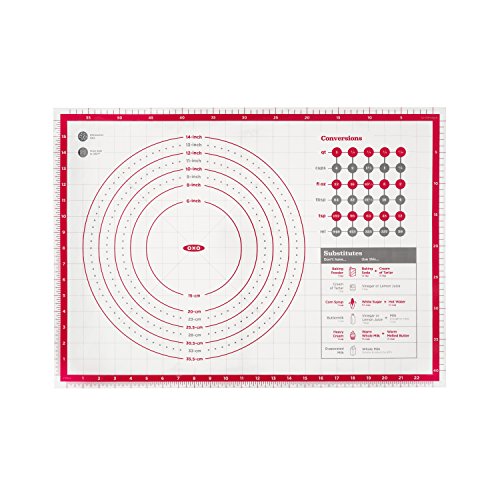
If your kitchen counter is your workspace, a non-slip silicone mat is plenty for pasta. Laid flat, it grips the counter, gives you a clean surface, and rolls up for storage. Easier to clean than a wood board and a fraction of the price. The measurement guides are a bonus for portioning.
What we like
Non-slip base grips any counter; measurement guides help portioning
Rolls up flat for storage — takes up almost no space
What to know
Smooth silicone surface is less grippy for dough than wood
Smaller working area than a full-size cutting board
This is the tool you didn't know you needed. A bench scraper lifts sticky dough without tearing it, divides dough into portions cleanly, scrapes flour off your board between batches, and lets you gather up cut pasta quickly. Buy this before you buy a ravioli cutter.
What we like
Lifts sticky dough without tearing — the move every pro uses
Doubles as dough divider, board scraper, and pasta gatherer
What to know
Takes a batch or two to build the habit of reaching for it
Once you can roll a good pasta sheet, you'll want to cut it into shapes. The Marcato includes spaghetti and fettuccine cutters — that's enough for months of pasta. After that, the most useful addition is a fluted pastry wheel (for pappardelle, maltagliati, and cutting ravioli edges) followed by a ravioli stamp if you get into filled pasta. Skip the dedicated pasta bike, the ravioli tray, and the fifty-piece cutter set for now.
Best starter
Ateco
Pastry Wheel with Fluted Edge
$14.99 as of Jun 22, 2026
★★★★★Our rating· Only 19 left in stock - order soon.
A fluted (wavy-edge) pastry wheel is how you cut beautiful pappardelle, maltagliati, and the sealed edges of ravioli all at once. Ateco's is inexpensive, well-built, and the wheel spins freely. The most versatile pasta cutting tool after the machine itself.
What we like
Cuts pappardelle and ravioli edges in a single pass
Inexpensive and lasts indefinitely — nothing to break or replace
What to know
Can skip on very thin pasta if you don't press evenly
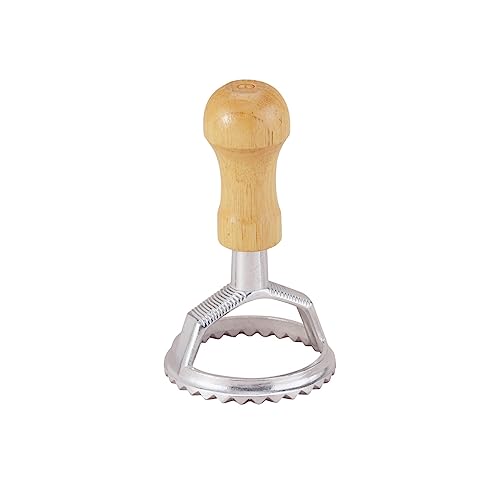
When you're ready to make filled pasta, a ravioli stamp is much faster than cutting with a knife and pinching edges by hand. Set the stamp on your filled pasta sheet, press, and you have a sealed ravioli with a fluted edge. Fantes has been making Italian kitchen tools since 1906 — the wooden handle is comfortable and the aluminum stamp is sharp.
What we like
Stamps and seals ravioli in a single press — faster than pinching by hand
Comfortable wooden handle; aluminum rim cuts and crimps cleanly
What to know
Only makes round ravioli — other shapes need a different tool
Must be floured between each press or it sticks to the dough
A ridged wooden board specifically for rolling cavatelli, gnocchi, and other pasta shapes that get their texture from dragging across wood. Not an everyday purchase, but if you want to branch into shapes beyond flat pasta, this board opens up a whole category. Roll a small piece of dough across the ridged surface and you get perfect texture in seconds.
What we like
Opens up cavatelli, gnocchi, and orecchiette with one simple tool
Ridges add authentic texture in seconds — no rolling skill needed
What to know
Single-use: only for shapes made by dragging across ridged wood
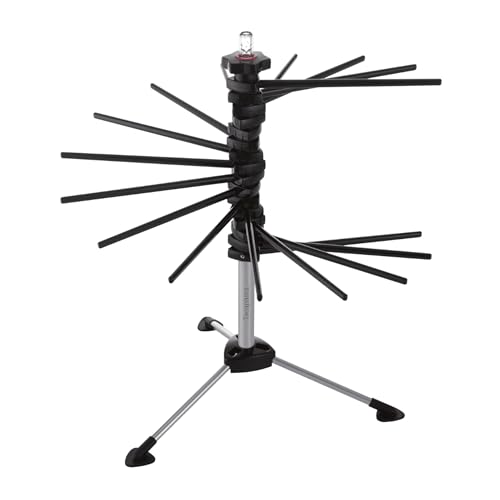
Cut pasta sticks together fast if you pile it. A pasta drying rack solves this — you hang cut noodles over wooden or plastic arms, they dry slightly on the outside, and they stay separated until you're ready to cook. This isn't strictly required (you can dust pasta with semolina and nest it in small nests on a tray), but a rack is genuinely useful once you're rolling more than one or two portions at a time.
Best starter
Marcato
Tacapasta Pasta Drying Rack
$82.95 as of Jun 22, 2026
★★★★★Our rating
Made by the same company as the Atlas 150 — same quality, same Italian factory. Ten wooden arms, folds flat for storage, and the wooden pegs don't react with pasta the way plastic can. If you're already buying the Marcato machine, this matches it perfectly.
What we like
Same factory as the Atlas 150 — wood quality and fit are excellent
Ten arms, folds completely flat for easy storage
What to know
Air-dry after use; pasta left on too long will stick to the arms
A no-frills wooden rack that does exactly what a pasta rack needs to do. Slightly wider arms than the Marcato, which some people prefer for thicker pasta shapes. Under $20 and does the job.
What we like
Slightly wider arms work well for thicker pasta like pappardelle
Under $20 and does exactly what a pasta drying rack needs to do
What to know
Build quality lower than Marcato — wobbles slightly when fully loaded
Two items you probably don't own but absolutely need: a kitchen scale and a spider strainer. The scale is for dough ratios (volume measurements for flour are unreliable). The spider is for pulling pasta out of boiling water into the pan with your sauce — this is how every Italian nonna, every Michelin-starred chef, and every pasta obsessive cooks pasta, because it adds a tablespoon of starchy pasta water automatically and stops the pasta from overcooking.
Best starter
OXO
Good Grips 11-lb Food Scale
$54.92 as of Jun 22, 2026
★★★★★Our rating· In Stock
The OXO is the kitchen scale we'd recommend for any cooking, but it's especially important for pasta. Weigh your flour in grams, add your eggs, and your dough ratio is exact every single time. The pull-out display is a useful detail when there's a large bowl blocking the screen.
What we like
Pull-out display stays readable even under a large mixing bowl
1g precision — exact enough for repeatable pasta dough ratios
What to know
Runs on batteries — keep spares in the kitchen drawer
Pull pasta directly from the boiling water into your sauce pan, a few tablespoons of pasta water clinging to the noodles. This — not draining into a colander — is how fresh pasta is finished in Italy, and it makes a real difference to the sauce texture. Also doubles as a strainer and blancher for everything else you cook.
What we like
Transfers pasta with water clinging — the key to sauce that clings
Doubles as strainer and blancher for everything else you cook
What to know
Fine mesh can catch small pasta shapes if not tilted when lifting
Pasta dough is just flour and eggs — but the technique is everything. Here's what actually happens in your first month, from a crumbly first batch to ravioli you'd serve at a dinner party.
Fresh pasta has a reputation for being intimidating. It’s not — but it is unforgiving of shortcuts in ways that aren’t obvious until you’ve made a few batches. The dough is fussy about hydration, the rest time actually matters, and the rolling takes practice to read by feel rather than by eye. All of that is learnable in a month.
This is what your first month actually looks like: what happens, what goes wrong, what clicks, and when you know you’ve got it.
Week 1: The first batch
The dough recipe is deceptively simple: 100g flour per large egg. Scale up from there. That’s it.
But “flour” needs a clarification. Tipo 00 flour — the fine Italian milling grade used for pasta — makes silky, stretchy, cooperative dough. All-purpose works and produces a slightly chewier result. Both are fine to start. Buy whichever is easiest to find, and note the difference after you’ve tried each.
The method:
Weigh your flour on a scale (don’t measure by volume — it’s inconsistent).
Make a well in the center, crack in your eggs, and beat the eggs with a fork while gradually incorporating flour from the inner walls.
When it comes together into a rough mass, switch to your hands and knead for 8 minutes. The dough should be smooth, slightly tacky, and elastic — it should spring back when you press a finger in.
Wrap tightly in plastic and rest for at least 30 minutes at room temperature. Skipping this step is the most common beginner mistake. The gluten needs to relax or you’ll be fighting the dough the whole time it resists rolling back.
Then roll. On a hand-crank pasta machine like the Marcato Atlas, start at setting 1 (thickest) and work down. Fold the sheet in thirds between passes at settings 1 and 2 to build structure. Go to 5 or 6 for fettuccine; 7 or 8 if you want silky, thin sheets for ravioli or lasagna.
Your first batch will probably be a bit thick and a bit uneven. That’s fine. Cook it anyway. Taste it. The goal in week one is to make pasta that is edible, not pasta that is excellent.
By your second or third batch, one of two problems will have emerged:
The dough is too dry. It crumbles at the edges when you roll it, or cracks when you fold it. This means your eggs were small, your flour was packed too dense when you measured (which is why we weigh), or the air in your kitchen is dry. Fix: a few drops of water, one at a time, kneaded in.
The dough is too sticky. It clings to the rollers or tears when you try to lift the sheet. This means too much moisture — usually from humid weather or slightly oversized eggs. Fix: dust with flour and keep rolling; it’ll dry slightly as you work. Next batch, use a hair less water.
The right dough sits in between. Barely tacky to the touch. Smooth like play-dough. Elastic enough to stretch without tearing. Once you’ve found that texture once, you’ll recognize it every time.
This week, try two things:
Vary the thickness. Roll a batch to setting 4, another to setting 7. Cook both and taste the difference. Setting 7 is almost translucent — it cooks in 90 seconds and is silky in a way that thick pasta can’t be. Understanding thickness helps you match pasta to sauce.
Cut by hand. Before relying on the cutter attachment, cut a sheet into pappardelle (wide, roughly 3cm ribbons) with a knife. You’ll feel how the pasta wants to be handled.
Week 3: First shapes and the sauce question
Now that your dough is consistent, the shape conversation begins.
Fettuccine and tagliatelle (4-8mm wide) are where most people live for their first few months. Easy to cut, easy to cook, forgiving of thickness variation, pairs with any rich sauce.
Pappardelle (2.5cm or wider) is the lazy person’s pasta shape — cut wide ribbons by hand, skip the cutter attachment, and suddenly you have the pasta you’d order at a restaurant. Bolognese loves this shape.
Ravioli is the third-week ambition. The technique: roll two thin sheets, dot one with filling (ricotta and a little lemon zest is the most forgiving first filling), lay the second sheet on top, press around each filling pocket to seal out air, cut with your fluted wheel or a stamp. The tricky part is sealing — if there’s any air trapped inside, the ravioli will puff and burst in the water. Press firmly.
On sauce: fresh pasta is not just dried pasta that you made yourself. It pairs differently. Fresh egg pasta loves fat — butter, cream, rich meat ragù. It’s less suited to olive-oil-based sauces and aglio e olio that work beautifully on dried spaghetti. Keep that in mind when you’re planning what to make.
The “finish in the pan” method: pull the pasta with a spider strainer directly from the boiling water into your sauce pan, where 1-2 minutes of tossing over medium heat lets the pasta finish cooking and absorb the sauce. You don’t drain into a colander. The pasta water that clings to the noodles loosens the sauce and binds it. This single technique — learned everywhere in Italy and almost nowhere else — is the biggest difference between restaurant pasta and home pasta.
Week 4: Going further
By the end of the month, you’ll have your first pasta-making instincts. You’ll know what your dough should look like before you roll it. You’ll know which thickness setting you want before you start. You’ll have a shape or two that you’re actually good at.
A few directions worth trying in month two:
Egg yolk pasta: Replace one or two whole eggs with additional yolks (200g flour, 2 whole eggs, 2 yolks). The dough is richer, more golden, and more pliable — the classic pasta texture for handmade egg pasta in Emilia-Romagna. A small change, a noticeable difference.
Semolina pasta: Semolina flour (the coarser grind of durum wheat) and water only — no eggs. The standard pasta of southern Italy. Stiffer dough, coarser texture, better with tomato sauces and olive oil. Roll thicker than egg pasta; it doesn’t do the silky thin thing. But cavatelli, orecchiette, and trofie are all made this way, and they’re worth learning.
Fresh pasta with herbs: Press a few flat-leaf parsley leaves or basil leaves between two thin sheets of pasta and roll through the machine. The herbs get laminated into the pasta — visible through the translucent sheet, fragrant when cooked. Impressive at a dinner party with approximately zero extra effort.
Every beginner makes the same mistakes. None of them are permanent:
Not resting the dough long enough. You’ll rush it once. The dough will fight you, tear, spring back off the rollers. You’ll never skip the rest again.
Dusting with too much flour. A little semolina keeps the sheets from sticking. A lot makes the pasta taste floury and prevents the sheets from sealing properly (critical for ravioli). Dust lightly.
Overcooking the pasta. Fresh pasta cooks in 2-3 minutes, not 10. If you’re walking away from the pot, you’ve already gone too long. Stay and taste.
Rolling the pasta too thin before the dough has been through enough passes. Roll through settings 1, 2, and 3 once each before jumping to 6. The progressive passes build structure and consistency.
Nobody’s first ten batches are beautiful. Most pasta that’s good enough to be delicious is also ugly enough to be embarrassing. Eat it anyway.
Save your money
What you don't need yet
Beginners get pressured to buy a lot of stuff that doesn't help them play
better. Here's what we'd skip on day one.
A pasta extruder — Extruded pasta (penne, rigatoni) is a different technique from rolled pasta. Learn to roll first — the extruder can wait a year.
A fifty-piece pasta cutter set — You'll use three cutters and the other forty-seven will live in a drawer. The fluted wheel handles most cuts.
A pasta drying cabinet — For commercially drying pasta in bulk. You're making dinner, not opening a restaurant.
Special pasta water salters or pasta pots — The largest pot you own and enough salt to make the water taste like the sea. That's it.
Pre-made pasta dough (from the store) — Making the dough is half the point — and fresh pasta dough takes fifteen minutes. This defeats the hobby.
First week
Your first seven days
A short, real plan to get from gear-on-doorstep to actually playing.
Order a kitchen scale if you don't own one — you need it before the pasta machine. · Buy
Watch one foundational pasta-dough video before touching flour. Pasta Grannies and Italia Squisita on YouTube are the two best resources on earth for this. · Learn
Make your first batch when the machine arrives: 200g tipo 00 flour (or all-purpose), 2 large eggs. Mix, knead 8 minutes, rest 30 minutes wrapped, roll to setting 6 on the Atlas. · Action
Cut by hand your first time — knife-cut fettuccine is forgiving and you get to feel how the pasta sheet behaves. No cutter attachment needed yet. · Action
Cook the pasta in heavily salted boiling water for 2-3 minutes (fresh pasta cooks fast), finish with your sauce in the pan, and eat it immediately. Fresh pasta does not reheat well. · Action
FAQ
Common questions
What flour should I use for fresh pasta?
Tipo 00 is the classic choice — it's finely milled, silky, and produces the most pliable dough. All-purpose flour works and produces a slightly chewier, more toothsome pasta that many people actually prefer. Both are fine starting points. Once you know what you like, try 50/50 semolina and all-purpose for extra bite.
Why is my pasta dough too dry / too sticky?
Dough too dry: your eggs were small or your flour was packed. Add a few drops of water. Dough too sticky: you added too much water or your humidity is high. Add flour gradually and knead. The correct dough should be smooth and barely tacky — it shouldn't stick to your hands, but it shouldn't crack when you fold it either.
Do I need to let the dough rest?
Yes, and this is the most-skipped step that makes the biggest difference. Rest your dough, wrapped in plastic, for at least 30 minutes at room temperature. Resting lets the gluten relax so the dough stretches without snapping back when you roll it. If you skip it, you'll fight the dough the whole time.
Can I make pasta without a pasta machine?
Yes — a rolling pin and patience gets you there. Roll the dough as thin as you can (you want to be able to read a newspaper through it), then fold and cut. It's harder and less consistent than a machine, but people made excellent pasta for centuries this way. If you want to do it by hand, a French-style wooden rolling pin (not a ball-bearing American one) gives you more control.
How long does fresh pasta keep?
Fresh pasta is best cooked the day you make it. You can refrigerate it for up to 24 hours (dusted with semolina, laid out or nested, in an airtight container) or freeze it for up to a month. Cook from frozen — don't thaw first.
What pasta should I make first?
Fettuccine or tagliatelle — wide, flat noodles are the most forgiving shape. They're easier to cut than spaghetti, cook quickly and evenly, and pair with almost any sauce. Make these the first five batches, then try pappardelle, then ravioli when you're feeling confident.
Pasta Grannies (YouTube) — The definitive pasta YouTube channel — real Italian grandmothers from every region demonstrating traditional shapes and sauces. More educational than any cookbook.
Italia Squisita (YouTube) — Professional Italian chefs showing technique in careful detail. Great for understanding the 'why' behind the method, not just the steps.
Serious Eats — Fresh Pasta Guide — Kenji López-Alt's thorough breakdown of pasta dough science — why rest time matters, what flour does what, and how to troubleshoot.
Mastering Pasta — Marc Vetri — The definitive pasta book for home cooks who want to go deep. Covers every regional shape, dough variant, and sauce pairing. Skip the first half in year one; return when you're ready to explore.
r/pasta — Active community with dough troubleshooting, shape tutorials, and honest equipment feedback. Good place to post your first batch photo and get critique.
Salt Fat Acid Heat — Samin Nosrat — Chapter three (Fat) covers hand-made pasta in detail, including the regional pasta traditions of Emilia-Romagna. Read this alongside Pasta Grannies for context.
As an Amazon Associate, JustBeginning earns from qualifying purchases.
We may also earn commission from other affiliate programs linked on this
page. Editorial recommendations are independent; we don't choose
products based on commission rates.
Product prices and availability are accurate as of the date and time
indicated and are subject to change. Any price and availability
information shown on Amazon at the time of purchase will apply.

 Best starter