Falconry is one of the oldest hunting partnerships in the world, and one of the hardest hobbies to enter legally in the US. You need a state hunting license, a falconry permit, and a licensed master falconer to apprentice under. The gear is the easy part. Here's what you'll need once you've cleared the paperwork.
By Colin B. · Published June 15, 2026 · Last reviewed June 15, 2026
My Weigh KD-7000 Digital Scale
— Daily weight tracking is how you keep your bird safe. The KD-7000 has the 1g resolution falconers actually need.
Budget total
$500
Typical total
$1200
Falconry has a high gear floor. You need a functional setup before you can legally keep a bird. Most apprentices spend $500-$1,200 in their first year, not counting food ($30-60/month for a Red-tailed Hawk) or telemetry ($200-400, ordered from specialty suppliers like marshallradio.com).
We earn commission on qualifying Amazon purchases — see our
affiliate disclosure.
Price tiers and budget totals shown above are editorial estimates;
actual Amazon prices vary.
At a glance
Our top pick in each category
The fastest path through this guide — each best-starter pick by category.
Scroll for the budget and upgrade alternatives.
You cannot legally keep a raptor in the US without a falconry permit. The federal minimum is two years as a licensed apprentice under a general or master falconer, plus a written exam and a facility inspection. Check your state's requirements. Apply before you buy any gear.
Find your apprenticeship sponsor before you find your bird. The North American Falconers Association has a mentor-matching program, and most experienced falconers are genuinely happy to help newcomers. A good sponsor will lend or help you source your first gear and tell you exactly what your state inspectors will check.
Apprentices in the US are limited to two species: an American Kestrel (small, fast, great learner) or a Red-tailed Hawk (larger, slower, more forgiving of beginner mistakes). Know which bird you're pursuing before you buy anything, because the gear list differs between the two.
The falconry glove (called a gauntlet) protects your hand and arm from talons and gives the bird a stable landing platform. It's worn on the non-dominant hand. Thickness matters: a kestrel's grip is manageable in a thin glove, but a Red-tailed Hawk's talons require double-layered leather. Length matters too: 12 inches covers the wrist for small raptors, while 16 inches protects the forearm for larger hawks. Don't buy cheap. A glove that lets talons through is a fast trip to urgent care.
Gauntlet — what's the difference?
A few common shapes, each making a different trade.
12-inch (Kestrel)
Wrist-length, lighter leather. Right for kestrels and small merlins.
Length
12 inches
Layers
Single or double
Best for
American Kestrel
Best for Apprentices starting with a kestrel
Tradeoff Too thin and short for Red-tailed Hawks or larger birds
16-inch (Hawk)
Forearm coverage, double-layer leather. The standard apprentice choice.
Length
16 inches
Layers
Double
Best for
Red-tailed Hawk
Best for Apprentices starting with a Red-tailed Hawk (most common in the US)
Tradeoff Heavier and warmer than shorter gloves; slight overkill for kestrels
Best starter
RAPICCA
16-Inch Animal Handling Falconry Gloves
$$
★★★★★Our rating
Double-layered top-grain split cowhide with reinforced palm and fingers, 16-inch forearm coverage, and a price that leaves budget for the rest of your gear. RAPICCA's animal-handling gloves are the most practical falconry gauntlet option widely available to US apprentices. Your sponsor and state inspectors will recognize the style immediately.
If you're starting with an American Kestrel and want to keep costs down, a shorter 12-inch suede glove in the $20-30 range does the job. Kestrel talons won't punch through most leather. Save what you save here for the telemetry system, which costs ten times as much and matters ten times as much.
What we like
Works fine for kestrels whose talons need minimal leather
Affordable entry while you decide which species to pursue
What to know
Not adequate for Red-tailed Hawks or larger raptors
Short cuff leaves forearm exposed if the bird bates and thrashes
Once you're working with larger birds like Harris's Hawks beyond the apprentice stage, an elbow-length glove with Kevlar lining is what you need. KBar7's extended gauntlet offers full forearm coverage and significantly more grip protection than a standard 16-inch glove. Overkill for apprentice-level Red-tails, but the right tool for larger raptors.
What we like
Kevlar lining adds grip protection beyond standard leather alone
Elbow-length coverage handles larger raptors' reach and grip
What to know
Heavy and warm; not comfortable for long summer training sessions
Unnecessary length for apprentice-level birds like Red-tailed Hawks
Your bird lives on its perch between training sessions. The right perch depends on species: Red-tailed Hawks need a larger block perch; kestrels need a smaller one (some prefer a bow perch, which is best sourced through a specialty falconry supplier). A poorly made perch can injure feet (bumblefoot, a serious bacterial infection, often starts here). Whatever you use needs to be covered in a soft, grippy material like Astroturf or carpet. State inspectors check perch quality during the facility inspection.
Best starter
Falconry Stainless Steel Block Perch with Astroturf 6-Inch
$41.96 as of Jun 22, 2026
★★★★★Our rating· In stock
The block perch is the standard housing perch for Red-tailed Hawks in the US: stable, easy to clean, and what inspectors expect to see for buteos. This stainless steel version with a 6-inch Astroturf top is the right size for a Red-tailed Hawk and won't rust outdoors. Your sponsor may have one to loan you for the facility inspection; buy one once you've confirmed the fit.
What we like
Stainless construction holds up to outdoor weather without rusting
Astroturf top is gentle on hawk feet and reduces bumblefoot risk
Standard block style US inspectors expect for buteos like Red-tails
What to know
Astroturf pad gets dirty fast; plan to replace the covering regularly
Spike base needs firm ground; won't stay upright in loose sand
Kestrels need a smaller perch than Red-tailed Hawks. This 5.5-inch marble-and-Astroturf block perch is sized correctly for a kestrel or merlin and provides the stable, padded surface small falcons need. If your sponsor recommends a bow perch instead, specialty falconry suppliers like Mike's Falconry Supplies carry them.
What we like
Scaled correctly for kestrel and merlin foot size
Marble base adds stability; won't tip when a small bird bates
What to know
Too small for Red-tailed Hawks or larger buteos
Some kestrels prefer a bow perch; confirm with your sponsor
A hood covers the bird's eyes to keep it calm during transport, before a hunt, and in distracting environments. A hooded falcon is a relaxed falcon. The fit has to be right: too tight and the bird can't blink; too loose and it slips off. Most falconers own two or three hoods in slightly different sizes. Dutch hoods (the tapered, ridged style) are the most common in North America and the easiest to fit on a new bird. Buy two of any hood. You will lose one.
Best starter
Dutch Falconry Hood Size 58 Hand Stitched
$$
★★★★★Our rating
The Ron Rollins Millennium-style Dutch hood is widely regarded in the falconry community as the most reliable handmade hood available on Amazon. Two-tone cowhide leather, hand-stitched traditional construction, and a topknot for easy removal. Size 58 fits most Red-tailed Hawks. Buy two: you'll lose one eventually.
What we like
Hand-stitched Dutch style fits the widest variety of raptor head shapes
Traditional Turk's topknot design for easy one-handed removal
Well-regarded Ron Rollins Millennium style in the falconry community
What to know
Sizing not standardized across makers; may need to try two sizes
New hoods need breaking in before braces open and close smoothly
If you're having trouble fitting a Dutch hood on your bird, the Khan-style open-back design offers a slightly different fit that works better for some head shapes. It also comes with traditional falconry bells attached, which give you a basic auditory tracking backup when the bird is nearby.
What we like
Open-back design offers a different fit than Dutch hoods
Includes traditional bells for auditory location when bird is close
What to know
Khan style less common in North America; fewer community fitting guides
Bells add a small amount of weight; remove for serious training sessions
Jesses are the leather straps attached to the bird's anklets (leg cuffs) that you hold or clip to your glove. The Aylmeri system (separate anklet plus removable field jess) is the modern standard: you can swap to shorter field jesses before a free flight and back to longer mews jesses for perching. You also need a swivel (so the bird can spin without tangling) and a leash. All of this should be leather or Dacron. Nothing synthetic that can cut into leg tissue.
Best starter
Falconry Aylmeri Anklets Jesses and Leash Set
$
★★★★★Our rating
The Aylmeri system is the community standard for good reason: the anklet stays on the bird permanently, while the jesses clip in and out. This set (medium size, appropriate for male Harris Hawk or most smaller raptors; buy large for Red-tailed Hawk) includes anklets, mews jesses, flying jesses, and a leash. Your sponsor should help you fit them the first time.
What we like
Aylmeri system is the North American standard every falconer knows
Complete kit includes anklets, mews jesses, field jesses, and leash
What to know
Leather needs conditioning every few months or it cracks and stiffens
Sizing is species-specific; wrong size can injure ankles over time
The swivel connects your jesses to the leash and lets the bird spin freely without tangling. A swivel that seizes up is a real safety risk. This 10mm barrel swivel pack is specifically listed for falconry use and is the right diameter for standard jess widths. Five per pack gives you spares for the season.
What we like
Sized correctly for standard jess width so the ring won't slip or bind
Pack of 5 keeps you stocked through a full season with spares
What to know
Remove before every free flight; swivels are for tethered situations only
Barrel-style swivels can accumulate debris; inspect and clean regularly
A scale is how you keep your bird healthy and motivated. Falconers fly their birds at a precise flying weight that keeps them keen to return for food. A bird above flying weight won't come back; a bird too far below is medically at risk. You need 1-gram resolution minimum, a tare function for a perch bowl, and enough capacity for your bird plus the bowl. For radio telemetry (required before your first free flight), order from a specialty supplier: Marshall Radio (marshallradio.com) is the North American industry standard. Budget $200-400 for a transmitter and receiver pair.
Best starter
My Weigh
KD-7000 Digital Scale
$54.99 as of Jun 22, 2026
★★★★★Our rating· In Stock
You need a scale accurate to 1 gram, with a tare function for a perch or bowl. The KD-7000 hits the accuracy falconers need without costing more than the bird's first month of food. It's what the community typically recommends for tracking a Red-tailed Hawk's 800-1100g flying weight, and the 7kg capacity handles the perch tared out.
What we like
1-gram resolution captures the small daily swings falconers track
7,000g capacity fits a Red-tailed Hawk with the perch tared out
Consistent readings; no battery-drain drift at low power
What to know
No backlight; hard to read in a dim mews at dawn
Requires a separate perch or bowl to weigh a live bird
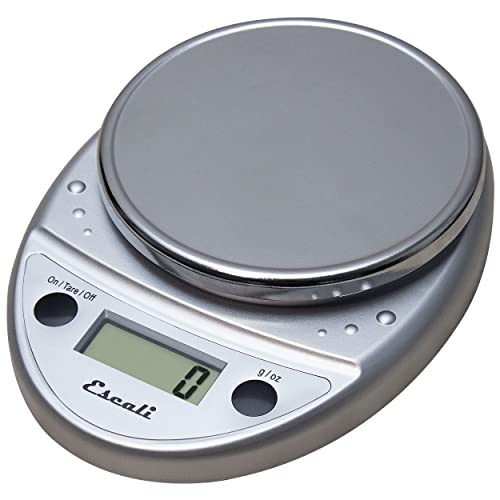
If you're starting with a kestrel (80-165g), the KD-7000's 7kg capacity is overkill. The Escali Primo weighs up to 11 pounds with 1g resolution and is a community staple in many precision hobbies. Half the price of the KD-7000 and plenty accurate for kestrel weight management.
What we like
1-gram resolution works for kestrel-level precision at lower cost
Trusted kitchen scale brand with consistent accuracy across readings
What to know
5kg max capacity; won't tare the perch out for a Red-tailed Hawk
Falconry is the one hobby where the legal process is harder than learning the skill. Here's what your first season actually looks like, from passing your state exam to your first free flight.
Most people who discover falconry assume the hard part is training a bird of prey to hunt with you. It’s not. The hard part is clearing the legal and logistical barrier before you ever touch a bird. Once you understand what that process actually looks like, the path forward is straightforward (unusual, demanding, but straightforward).
Here’s what your first season really involves, in order.
Before you have a bird: the permit process
Falconry in the US is federally regulated under the Migratory Bird Treaty Act. To legally keep a raptor, you need both a state falconry permit and a federal permit issued through the US Fish and Wildlife Service. As an apprentice, you also need a licensed general or master falconer willing to sponsor your application.
The process has four steps, roughly in this order:
1. Find a sponsor. Nothing else happens without one. Your sponsor must have held a general or master falconry license for at least two years, and they’ll sign your application, inspect your facility, and mentor you through your first two years. The North American Falconers Association maintains resources for finding mentors. Most experienced falconers are genuinely willing to help; the community is small and takes its own continuation seriously.
2. Pass the written exam. Most states require at least 80% on a written test covering raptor biology, falconry equipment, regulations, and husbandry. The Modern Apprentice (themodernapprentice.com) is the community’s standard study resource, with practice exams that closely mirror what states actually test. Give yourself 4-6 weeks of regular study. This is not a hard exam if you study; it is a guaranteed failure if you don’t.
3. Pass the facility inspection. Before you can receive your permit, your state will send an inspector (usually a conservation officer) to verify that your housing setup meets regulations. This means a mews (a weatherproof enclosure for the bird), a perch of the right type and size, appropriate tethering hardware, and a scale. Your sponsor should walk through the inspection requirements with you and check your setup before the official visit. Get this right the first time; re-inspections add months.
4. Apply and wait. Processing times vary by state. Some issue permits quickly; some have waiting lists. Budget 3-6 months from starting the process to holding a permit.
Apprentices in the US may possess up to two birds, limited to two species: the American Kestrel or the Red-tailed Hawk. Most US apprentices start with a Red-tailed Hawk. They’re larger and slower than kestrels, more tolerant of beginner mistakes, and easier to read. Kestrels are fast learners but delicate; they’re a better second bird than a first.
You don’t buy a bird. You trap a wild passage hawk, which is a juvenile hawk from the most recent breeding season, caught during the fall migration. Passage hawks haven’t yet survived a full winter, which makes them more motivated to work with a food source (you) and more willing to be trained than adult birds.
The trapping season varies by state but generally runs August through November. Your sponsor will teach you to use a bal-chatri trap (a wire dome baited with mice, with monofilament nooses on top) or a dho-gaza net. Trapping requires its own permit in most states and is done on public land with your sponsor present for your first season.
The first time you hold a wild hawk on your glove, even tethered and hooded, is genuinely arresting. They are heavier than you expect, and more present than you expect.
Manning: the first three to six weeks
“Manning” is the falconry term for acclimating a wild bird to human presence, to the glove, and eventually to coming to you for food. It is slow, daily, and non-negotiable. A bird that isn’t properly manned won’t return to you reliably, and a bird that doesn’t return reliably is a bird you will lose.
The process looks like this:
Days 1-3: The bird is hooded most of the time, perched in your mews, getting used to sounds and smells without visual overload. You handle it briefly, offering food from the glove. It will bate (jump off the glove and hang upside down by the jesses) frequently. This is normal. You simply return it upright each time, calmly.
Days 4-14: You begin spending time near the unhooded bird, letting it eat from the glove, lengthening the contact gradually. You weigh it every morning and every evening. Flying weight management starts here: a bird above its flying weight won’t work for food; a bird below is at medical risk. Your sponsor helps you find the right weight.
Days 14-21 and beyond: You introduce the creance, a long light line that lets the bird fly short distances to the glove. You call it from one foot, then three feet, then ten feet, then across the yard. Each session extends the distance. The moment the bird flies consistently and eagerly to the glove from the full creance length, you’re approaching free flight.
The first free flight
The first time you remove the creance and call your bird free, you will be terrified. This is correct. The bird will not be.
Most hawks, properly manned and at flying weight, fly to the glove exactly as they’ve been trained. They don’t experience the absence of the creance as a change in the situation; they experience it as another recall to food. The training has been building this reflex for weeks.
What can go wrong: the bird is too heavy (flies to a tree and ignores you), the weather is wrong (thermal conditions on some days make birds reluctant to descend), or the location has too many distractions. Your sponsor should be present for the first free flight and will help you read whether the conditions are right.
When the bird lands on your glove from a true free flight, the feeling is hard to describe to someone who hasn’t experienced it. It’s not quite like anything else in any other hobby.
What falconry asks of you
Falconry is not a weekend hobby. Your bird needs to be weighed and checked every day. It needs to be flown regularly, even in cold or inconvenient weather. If you’re going to be away for a week, you need a trusted falconer (usually your sponsor) to care for it.
The community takes this seriously, and so should you. Raptors are wild animals kept under federal permit, not pets. If you stop meeting your commitment to the bird’s welfare, there are legal and ethical consequences, and the community will hold you to account.
What you get in return is unusual. Falconry is one of the few hobbies that genuinely changes how you see the natural world. You learn to read weather, migration patterns, prey behavior, and landscape. After a season of flying a hawk, you stop looking at fields and tree lines the way you used to. The hawk looks first.
What to do before trapping season
The best use of the months before you hold your permit is to prepare your facility, master your gear, and spend as much time as possible with your sponsor in the field. Watch them fly their bird. Watch the bird hunt. Ask questions.
By the time you trap your first passage hawk, you want the equipment to be second nature. You shouldn’t be figuring out how the swivel works when a wild Red-tailed Hawk is sitting on your glove for the first time.
Beginners get pressured to buy a lot of stuff that doesn't help them play
better. Here's what we'd skip on day one.
GPS tracking collar — Radio telemetry is sufficient for apprentice distances. GPS units are heavier and overkill until you're hunting at long range with large falcons.
Lure swing — You'll use a lure eventually, but your sponsor will have you working a creance (training line) long before you need a free-flight lure.
Hawking bag — A basic backpack works fine for your first season. The traditional falconry bag is a nice upgrade after a year of hunting when you know what you actually carry.
Weathering yard — Outdoor sunning is great for bird health but requires a separate secure outdoor perch setup. Not a day-one build.
Second bird — Apprentice licenses allow a maximum of two birds. Learn one bird completely before considering a second.
Breeding equipment — Apprentices are years away from captive breeding. Don't buy any of it yet.
First week
Your first seven days
A short, real plan to get from gear-on-doorstep to actually playing.
Download your state's falconry regulations PDF and read the apprentice section completely. Facility requirements (mews dimensions, perch type, tether length) vary by state. · Learn
NAFA regulations index · North American Falconers Association - links to each state's current regulation PDF
Find a licensed sponsor. You cannot legally trap a bird until a licensed general or master falconer agrees to mentor you and signs your application. · Action
The Modern Apprentice · The go-to reference site for US apprentice falconers, including mentor-finding advice
Study for and pass the written falconry exam. Most states require 80% or above. The Modern Apprentice's practice tests are the community's standard study tool. · Learn
Build or buy your perch and mews setup, then schedule your facility inspection. Inspectors check everything before you're licensed to keep a bird. · Action
Order your gauntlet so it arrives before you're ready to trap. Break it in by flexing it daily. · Buy
Attend a falconry meet or field day. NAFA and most state clubs host them. Watching experienced falconers work is the fastest way to understand what the gear actually does. · Action
FAQ
Common questions
How much does it cost to get into falconry?
Budget $500-$1,200 for equipment before your first bird. That covers a glove ($40-80), perch ($40-100), hood ($40-80), jesses and hardware ($30-60), scale ($40-80), and telemetry ($200-400, from specialty suppliers like marshallradio.com). The bird itself is usually free: you trap a wild passage hawk during the fall season. Ongoing costs are primarily food ($30-60/month for a Red-tailed Hawk).
Do I need a permit to practice falconry?
Yes. In the US you need a state falconry permit plus a federal migratory bird permit. As an apprentice, you also need a licensed general or master falconer to sponsor you. The process typically takes 3-6 months: study, pass the written exam, pass the facility inspection, then apply. Your state's fish and wildlife department is the starting point.
What bird should I start with as an apprentice?
US apprentices are limited to two species: the American Kestrel (small, fast, great learner but delicate) or the Red-tailed Hawk (larger, slower, more forgiving of beginner mistakes). Most US apprentices start with a Red-tailed Hawk for that reason. Your sponsor's preference and your local geography should guide the final choice.
How long before I can fly my bird for the first time?
From trapping a wild passage hawk to a first free flight typically takes 3-6 weeks of daily manning (taming to the glove) and weight management. You'll know the bird is ready when it flies reliably to your glove for food on the creance. Some birds click in two weeks; some take two months.
Can I keep a hawk as a pet without doing the hunting part?
No, legally or ethically. Falconry permits require you to actively fly the bird for hunting or exercise. A bird kept only for display is a wildlife violation. If you want a raptor as a display animal, contact a licensed wildlife educator instead.
Is falconry legal in all US states?
Yes, falconry is legal in all 50 states plus Puerto Rico, but regulations vary significantly. Trap seasons, permitted species, and facility specs all differ by state. Some states have annual licensing fees; some have waiting lists for apprentice applications. Start with your state's fish and wildlife website.
North American Falconers Association (NAFA) — The primary professional organization for falconers in North America. Has mentor-matching, a state regulation index, and field meets calendar.
The Modern Apprentice — The most comprehensive online resource for US apprentice falconers. State-by-state regulations, exam study guides, equipment tutorials. Start here.
USFWS Falconry Program — Federal regulations and permit applications. State permits are issued under the umbrella of federal migratory bird law.
Marshall Radio Telemetry — The industry standard for North American falconry telemetry. A transmitter/receiver pair ($200-400) is required before your first free flight. Not on Amazon; order direct from their site.
International Association for Falconry (IAF) — Global governing body. UNESCO recognized falconry as Intangible Cultural Heritage of Humanity in 2016. Useful if you plan to take your bird abroad.
r/falconry — Active community. Good for equipment sourcing questions and sponsor-finding posts. Experienced practitioners are patient with genuine beginners.
As an Amazon Associate, JustBeginning earns from qualifying purchases.
We may also earn commission from other affiliate programs linked on this
page. Editorial recommendations are independent; we don't choose
products based on commission rates.
Product prices and availability are accurate as of the date and time
indicated and are subject to change. Any price and availability
information shown on Amazon at the time of purchase will apply.
Our top pickRAPICCA 16-Inch Animal Handling Falconry Gloves