Thai cooking is about balancing salty, sour, sweet and spicy, then tasting and adjusting at the end. The gear list is short: a heavy granite mortar, a carbon steel wok and a way to steam sticky rice. The pantry matters more. Here's what to buy, which fish sauce and curry paste brands to look for, and where to find fresh herbs.
By Colin B. · Published November 16, 2026 · Last reviewed November 16, 2026
Premium 40N Fish Sauce
— Red Boat fish sauce: just anchovies and salt, the bottle that makes everything taste right. About $15.
Budget total
$135
Typical total
$315
A Yosukata wok, Red Boat fish sauce, a Maesri curry paste pack, a case of Aroy-D coconut milk and palm sugar come to about $135. Add the 5-cup ChefSofi mortar, a sticky rice steamer set, sweet rice, oyster sauce and thin soy sauce and you're near $315. Fresh herbs are extra and cheapest at an Asian grocery.
We earn commission when you buy through links on this page, including
Amazon. See our affiliate disclosure.
Price tiers and budget totals shown above are editorial estimates;
actual prices vary.
At a glance
Our top pick in each category
The fastest path through this guide — each best-starter pick by category.
Scroll for the budget and upgrade alternatives.
Buy a granite mortar, not a wooden or small marble one. Thai cooking pounds garlic, chilies and herbs into pastes, and you need weight and a rough surface. A 5-cup granite mortar is the size most Thai cooks use. The smaller 2-cup size is fine for dipping sauces only.
Find an Asian grocery near you before buying herbs online. Thai basil, cilantro, Thai chilies, lemongrass, galangal and makrut lime leaves are cheap there, and most of them freeze well. Pantry items like fish sauce, curry paste and coconut milk are also often cheaper in store than online.
Learn to taste and adjust. Most Thai dishes are finished by adding fish sauce for salt, lime or tamarind for sour, palm sugar for sweet and chilies for heat. Recipes give a starting point; your tongue decides the end.
Thai cooks pound garlic, chilies, lemongrass and herbs into pastes and dressings, and a heavy granite mortar does it far better than a food processor, crushing ingredients to release oils instead of chopping them. Get one with a rough, unpolished inside and enough weight that it doesn't slide. The 5-cup size handles curry paste and papaya salad. Smaller ones are fine for dipping sauces and chili garlic only.
Best starter
ChefSofi
Granite Mortar and Pestle Set, 5 Cups
$77.99 as of Nov 16, 2026
★★★★★Our rating· In Stock
A heavy, unpolished granite mortar big enough for curry paste and som tam, with a sturdy pestle and a non-slip pad. It's the most popular granite mortar on Amazon for good reason. Season it once by grinding rice and garlic. About $78. 24,000+ reviews at 4.8 stars.
The same granite in a smaller size, good for pounding garlic and chilies for stir-fries and making nam jim dipping sauces. Too small for full batches of curry paste. About $33.
Stir-fries like pad krapow and pad see ew need high heat and room to toss, which is what a wok's shape is for. Carbon steel heats quickly, gets naturally non-stick as it seasons, and is light enough to lift. Choose flat-bottomed for electric, induction and most home gas stoves, and round-bottomed only if you have a powerful gas burner or a wok ring. A 13 to 14 inch wok suits most home kitchens.
A pre-seasoned carbon steel wok with a flat bottom that works on gas, electric and induction stoves, and a long wooden handle. It's ready to cook in after a quick rinse and oil, and gets better with every use. About $63. 5,500+ reviews at 4.2 stars.
Traditional Hand Hammered Carbon Steel Wok, Round Bottom
$65.75 as of Nov 16, 2026
★★★★☆Our rating· In Stock
A traditional round-bottomed, hand-hammered wok of the kind used in Asian restaurants. Best on a strong gas burner with a wok ring, where the round bottom puts heat right where food sits. You season it yourself. About $66. 12,000+ reviews at 4.4 stars.
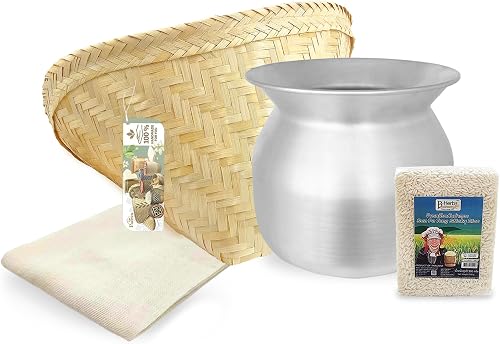
Thai meals revolve around rice: fragrant jasmine rice with curries and stir-fries, and glutinous sticky rice with grilled meats, som tam and mango. Jasmine rice is easy in any rice cooker. Sticky rice is soaked for hours, then steamed in a cone-shaped bamboo basket over a tall pot, not boiled. Buy rice labeled glutinous or sweet rice, because regular rice won't turn sticky however you cook it.
Best starter
Sticky Rice
Essential Starter Set (Steamer Pot and Bamboo Basket)
$58.95 as of Nov 16, 2026
★★★★★Our rating· In Stock
The traditional Thai setup in one box: a tall aluminum pot and a handwoven bamboo basket that sits in its neck to steam sticky rice. It's a small seller with few reviews so far, but it's hard to find this pot outside Asian groceries. About $59.
Thai glutinous rice in a 5 lb bag. Soak it for at least four hours, then steam it for 20 to 25 minutes. This is the rice for mango sticky rice and for eating with grilled chicken. About $15. 4,900+ reviews at 4.7 stars.
Fragrant Thai hom mali jasmine rice, the everyday rice for curries and stir-fries. Rinse it a couple of times and cook it with slightly less water than other long-grain rice. About $16. 1,000+ reviews at 4.8 stars.
A simple, cheap rice cooker that makes jasmine rice hands-off and keeps it warm through dinner, with a steamer tray for vegetables. You don't need a fancy cooker for Thai rice. About $34. 4,900+ reviews at 4.2 stars.
Fish sauce is the salt of Thai cooking, and a good one tastes savory rather than fishy. Alongside it, keep palm sugar for sweetness, a Thai thin soy sauce, and oyster sauce for stir-fries. These four, plus fresh limes and chilies, are how you balance almost any dish. Look for Thai brands: Thai soy sauce and oyster sauce taste noticeably different from Chinese or Japanese ones in Thai recipes.
Best starter
Red Boat
Premium 40N Fish Sauce
$14.99 as of Nov 16, 2026
★★★★★Our rating· In Stock
A first-press fish sauce made with just anchovies and sea salt, rich and savory with no added sugar or MSG. A little goes a long way, and it lasts for months. About $15. 7,500+ reviews at 4.7 stars.
The Thai light soy sauce many Thai recipes mean when they say soy sauce, milder and less sweet than Chinese light soy. Use it in stir-fries, fried rice and soups. About $12. 600+ reviews at 4.8 stars.
A thick, savory Thai oyster sauce that's essential for pad see ew, stir-fried greens and pad krapow. Megachef is made with more oyster extract than most supermarket brands. About $15.
Soft Thai palm sugar with a caramel flavor that white sugar can't copy. It balances fish sauce and lime in curries, dressings and som tam. Shave or pound it before using. About $9.
Store-bought curry paste is how most Thai home cooks make weeknight curries. Fry it in the thick cream from the top of the coconut milk until fragrant, then build the curry and season with fish sauce and palm sugar. Maesri and Mae Ploy are the two Thai brands to look for. Buy coconut milk with no gums or stabilizers if you can, because it separates and fries the paste properly.
Best starter
Maesri
Variety Curry Paste, 8 Pack
$18.81 as of Nov 16, 2026
★★★★★Our rating· In Stock
Two cans each of green, red, massaman and panang curry paste in small 4 oz cans, each enough for one family-size curry. A cheap way to try the main Thai curries. About $19. 1,300+ reviews at 4.7 stars.
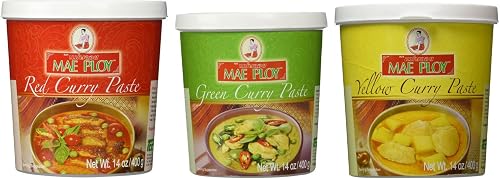
Mae Ploy's big tubs of red, green and yellow paste, a favorite of Thai restaurants. Each tub makes many curries and keeps for months in the fridge. About $22. 2,200+ reviews at 4.7 stars.
A Thai coconut milk with nothing but coconut and water in small cartons, one per curry. It fries curry paste properly and tastes clean. About $28. 2,100+ reviews at 4.0 stars.
Thai cooking is about balance: salty, sour, sweet, spicy and fresh, adjusted by taste at the end. Here's a four-week plan that starts with a stocked pantry and a stir-fry, then moves to curries, a pounded papaya salad and sticky rice.
The most important Thai cooking skill isn’t knife work or heat control. It’s tasting at the end and adjusting: a splash more fish sauce, a squeeze of lime, a pinch of palm sugar. Every week below ends with that habit.
Week 1: Pantry and a stir-fry
Stock fish sauce, palm sugar, oyster sauce, thin soy sauce, jasmine rice and a couple of curry pastes. Find an Asian grocery near you for fresh Thai basil, cilantro, Thai chilies, lemongrass, galangal and makrut lime leaves. Most of the herbs freeze well.
Start with pad krapow (holy basil stir-fry). Pound garlic and chilies, fry them in a hot wok for a few seconds, add ground pork or chicken, then season with fish sauce, oyster sauce, a little soy and sugar. Finish with a big handful of basil and serve over rice with a crispy fried egg.
Green, red and panang curries all follow the same pattern. Fry the paste in the thick cream from the top of a can of coconut milk until it smells fragrant and the oil starts to separate, about three to five minutes. Then add the protein, the rest of the coconut milk, vegetables and makrut lime leaves. Season with fish sauce and palm sugar, and finish with Thai basil.
Taste the curry before serving. If it’s flat, it needs salt (fish sauce). If it’s harsh, it needs a little sugar.
Use the granite mortar for som tam (green papaya salad). Pound garlic and chilies, then add palm sugar, fish sauce and lime, and lightly bruise long beans and tomatoes. Add shredded green papaya and toss it with the pestle and a spoon. You’re bruising, not mashing.
Try making a simple curry paste from scratch once too. It takes 20 minutes of pounding, and you’ll understand every jar of paste you buy afterward.
Soak glutinous rice for at least four hours (overnight is better), then steam it in a bamboo basket over a pot of boiling water for 20 to 25 minutes, flipping the rice halfway. Serve it with grilled chicken and a dipping sauce, or with mango and sweet coconut cream for dessert.
Finish the month with pad see ew or pad thai. Soak the noodles in warm water rather than boiling them, cook one or two portions at a time, and keep the wok very hot.
Make a green curry from paste, frying the paste in coconut cream until the oil separates. · Action
FAQ
Common questions
Is curry paste from a jar or can okay?
Yes. Many Thai home cooks use Maesri or Mae Ploy paste for weeknight curries. Fry it in coconut cream until fragrant, then add fresh makrut lime leaves and Thai basil at the end. Make paste from scratch once to learn the flavors, then use whichever you prefer.
Which fish sauce should I buy?
Red Boat is a great all-around choice with just anchovies and salt. Three Crabs and Squid brand are popular and cheaper. Fish sauce lasts for months in the fridge or pantry once opened, so a bigger bottle is fine.
Can I use regular basil?
In a pinch, but Thai basil has a stronger anise flavor and holds up to heat. Holy basil (krapow) is different again, peppery and clove-like. Look for both at Asian groceries, or grow them from seed in summer.
How do I make sticky rice without a special cooker?
Soak glutinous rice in water for at least four hours, drain it, and steam it in a cone-shaped bamboo basket over a pot of boiling water for 20 to 25 minutes, flipping it halfway. Regular jasmine rice won't work; buy rice labeled glutinous or sweet rice.
Do I need a wok?
For stir-fries and noodle dishes, a carbon steel wok makes things much easier because the shape lets you toss food and keep it moving over high heat. Curries, soups and salads don't need one. A large skillet works while you decide.
JustBeginning earns commission from affiliate programs. As an Amazon
Associate, we earn from qualifying purchases. This costs you nothing
extra and doesn't change our recommendations.
Prices and availability are accurate as of the date and time
shown and can change; the price on Amazon when you buy is what
applies.
How this works.


 Best starter