You build perfumery from smell alone — there's nothing to see, nothing to touch, just your nose and a handful of aroma materials. A starter palette, test strips, a precise scale, and a bottle of perfumer's alcohol is the whole kit. The skill is in training your nose to identify notes and build accords. Takes months to get good. Takes one session to get hooked.
By Colin B. · Published May 30, 2026 · Last reviewed August 7, 2026
A real starter palette runs $100–$250 depending on materials path; add a scale, perfumer's alcohol, test strips, and bottles and you're at $150–$400 all-in.
We earn commission on qualifying Amazon purchases — see our
affiliate disclosure.
Price tiers and budget totals shown above are editorial estimates;
actual Amazon prices vary.
At a glance
Our top pick in each category
The fastest path through this guide — each best-starter pick by category.
Scroll for the budget and upgrade alternatives.
Don't buy a perfumery kit yet. Most Amazon 'perfume making kits' bundle low-grade fragrance oils and cheap bottles. You'll learn more building your kit piece by piece — a real oil palette, a precise scale, and proper alcohol.
Natural (essential oils) vs synthetic (aroma chemicals) is the first real choice. Essential oils are more accessible; synthetics give you more control and the full vocabulary of fine perfumery. Most beginners start with EOs and add synthetics over time.
Your nose fatigues fast. You can evaluate 5–7 materials before your brain stops distinguishing. Smell coffee beans between sniffs to reset, take breaks, work in short sessions. Every serious perfumer does this — it's not a weakness.
The gear
What you actually need
Fragrance Materials
Your fragrance palette is the most important purchase you'll make. For beginners, essential oils are the most accessible entry point — widely available, naturally derived, and each with clear character. A working starter palette needs at least one top note (bergamot, lemon, grapefruit), two or three middles (lavender, rose, ylang ylang), and one or two bases (cedarwood, patchouli, vetiver). You don't need 50 materials to start — 14 well-chosen ones let you build dozens of accords.
Fragrance Materials — what's the difference?
A few common shapes, each making a different trade.
Natural (Essential Oils)
Accessible starter path. Strong crossover with candle and soap making.
Source
Steam-distilled plants, citrus peel
Longevity
Moderate on skin
Cost
$30–$120 for a starter set
Best for Complete beginners, crafters who also make candles or soap
Tradeoff Citrus top notes fade fast; rose and jasmine EOs are expensive
Synthetic (Aroma Chemicals)
More precise, longer-lasting, full fine-fragrance vocabulary.
Source
Isolated or synthesized molecules
Longevity
Higher projection and fixation
Cost
$150–$400 for a starter set
Best for Intermediate perfumers, fine-fragrance enthusiasts
Tradeoff Steep learning curve; sourcing harder than essential oils
Best starter
Plant Therapy
Top 14 Essential Oils Set
$78.99 as of Jun 22, 2026
★★★★★Our rating· In Stock
Plant Therapy is the most trusted essential oil brand in the US — GC/MS-tested, batch-verified, consistently clean. The Top 14 set spans the full fragrance spectrum: citrus top notes, floral and herbal middles, woody bases. It's the only set on Amazon that gives you structural range to build real perfume accords, not just make things smell nice.
What we like
GC/MS tested with public batch reports — rare in the EO category
Top/middle/base coverage lets you build real accords from day one
Full-size 10ml bottles — generous quantity for experimentation
What to know
Citrus top notes fade quickly in wearable perfumes
Missing some classic materials (vetiver, oakmoss, skin musks)
Edens Garden is the other name perfumers trust alongside Plant Therapy — independently tested, transparent batch reports, slightly different sourcing. Their 12-set adds frankincense, rosemary, and lemongrass that the Plant Therapy 14 lacks. The right next step when you want a second trusted brand or to expand beyond your starter palette.
What we like
Independently tested — same transparent quality standard as Plant Therapy
Adds frankincense, rosemary, lemongrass not in the standard starter set
What to know
Overlaps with Plant Therapy set in lavender, cedarwood, citrus
10ml bottles run out faster with heavy-use materials like lavender
Jasmine absolute is the material that makes beginners understand why fine perfumes cost what they cost. It's not jasmine essential oil — it's a cold-extracted concentrate with depth and warmth that transforms any floral accord. One drop changes the character of a blend completely. Start small: a 1ml bottle used by the drop is enough for many blends.
What we like
Pure jasmine absolute has depth no synthetic version can match
Transforms any floral accord — one drop noticeably changes a blend
What to know
Expensive — one of the priciest natural perfumery materials
Requires dilution before use; full strength overwhelms a blend
Perfumer's alcohol (190-proof grain alcohol or specially denatured alcohol) is the standard diluent for spray perfumes. It carries fragrance cleanly, evaporates quickly without leaving residue, and has almost no smell of its own. For oil-based perfumes in roller bottles, fractionated coconut oil is your carrier instead. Most beginners start with alcohol-based sprays — it's the format we're most familiar with wearing.
Best starter
Tillbrook
Perfumers Alcohol 16 oz, 200 Proof
$18.99 as of Jun 22, 2026
★★★★★Our rating· In Stock
Tillbrook's perfumer's alcohol is 200-proof SDA 40B — the standard-spec carrier for spray perfumes. It's odorless, purpose-made for fragrance use, and available on Amazon with reliable shipping. One 16-oz bottle makes roughly 30–40 small spray bottles of finished perfume. The right proof, the right spec, no guesswork.
What we like
Purpose-made for fragrance — no competing scent from the carrier
16 oz makes 30–40 small bottles of finished perfume
What to know
More expensive per oz than bulk grain alcohol
Shipping restrictions in some states due to alcohol content
For oil-based roll-on perfumes, fractionated coconut oil is the move. It stays liquid year-round, has virtually no smell of its own, and absorbs cleanly. At $12–$15 for 16 oz it's the cheapest viable carrier. Your fragrances won't project as far as alcohol-based versions, but for personal-wear roll-ons, it works beautifully.
What we like
Budget carrier for roll-on perfumes — about $12 for 16 oz
Stays clear and liquid year-round unlike regular coconut oil
What to know
Oil-based perfumes project less than alcohol-based sprays
Some materials smell different dissolved in oil vs alcohol
These two items are cheap and completely non-negotiable. A 0.01g precision scale means you can reproduce any blend you make — without one, you're eyeballing drops and every batch will be different. Smelling strips let you evaluate materials and rough blends without putting everything on your skin. Buy both before you open any bottles. Total cost for both: under $25.
Best starter
American Weigh Scales
BL-100 Digital Pocket Scale
$
★★★★★Our rating
American Weigh is the standard precision scale brand among home perfumers and DIY cosmetic makers. The AC-100 reads to 0.01g, handles up to 100g, tares reliably, and doesn't drift between sessions. Buy it once, set it on your blending table, and forget about it — the thing just works.
What we like
0.01g precision — the standard for repeatable fragrance formulas
American Weigh is the DIY perfumery community's default scale
What to know
100g max load — fine for perfumery, wrong for large batch soap or candles
Buttons are slightly fiddly; takes one session to get comfortable
★★★★☆Our rating· Only 5 left in stock - order soon.
Smelling strips let you evaluate a material before it touches skin. Dip one end, wait 30 seconds for alcohol to flash off, then smell the strip over an hour to watch the fragrance evolve. A 500-pack costs under $10 and lasts a long time — unless you really get into this, at which point you'll want more.
What we like
500 strips for under $10 — buy the 500-pack, not the 100-pack
Uncoated paper doesn't add competing scent — accurate evaluation
What to know
No label area — mark each strip with a fine-tip Sharpie as you dip
Some batches have a faint paper smell that fades within the first minute
Glass dropper pipettes matter when you're moving 0.05–0.2ml of a concentrated aroma material. These graduated glass droppers are reusable, clean fully with a rinse of perfumer's alcohol, and precise enough for early-stage blending. The 16-piece set gives you enough to dedicate a dropper per material without cross-contaminating your palette.
What we like
Glass cleans fully with alcohol — no retained smell between materials
Graduated markings let you measure small volumes without a pipette tool
What to know
Fragile — glass breaks; keep a spare box
Smaller volume than plastic transfer pipettes — right for perfumery
For storage and working batches, amber glass bottles are essential — dark glass blocks UV degradation, which matters for citrus and floral oils over months of storage. For finished wearable perfumes, fine-mist glass atomizers in 2oz or 10ml sizes are the standard. Roller bottles work for oil-based perfumes. Keep a Sharpie and masking tape nearby — you'll label constantly.
Best starter
mEssentials
24-Pack 10ml Amber Glass Dropper Bottles
$19.99 as of Jun 22, 2026
★★★★★Our rating· In Stock
Amber glass protects your materials from UV degradation — essential for citrus and floral oils that oxidize quickly in clear glass. The 10ml size is standard for working batches and material storage. A 24-pack at this price means you can label every material cleanly and still have bottles left over for finished blends.
What we like
Amber glass blocks UV — citrus and florals last months not weeks
10ml working size is the community standard for test batches
What to know
Dropper caps aren't precision dispensers — combine with pipettes for formulas
Labels sometimes peel off curved glass; use a label pen instead
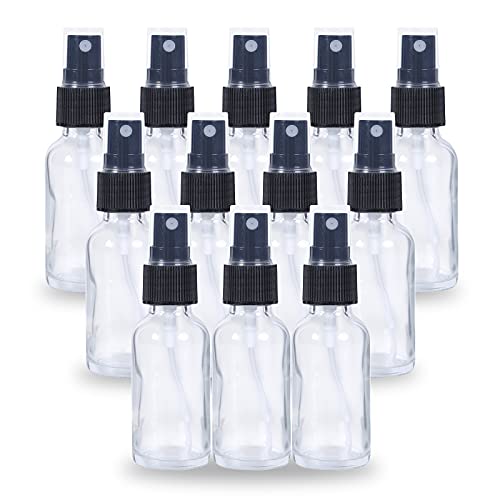
2oz fine-mist sprayers are the right format for finished perfumes you actually wear. Small enough to travel with, large enough to hold a season's worth of a fragrance you love. This 12-pack gives you bottles to fill all year — try different formulas, give some away, keep your favorites.
What we like
Fine mist atomizes evenly — no drips or uneven application
12-pack means plenty for experiments, gifts, and your best keeps
What to know
Pumps clog at high fragrance concentrations — stay under 25%
2oz is small; fill a second bottle as backup for your favorites
For oil-based perfumes made with fractionated coconut oil, roller bottles are the right delivery. The apply-roll-absorb mechanism is quieter and more precise than spraying — good for office wear and small spaces. This 30-pack comes with droppers, a roller opener, and labels — everything you need to fill, seal, and track your oil-based blends.
What we like
30-pack with droppers, opener, and labels — complete set for oil perfumes
Roller application is precise and quiet — better for office wear
What to know
Roller ball can seize with crystallizing fragrance compounds
Less projection than spray — different wear profile entirely
Bundled perfumery kits come in two varieties: ones worth buying and ones that look complete but aren't. Good kits include real fragrance materials (named essential oils, not just 'fragrance blend'), instructions for building accords, and quality bottles. The kits below are worth the price — use them to decide if perfumery is your thing before investing $300 in a full palette.
Best starter
WEBEEDY
Perfume Making Kit with Essential Oils
$$$
★★★★★Our rating
WEBEEDY's perfume kit includes essential oils, glass bottles, colorants, and tools in one box — the all-in-one option if you don't want to source components separately. Real named essential oils mean you can build on what you learn instead of just mixing mystery 'fragrance blends.' Good for a first session the day it arrives.
What we like
Everything in one box — no separate sourcing for your first session
Named essential oils with identity — you learn what you're working with
What to know
Smaller oil quantities than buying individually once you're committed
Guide is beginner-level; you'll want community resources quickly
P&J Trading's starter kit includes a selection of fragrance oils, bottles, and instructions at a price that makes sense before you know if this hobby sticks. Everything arrives ready to use. Not the quality of sourcing individually, but a solid proof-of-concept before you invest in a real palette.
What we like
Same-day start — everything in one box, no separate sourcing needed
Good proof-of-concept before investing $300+ in a real palette
What to know
Fragrance oils, not essential oils — mixing finishes, not building accords
Entry-level tools; you'll replace the bottles and scale if you continue
Most people expect perfumery to feel like art. It does — eventually. First it feels like chemistry you don't understand yet, and smells that refuse to behave. Here's what the first month actually looks like, from opening your first bottle to wearing your first finished fragrance.
Perfumery has a learning curve that catches beginners off guard. It’s not that it’s hard — it’s that it’s invisible. You can’t see a fragrance, measure it with your eyes, or know if you’re getting better by looking at anything. Your only instrument is your nose, and your nose needs training.
The good news: a trained nose is something you genuinely build within weeks, not years. Here’s what the first month actually looks like.
Week 1: The smell audit
Before you blend anything, spend your first session doing nothing but smelling. Open each bottle in your starter set, hold it a few inches from your nose (never directly at the opening — it overwhelms), and give yourself 20–30 seconds with each material.
This sounds passive. It isn’t. You’re building a smell library your brain will reference for every blend you make. Write notes. Write what the material reminds you of. Write whether you like it. Write “difficult” for the ones that are hard to sit with — those often become the most useful materials in a blend.
Take breaks every five or six materials. Your nose fatigues faster than you’d expect, and once it does, everything starts smelling the same. Smell coffee beans between materials if you have them nearby — the ritual of it helps reset your attention more than any physiological effect.
By the end of week one, you should know which of your starter materials you want to anchor a blend around.
An accord is three to five materials that work together as a coherent smell — not “I can smell all three,” but “I smell a thing.” Your first goal is to build an accord where the components disappear into something unified.
Start with a simple structure: one top note, two middles, one base. Something like: bergamot (top), lavender + geranium (middles), cedarwood (base). Weigh them on your scale. Record the exact weights. Put the blend on a test strip, wait two minutes for the alcohol to flash off, and evaluate what you have.
Most first accords are interesting but unbalanced. The base overwhelms. The middle notes clash. The top disappears before you can enjoy it. This is expected — and the learning is in identifying which problem you have and adjusting.
The key skill to practice: adjust one material at a time. If you adjust three things simultaneously, you won’t know what fixed it. Pick the biggest problem, change the amount of that one material, and re-evaluate.
Let your best attempt macerate in a sealed bottle overnight before final evaluation. Fragrance binds and mellows over 24–48 hours — what smells sharp and disjoint in the evening often reveals a completely different character by morning. This is why perfumers wait before showing their work to anyone.
Once you have an accord you like on a strip, it’s time to dilute it into something you’d actually wear.
Mix your accord materials at 10–20% total concentration in perfumer’s alcohol. Fill a small spray bottle. Wear it for a full day and notice three things:
How it opens. The first 15 minutes after you spray is the top-note phase — the citrus and light herbs that volatilize fastest. This is usually the most energetic part of a fragrance.
What it becomes. After 20–30 minutes, the top notes have faded and you’re left with the heart of the blend: your middle notes. This is the true character of your fragrance. If you don’t love what it is at this phase, the blend needs work.
How it finishes. By hour three or four, you’re into the base notes — the woods, resins, and musks. A good base doesn’t disappear; it warms and deepens. A weak base means your fragrance fades to nothing by midday.
Most first wearable perfumes smell competent rather than distinctive. That’s fine. What you’re building is the ability to diagnose what’s missing and name the problem — “too sharp in the middle” or “no anchor — needs more base” or “the lavender is eating everything else.” That diagnostic skill is the real first-month achievement.
A few habits, established in the first month, that separate improving perfumers from beginners who plateau:
Smell everything. Not just your blends — coffee, wine, food, rain on concrete, the back of your hand in the afternoon. Perfumers talk about “building vocabulary,” which sounds pretentious until you realize you genuinely smell things differently after six months of practice.
Date and label every blend. The vial that doesn’t get labeled will be the one that turns out beautiful. Every formula in your notebook needs: date, exact weights of each material, and a one-line evaluation after 24 hours of maceration.
Don’t throw away failures. A blend you hate today may smell interesting three months later when your nose has developed. Keep them. Set them aside. Come back.
Use Fragrantica. Before you blend something new, look up a commercial perfume in the family you’re working in — a classic chypre, a soliflore, a woody amber — and read what the nose notes actually are. Reverse-engineering something you already like is one of the fastest paths to learning what makes a structure work.
Save your money
What you don't need yet
Beginners get pressured to buy a lot of stuff that doesn't help them play
better. Here's what we'd skip on day one.
A full aroma chemical library — You need 10–20 materials to learn the fundamentals. Perfumers build their palette over years — not their first month.
A fume hood or lab ventilation — Work near an open window. Hobbyist quantities of aroma materials don't require lab-grade ventilation.
Professional-grade denatured alcohol — Consumer perfumer's alcohol from Heritage Store is identical for practical purposes at a fraction of the cost.
Paid perfumery courses or certification — Online courses cost $300–$1,000 for information freely available at Formula Botanica and Basenotes. Learn while blending first.
An ultrasonic diffuser or nebulizer — You're making wearable perfume, not room fragrance. These serve a completely different purpose.
First week
Your first seven days
A short, real plan to get from gear-on-doorstep to actually playing.
Order your starter essentials: a 14-oil essential oil set, a 0.01g scale, test strips, and 16oz of perfumer's alcohol. · Buy
Smell each essential oil individually before you blend anything. Hold the open bottle a few inches from your nose — don't inhale directly. Note which ones you love and which ones feel difficult. · Action
Learn the three fragrance note tiers: top notes (citrus, light herbs) are what you smell first and fade in 15–30 min; middle notes (floral, spice) are the heart; base notes (wood, resin, musk) anchor and last all day. · Learn
r/DIYfragrance · Active craft perfumery community — formula sharing and beginner Q&A
Build your first accord: combine 3–5 oils in a test vial, record exact weights on your scale, and evaluate on a strip. Don't put it on skin yet — strip evaluation is enough for iteration. · Action
Smell your first accord the next morning. Fragrance shifts during maceration — what smelled sharp yesterday may smell rounded and coherent today. This is why perfumers wait before evaluating. · Action
Dilute your best accord to 10% in perfumer's alcohol, fill a small spray bottle, and wear it for a day. Note how the top, middle, and base phases feel on your skin across the hours. · Action
FAQ
Common questions
What's the difference between essential oils and fragrance oils?
Essential oils are single-material extracts from plants — bergamot is bergamot, vetiver is vetiver. Fragrance oils are finished blends, often synthetic, designed to smell like a specific concept. For learning perfumery, you want essential oils so you're building structure from individual materials, not mixing pre-made scents.
How long does it take to develop a good nose?
Most people distinguish basic note categories (citrus/floral/woody) within a few sessions. Reliably identifying individual materials by name takes 3–6 months of regular practice. Making blends you genuinely enjoy wearing happens much faster — often in your first few sessions.
Can I make perfume with just essential oils, or do I need aroma chemicals?
You can make excellent perfume with just essential oils. Natural perfumery is a complete discipline. Aroma chemicals add precision, longevity, and aromatic profiles plants can't produce. Most beginners start with EOs and add synthetics once comfortable with the basics.
How do I stop my perfume from smelling like rubbing alcohol?
Use purpose-made perfumer's alcohol, not rubbing alcohol or 91% isopropyl — both have their own smell. Then let your finished perfume macerate 48–72 hours before evaluating. The alcohol note dissipates significantly as fragrance binds. If it still smells boozy, your concentration is too low.
How much fragrance do I add to the alcohol?
For Eau de Toilette (EDT): 5–15% fragrance to alcohol by weight. Eau de Parfum (EDP): 15–20%. Pure parfum: 20–30%. Start at 10% so you can smell the structure clearly; increase once you like what you've built.
Is perfumery expensive to start?
A minimal start — small EO set, scale, strips, carrier — runs $80–$120. A working palette that opens the full creative range costs $200–$400. Materials last: a 10ml bottle of lavender is 200+ drops, and a finished perfume uses only 10–15 drops total per small bottle.
Basenotes — The most active fragrance enthusiast forum online. Deep database of reviews, ingredient discussions, and community formula sharing. Best single resource for learning what commercial perfumes smell like and why.
The Perfumer's Apprentice — Leading craft perfumery supplier in the US. Their beginner resources and ingredient database are free and thorough — worth reading before spending anything.
Formula Botanica — Online cosmetics school with free introductory modules on natural fragrance. High-quality beginner content without a paywall.
Fragrantica — Largest fragrance review database online. Invaluable for understanding what notes are in commercial perfumes you already know — reverse-engineering inspiration.
r/DIYfragrance — Active craft perfumery community. Formula sharing, ingredient advice, friendly critiques. The wiki is worth reading before posting beginner questions.
As an Amazon Associate, JustBeginning earns from qualifying purchases.
We may also earn commission from other affiliate programs linked on this
page. Editorial recommendations are independent; we don't choose
products based on commission rates.
Product prices and availability are accurate as of the date and time
indicated and are subject to change. Any price and availability
information shown on Amazon at the time of purchase will apply.
Our top pickPlant Therapy Top 14 Essential Oils Set

 Best starter